Savannah · Hotels
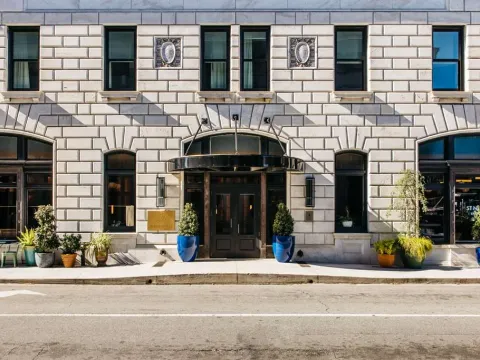
The Drayton Hotel
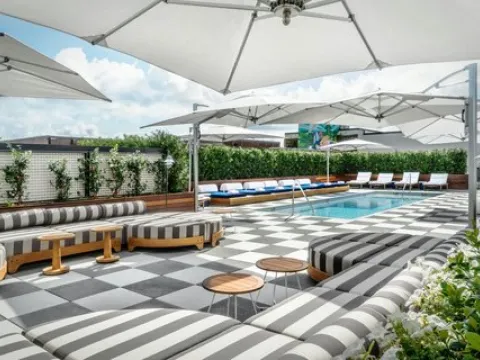
We chose The Drayton for its rooftop first: Pendant Terrace looks straight toward City Hall's...
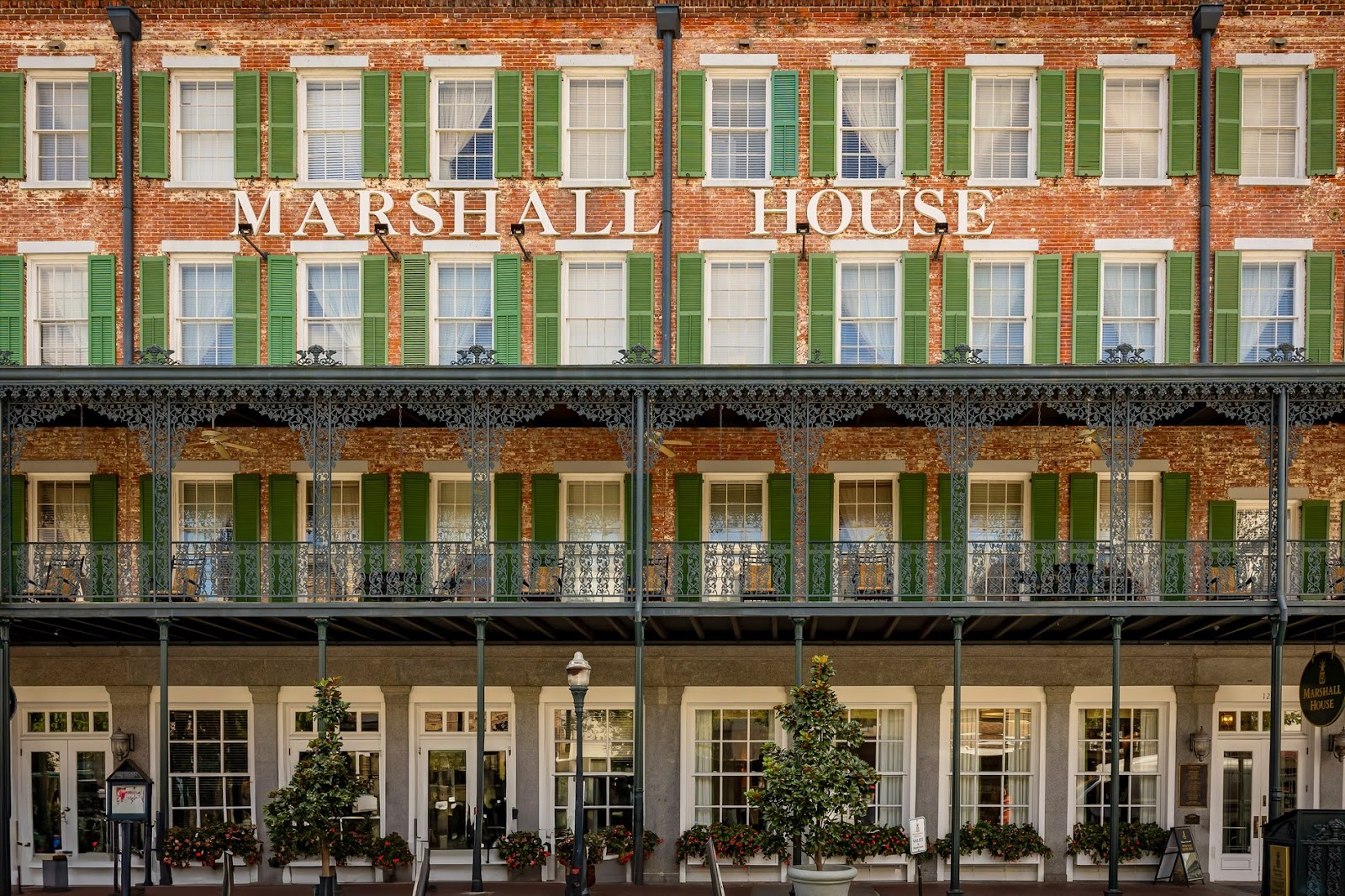
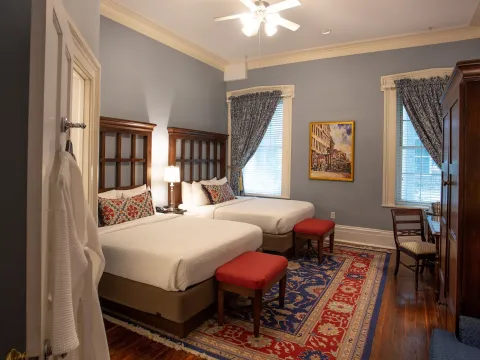
The Marshall House opened in 1851, founded by businesswoman Mary Marshall during Savannah's railroad boom, and has operated continuously since as the city's oldest hotel, with two notable exceptions. The building served as a hospital during the yellow fever epidemics of the mid-1800s, then again as a Union hospital under General Sherman's occupation in the final months of the Civil War. Author Joel Chandler Harris, best known for the Uncle Remus stories, lived here during Reconstruction. The hotel closed in 1957 over fire code issues and sat vacant for decades before a 1999 restoration brought it back, carefully, rather than rebuilding it into something else.
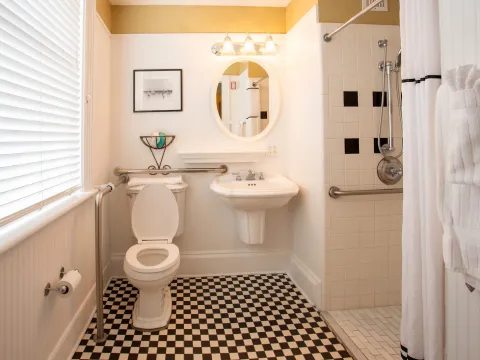
We chose The Marshall House because its history is structural, not decorative: the 1999 restoration preserved the original 120-foot cast-iron veranda erected in 1857, the Philadelphia pressed brick and Savannah grey brick façades, and claw-foot tubs dating to 1880, rather than replacing them with reproductions. A glass-ceiling courtyard atrium folds a modern addition into the original footprint without erasing it, and Mary Marshall's 1830 portrait, acquired from the estate of Jim Williams, hangs behind the reception desk as a quiet reminder of how deep the building's ties to the city run. Few hotels this central to a downtown core carry this much documented, verifiable past.
The hotel sits at 123 East Broughton Street, inside Savannah's historic district and its premier shopping corridor, within walking distance of the Savannah River, City Market, and the shaded squares the city is built around. Broughton Street itself has been a commercial spine since the 19th century, and staying on it puts guests inside the same walkable grid that drew visitors here two centuries ago, rather than at the edge of it. Bike tours, walking tours, and pub crawls through downtown Savannah all start within a few minutes of the lobby.
Price: €€€ (upscale, historic)
Vibe: historic, documented, downtown
Rooms: 68, period-appropriate furnishings
Best For: history-minded travelers, couples, downtown walkability
Our Favorite Thing About the Hotel: the 120-foot 1857 cast-iron veranda
Dining: on-site restaurant and bar, concierge-arranged dining downtown
Amenities: courtyard atrium, 24-hour front desk, valet parking, business center
Attractions: City Market, Savannah River, historic squares, Broughton Street shopping
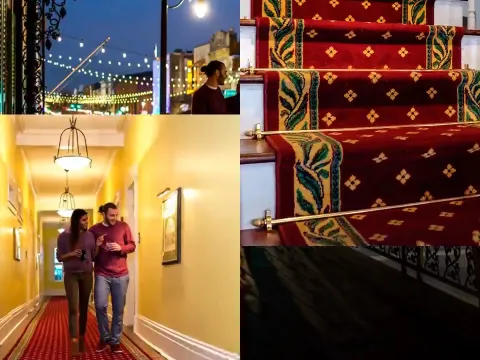
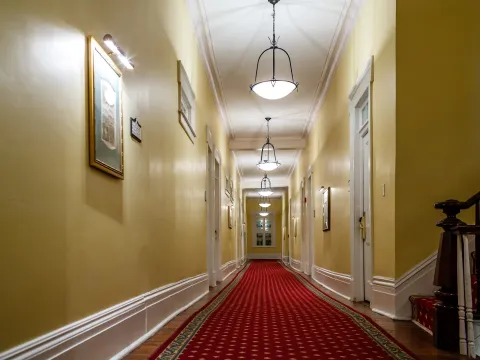
The 1999 restoration is the hinge of the hotel's modern identity: rather than gutting a building that had sat closed for decades, the renovation team recovered original staircases, wood floors, fireplaces, and brick walls, and the artifacts uncovered during the work are now displayed in cabinets on the second and third floors. The result is a hotel that reads its own history out loud, in the fabric of the building rather than in a laminated placard, and it is a different proposition from a historic-style hotel built new to look old.
Joel Chandler Harris's residency during Reconstruction is the best-documented of the hotel's literary connections, but the building's run as a hospital, first during yellow fever outbreaks and later under Sherman's occupying Union forces, gives it a civic history well beyond hospitality. That range, railroad-era hotel, wartime hospital, shuttered relic, restored landmark, is unusual for a property still taking reservations, and it gives The Marshall House a depth few boutique hotels built in the last few decades can claim.
The Marshall House suits travelers who want Savannah's history under their feet rather than summarized in a guidebook, and its downtown Broughton Street address rewards anyone planning to walk the historic district rather than drive it. Guests looking for a modern, minimalist aesthetic should look elsewhere, this is a hotel that leans into its age rather than smoothing it over. For a Savannah stay built around the city's documented past, this address is among the most credible in the historic district.