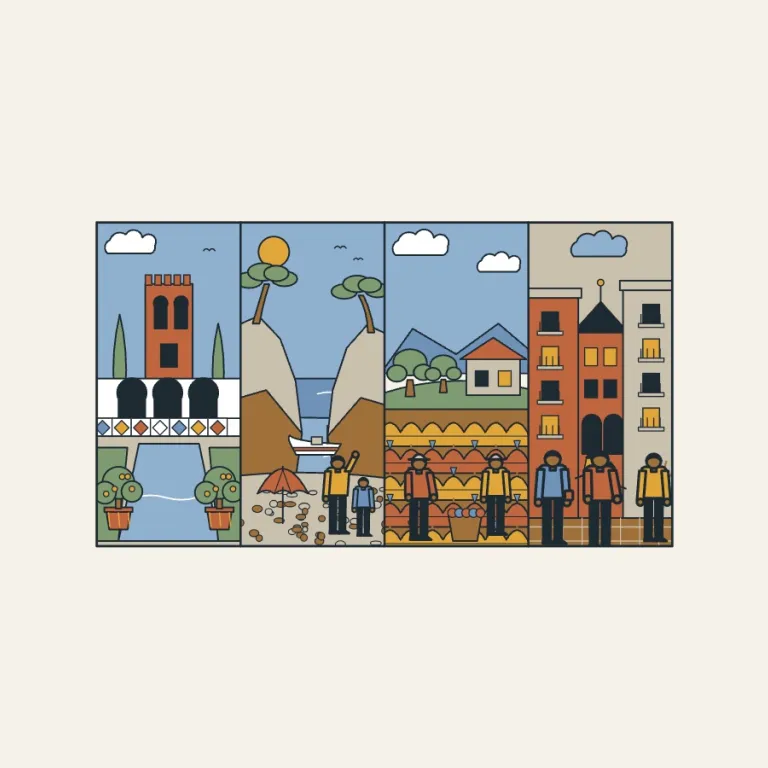
The best time to visit Spain is late April to mid June, when Seville still averages a daily high of 81°F (27°C) in May, the evenings run long and hotel rates sit close to their winter level. September is the second window: the sea off Barcelona holds 77°F (25°C) and nightly rates fall week by week. The period to avoid is July and August inland, when Seville averages 97°F (36°C) and Spanish hotels charge 38 percent more than in January. Browse our hotel guides and our Spain collection to plan the stay itself.
The short answer
- Best overall: late April to mid June, and all of September into the first half of October.
- Worst for inland cities: mid July to late August. Seville averages 97°F (36°C) in July, Madrid 90°F (32°C), against 82°F (28°C) in Barcelona (AEMET).
- Warmest sea: August off Barcelona, 80°F (26°C). It is still 72°F (22°C) in late October.
- Cheapest month: January, at an average 112.69 EUR per hotel night nationwide in 2025, against 155.52 EUR in August (INE).
- Busiest: August, with 11.2 million international visitors in 2025 against 5.1 million in January (INE).
- Wettest region: the Atlantic north. Bilbao records 124 rain days a year against 50 in Seville.
- Moving dates to check first: Semana Santa, which falls 21 to 28 March in 2027, and the Feria de Abril that follows it two weeks later.
Understanding the climate in Spain
Spain is not one climate but four, and the gap between them is wider than in any other country in western Europe. The national weather service, AEMET, publishes station normals that make the point plainly.
The interior bakes. Seville sits on the Guadalquivir plain with nothing between it and the African air. Its airport station averages a daily high of 97°F (36°C) in July and 96°F (35.5°C) in August, with 354 hours of sunshine in July and a total of 2 millimetres of rain across the whole month. Madrid, at 2,188 feet (667 m) on the meseta, reaches 90°F (32°C) in July but drops hard at night and in winter: its January high is 50°F (10°C) and its January low 37°F (3°C).
The Mediterranean coast is milder than visitors expect. Barcelona peaks at 83°F (28.5°C) in August, and in July it sits 15°F below Seville. The sea does the work: it warms slowly through spring, then holds heat into autumn, which is why September in Barcelona feels like a continuation of summer while Madrid has already cooled to 80°F (26°C).

Barcelona is the one Spanish city that works in every month of the calendar. Illustration: my-usa-stay.com.
The Balearics are hotter than the sea suggests. This is where grid based climate models mislead. Palma de Mallorca sits on an island narrow enough that a reanalysis cell over it is mostly water, which flattens the peaks. The AEMET station at Palma airport records a July high of 88°F (31°C), several degrees above what a smoothed model returns. Inland Mallorca in August is genuinely hot, even when the coast reads mild.
The Atlantic north is a different country. Bilbao averages 78°F (25°C) in July and takes 1,134 millimetres of rain a year spread over 124 days, against 539 millimetres over 50 days in Seville. It gets 186 hours of July sunshine where Seville gets 354. San Sebastian, an hour east, is wetter still. Green Spain earns its name, and August there is a beach month in the way that Maine is a beach month.
Spring: March to May
Spring is the strongest season in Spain, and the one that fills fastest. By mid April Seville is averaging 74°F (23°C), Madrid 65°F (18°C), and the orange trees in the Andalusian patios are in flower. International arrivals climb from 6.6 million in March 2025 to 8.6 million in April, then 9.4 million in May, so the country goes from quiet to busy inside eight weeks.
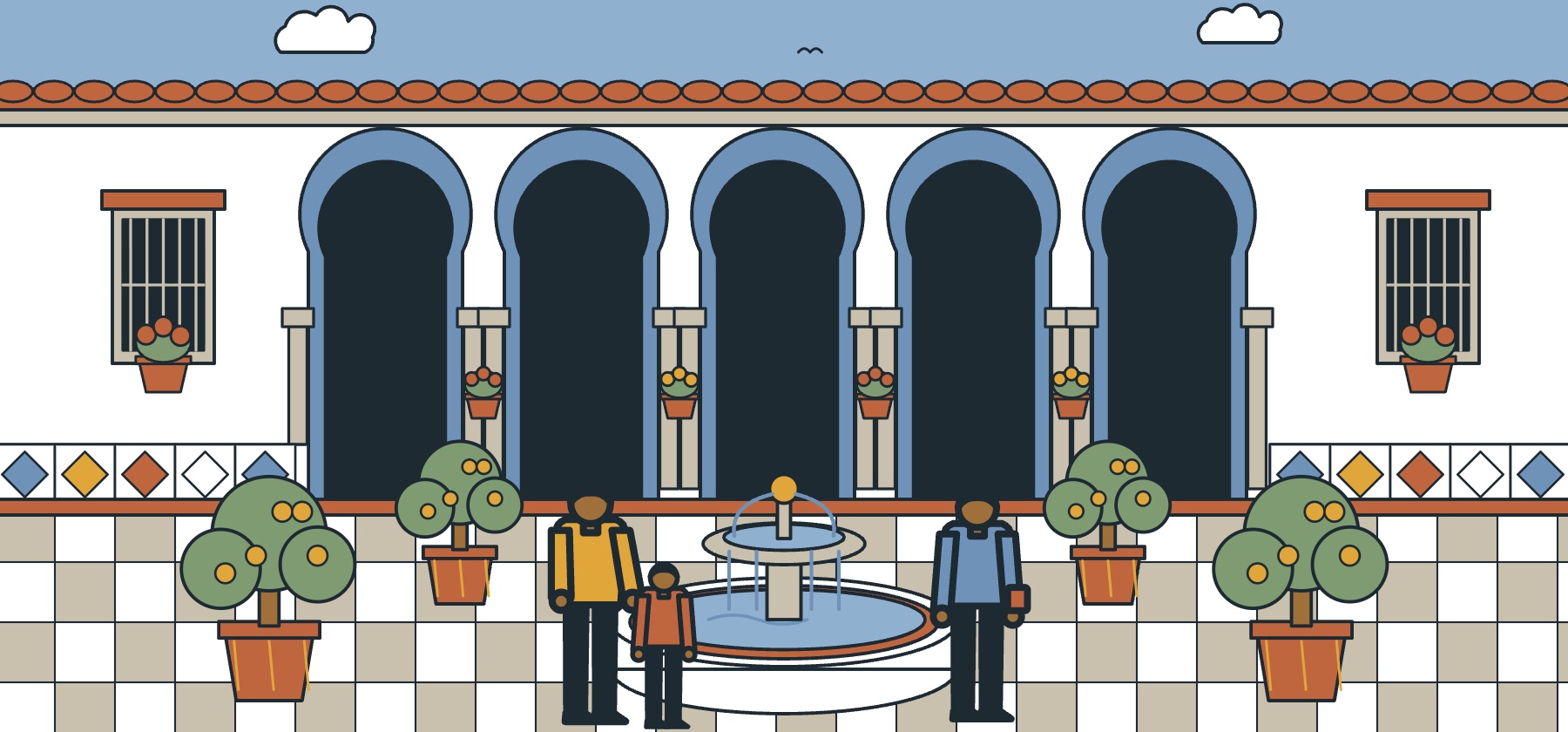
A Seville patio in April, when the city averages 74 degrees Fahrenheit (23 degrees Celsius). Illustration: my-usa-stay.com.
What to plan around:
- Semana Santa moves with Easter. In 2027 it runs 21 to 28 March, according to Spain's national tourist board. Seville, Malaga and Valladolid fill completely, prices spike for that week alone, and city centres close to traffic for hours at a time.
- The Feria de Abril in Seville opens roughly two weeks after Easter Sunday, so an early Easter pulls it into April and a late one pushes it towards May. The Ayuntamiento de Sevilla fixes the exact dates each year, which is worth checking before booking anything in the city that fortnight.
- Las Fallas in Valencia does not move: 15 to 19 March, every year, with a mascleta fired at 2pm daily on the Plaza del Ayuntamiento from 1 March and the crema, the burning of the monuments, on the night of 19 March.
- Rain is still real in spring. Barcelona records 5.1 rain days in April, its wettest spring month, and Bilbao 12.5.
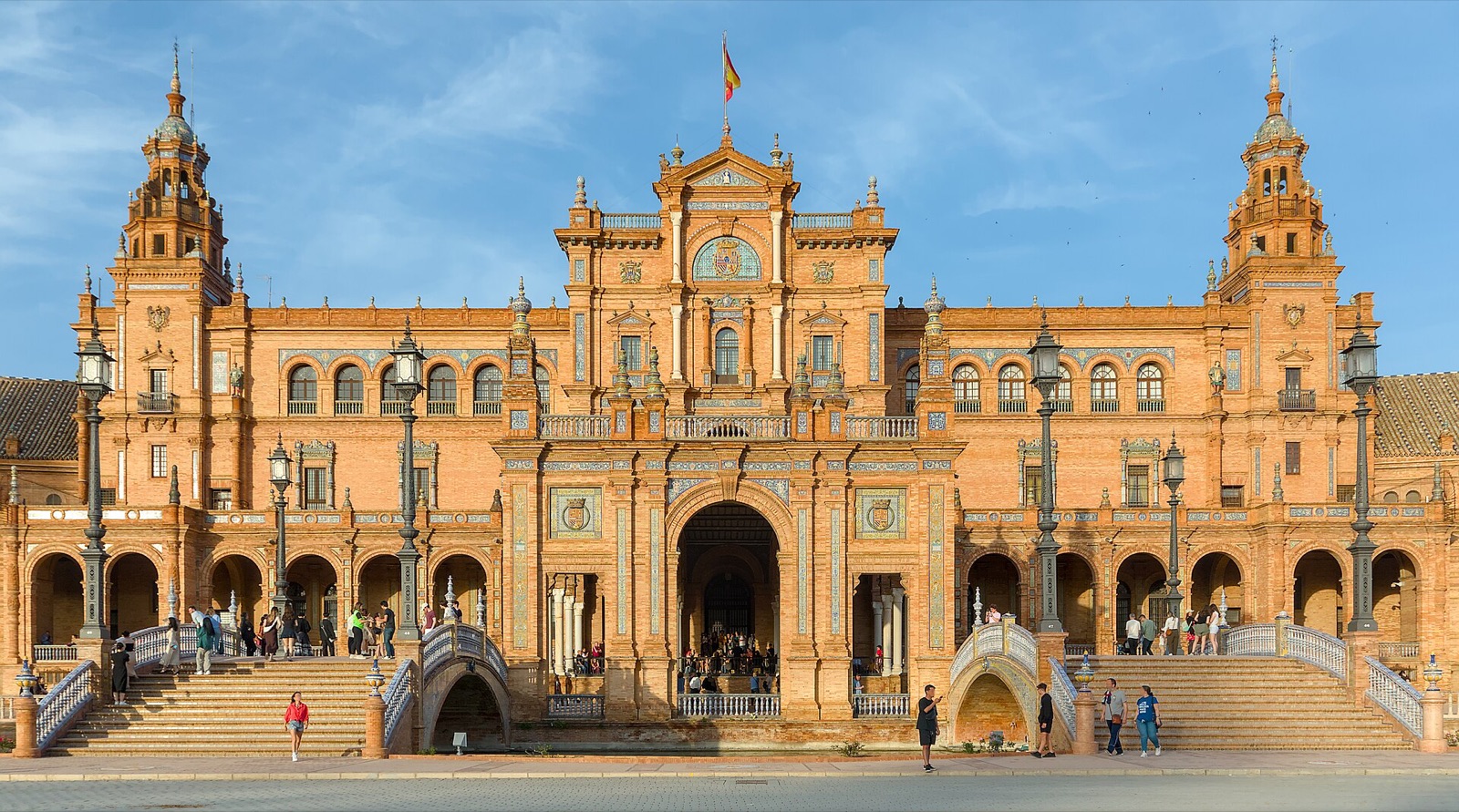
The Plaza de Espana in Seville, easy walking in May and an exercise in finding shade by July. Photo: Benjamin Smith, Wikimedia Commons, CC BY-SA 4.0.

Spring is also the only sensible season for the interior on foot. Walking Seville, Cordoba or Toledo in May is pleasant; doing it in July is an exercise in finding shade.
Summer: June to September
Summer in Spain splits cleanly in two: the coast works, the interior does not. June is the last comfortable month almost everywhere, with Seville at 90°F (32°C) and Barcelona at 77°F (25°C). From the first days of July the inland cities become an early morning and late evening proposition.
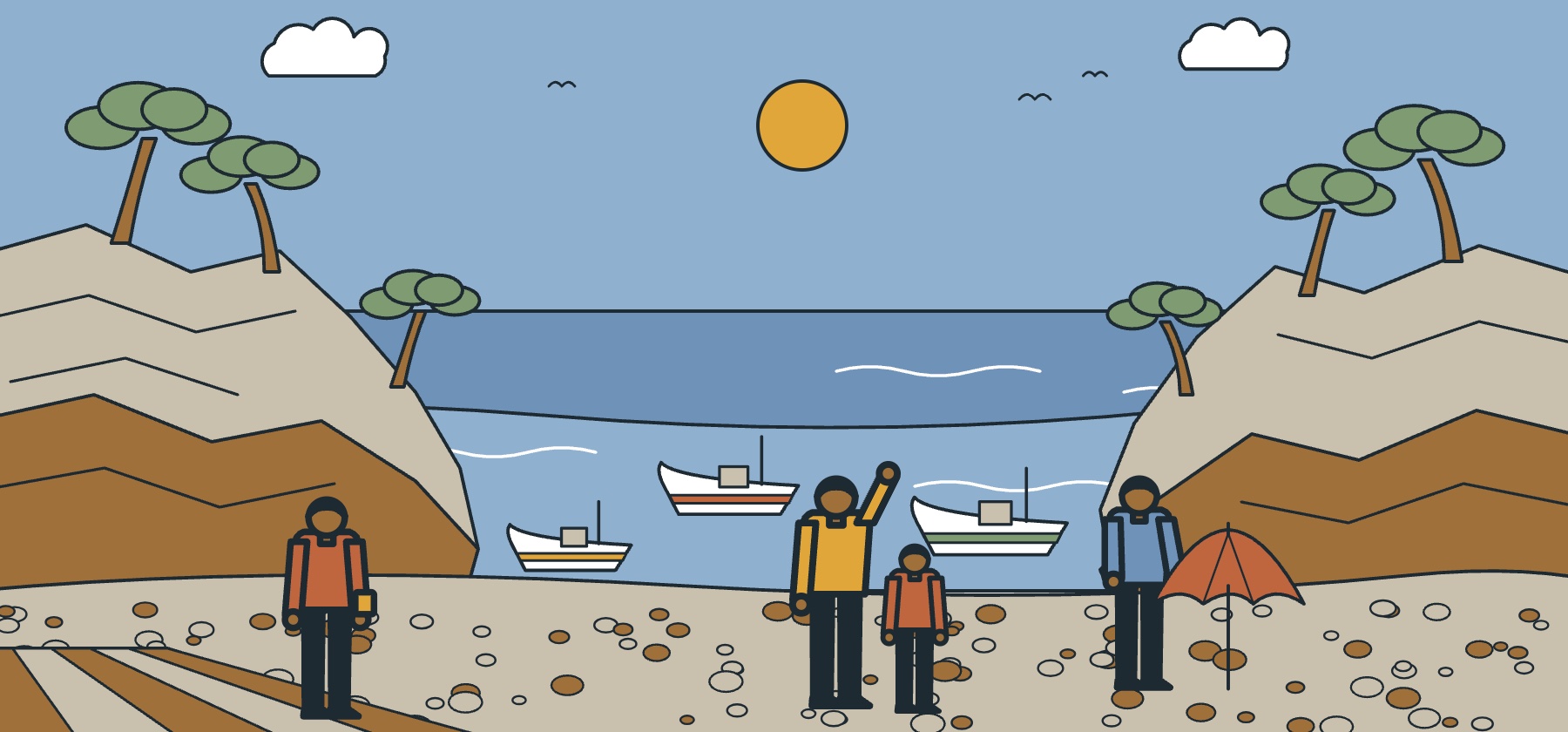
A Mallorcan cove in June, when the Balearic Sea has already reached 72 degrees Fahrenheit (22 degrees Celsius). Illustration: my-usa-stay.com.
The sea is the reason to come anyway. Off Barcelona the water reaches 72°F (22°C) by June, 77°F (25°C) in July and peaks at 80°F (26°C) in August, on NOAA satellite records for 2016 to 2025. The Alboran Sea off Malaga, fed by Atlantic water through the Strait of Gibraltar, runs cooler in high summer at 76°F (24°C) but warmer in winter at 60°F (15°C). That is why the Costa del Sol is a winter destination and the Costa Brava is not.
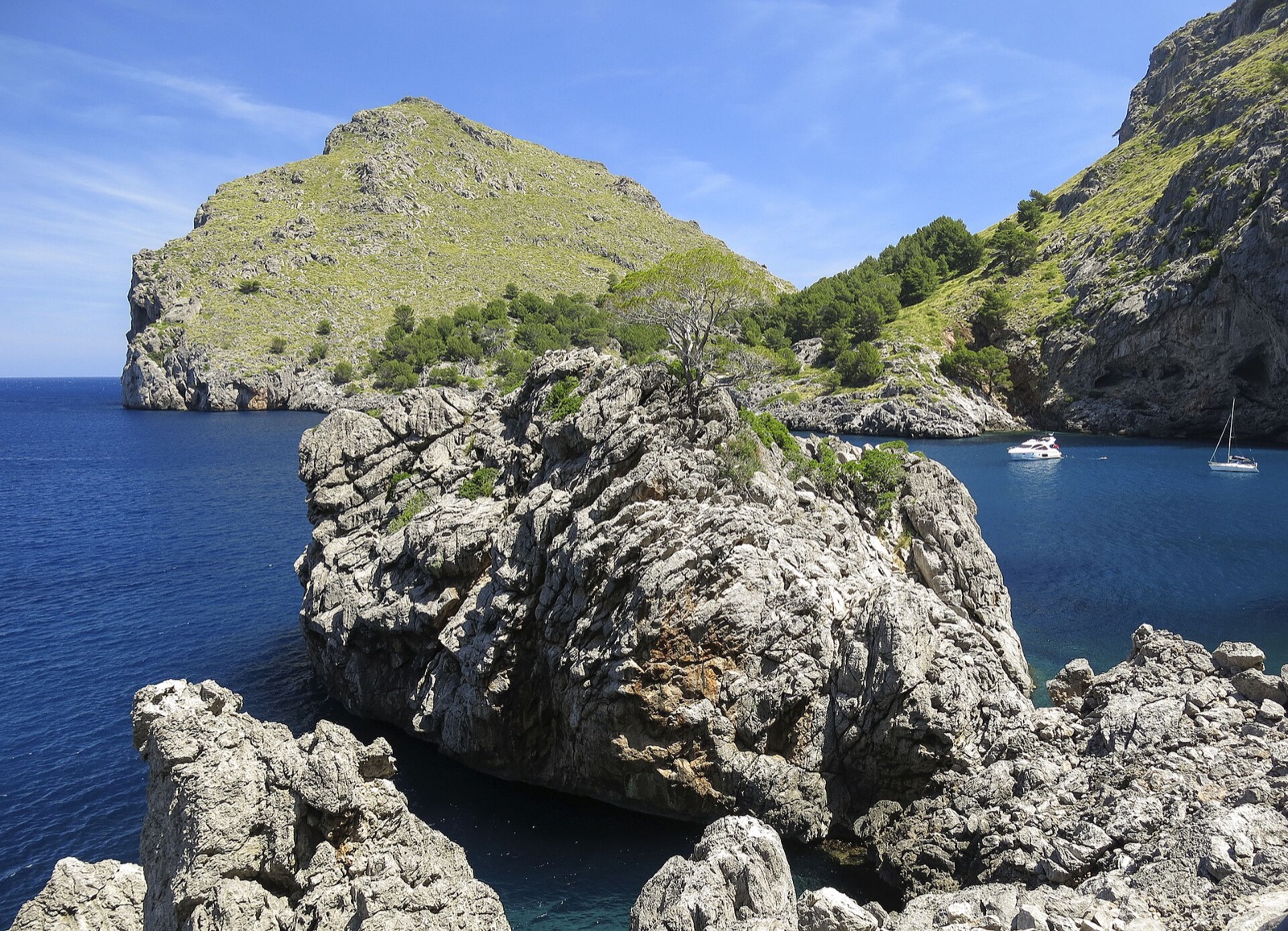
The Serra de Tramuntana on the north coast of Mallorca, above the Torrent de Pareis. Photo: Vicenç Salvador Torres Guerola, Wikimedia Commons, CC BY-SA 3.0.

Precautions for July and August:
- Treat 2pm to 6pm as indoor time in Seville, Cordoba, Madrid and inland Mallorca. Spanish cities are built for this; the museums and the lunch tables are where everyone else will be.
- Book the Alhambra and the Sagrada Familia the moment your dates are fixed. The Alhambra opens 8:30 to 20:00 in the summer season and the last entry to the Nasrid Palaces is one hour before closing, so the early slots are the ones worth having.
- Expect August closures in the interior. Madrid empties in August, which is pleasant for the streets and inconvenient for restaurants.
- Go north instead. San Sebastian, Bilbao and the Rias Baixas run close to 20°F cooler than Andalusia and are at their driest in July, when Bilbao takes only 50 millimetres of rain.
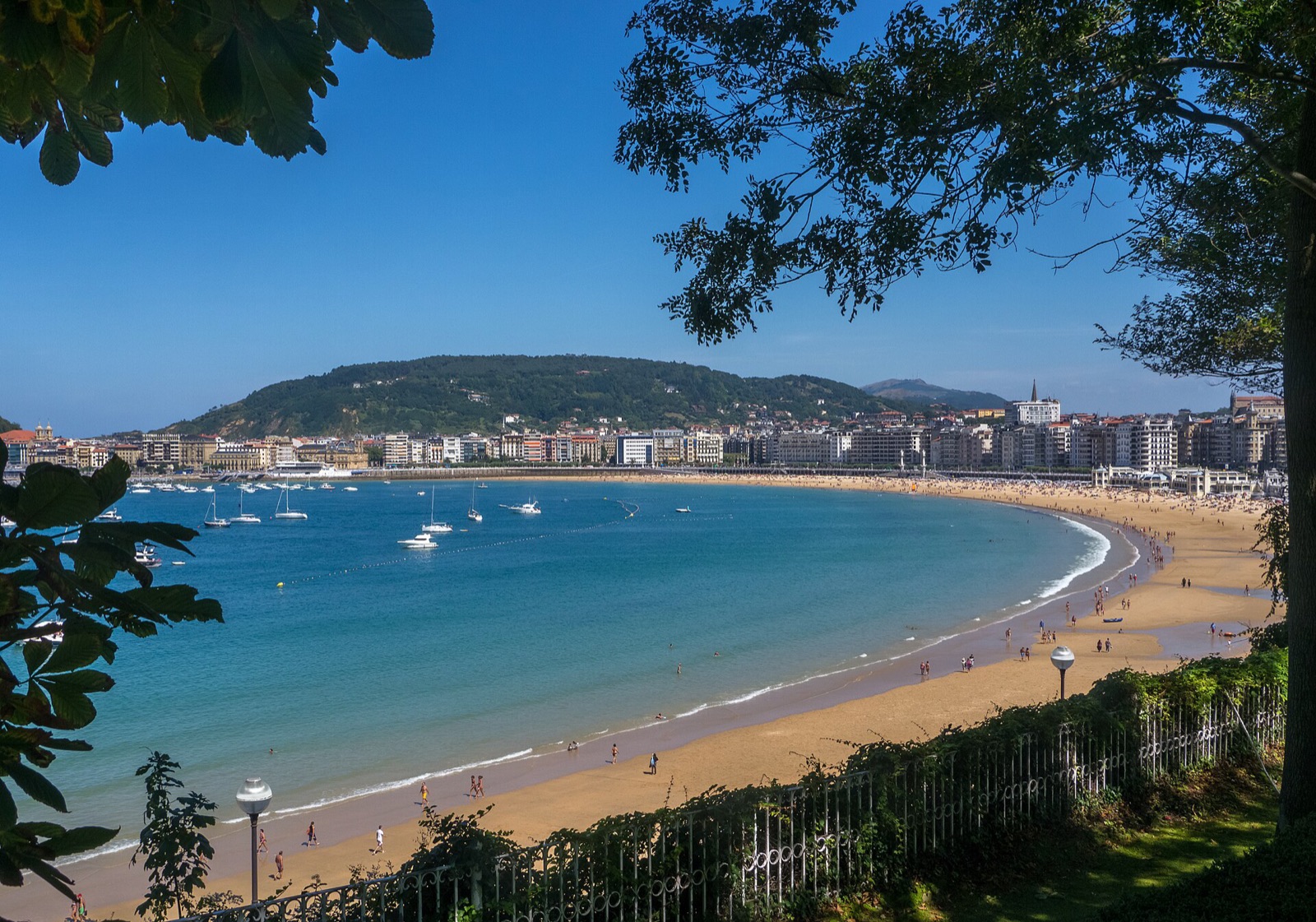
La Concha at San Sebastian, where August runs close to 20 degrees Fahrenheit cooler than Andalusia. Photo: Ermell, Wikimedia Commons, CC BY-SA 4.0.

September is the month most guides undersell and the numbers reward. The sea is still at its August warmth in the first half, Barcelona averages 79°F (26°C), and the national hotel rate falls from 155.52 EUR in August to 131.43 EUR. It is not empty, though: Spain took 9.7 million international visitors in September 2025, more than in June or May.
Autumn and winter: October to February
October is the best value month on the Spanish calendar. Seville comes back to 79°F (26°C), walkable again, the sea off Barcelona is still 72°F (22°C), and the national hotel rate drops to 120.54 EUR. The trade is rain: Barcelona records 6.3 rain days in October, its wettest month, and 91 millimetres.
November is the hinge. Arrivals collapse from 9.3 million in October 2025 to 5.8 million, a fall of 38 percent in four weeks, and the country goes quiet until Christmas. Seville still averages 68°F (20°C) in November, and its sea off Malaga is still at 65°F (18°C).
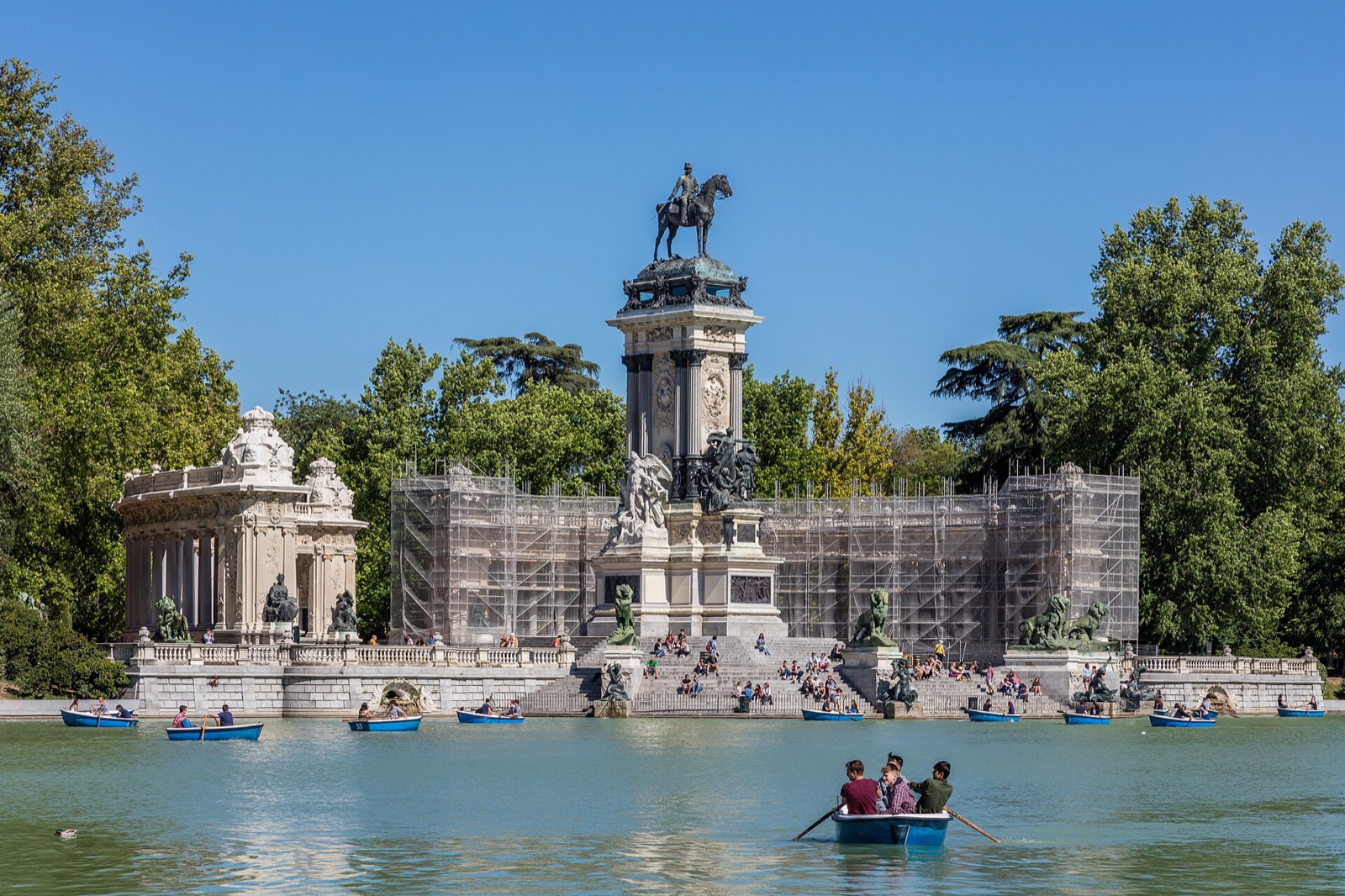
The Estanque del Retiro in Madrid, a city that averages 50 degrees Fahrenheit (10 degrees Celsius) by day in January. Photo: Diego Delso, Wikimedia Commons, CC BY-SA 4.0.

Winter is cheap and clear rather than warm. Madrid averages 50°F (10°C) by day in January and freezes at night; Barcelona holds 56°F (14°C); Seville reaches 61°F (16°C) with 183 hours of sunshine in the month. Andalusia in January is the reason Northern Europeans winter there. Sierra Nevada, above Granada, runs a ski season while the city below sits in shirtsleeves, and the two are 40 minutes apart by road.
Spain month by month
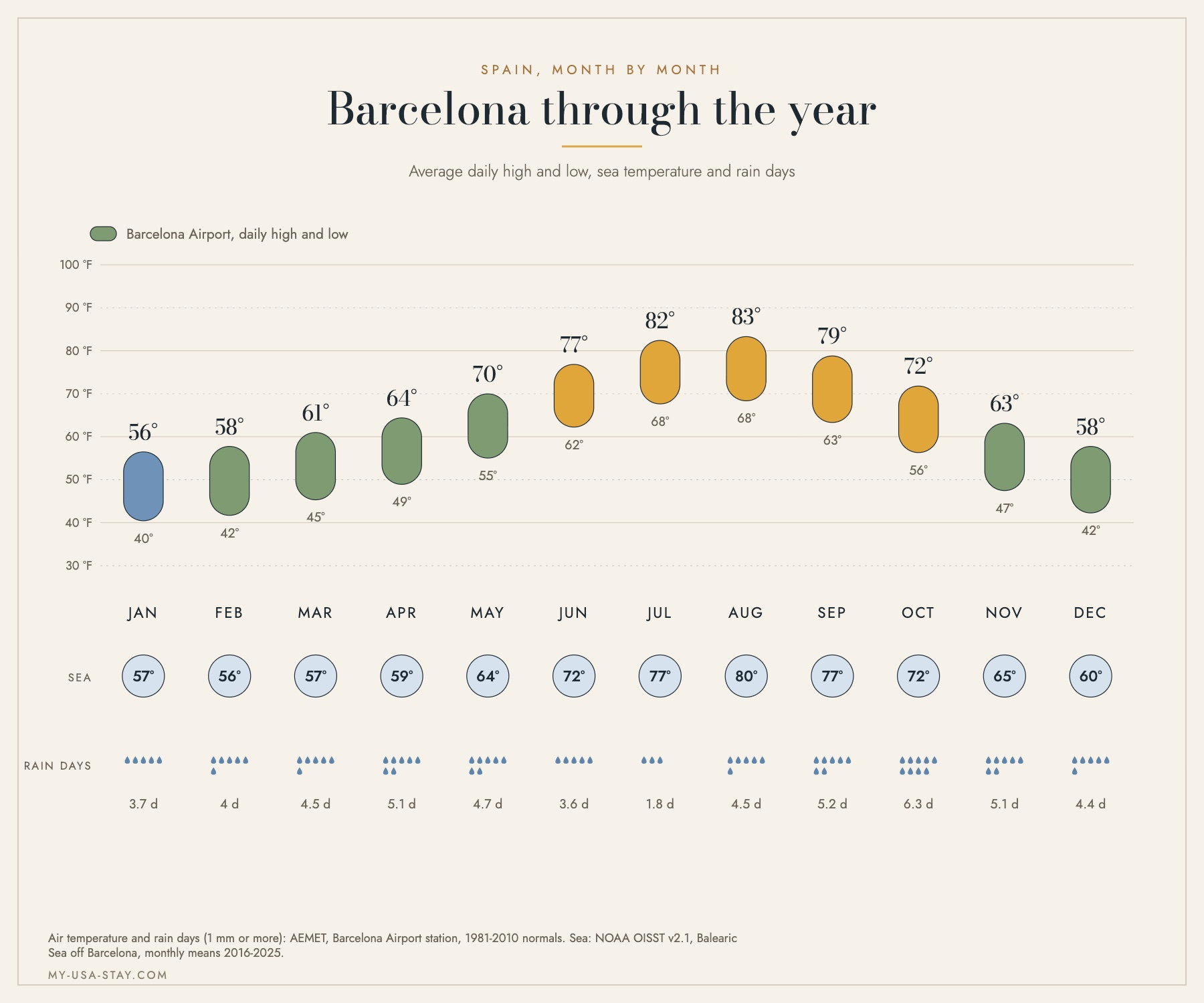
Barcelona through the year, on AEMET station normals and NOAA sea surface records.
| Month | Barcelona high / low | Seville high | Madrid high | Sea, Barcelona | Rain days, Barcelona | Visitors 2025 | Verdict |
|---|---|---|---|---|---|---|---|
| January | 56 / 40°F (14 / 5°C) | 61°F (16°C) | 50°F (10°C) | 57°F (14°C) | 3.7 | 5.1 M | Cheap, clear, cold |
| February | 58 / 42°F (14 / 5°C) | 65°F (18°C) | 54°F (12°C) | 56°F (13°C) | 4.0 | 5.4 M | Quiet, mild south |
| March | 61 / 45°F (16 / 7°C) | 71°F (22°C) | 61°F (16°C) | 57°F (14°C) | 4.5 | 6.6 M | Festivals begin early |
| April | 64 / 49°F (18 / 9°C) | 74°F (23°C) | 65°F (18°C) | 59°F (15°C) | 5.1 | 8.6 M | Beautiful, filling fast |
| May | 70 / 55°F (21 / 13°C) | 81°F (27°C) | 72°F (22°C) | 64°F (18°C) | 4.7 | 9.4 M | Best all round month |
| June | 77 / 62°F (25 / 17°C) | 90°F (32°C) | 83°F (28°C) | 72°F (22°C) | 3.6 | 9.5 M | Sea warm, interior hot |
| July | 82 / 68°F (28 / 20°C) | 97°F (36°C) | 90°F (32°C) | 77°F (25°C) | 1.8 | 11.0 M | Coast only, honestly |
| August | 83 / 68°F (29 / 20°C) | 96°F (36°C) | 88°F (31°C) | 80°F (26°C) | 4.5 | 11.2 M | Hottest, dearest, fullest |
| September | 79 / 63°F (26 / 17°C) | 89°F (32°C) | 80°F (26°C) | 77°F (25°C) | 5.2 | 9.7 M | Warm sea, falling rates |
| October | 72 / 56°F (22 / 14°C) | 79°F (26°C) | 67°F (19°C) | 72°F (22°C) | 6.3 | 9.3 M | Best value, some rain |
| November | 63 / 47°F (17 / 9°C) | 68°F (20°C) | 56°F (14°C) | 65°F (18°C) | 5.1 | 5.8 M | Emptying out fast |
| December | 58 / 42°F (14 / 6°C) | 62°F (17°C) | 50°F (10°C) | 60°F (16°C) | 4.4 | 5.3 M | Christmas, then quiet |
Air temperatures and rain days: AEMET station normals for 1981 to 2010, Barcelona Airport, Seville Airport and Madrid Retiro. A rain day is a day with 1 millimetre or more. Sea temperature: NOAA OISST v2.1, Balearic Sea off Barcelona, monthly means 2016 to 2025. Visitors: INE, Frontur survey of international tourist arrivals, 2025, national total.
The best time for what you want to do
The right month depends far more on the activity than on the destination, because Spain offers all of them somewhere in any given week.
- Beaches and swimming: late June to early October on the Mediterranean, when the sea holds 72°F (22°C) or more. The Atlantic north never gets there; its August sea is swimmable but bracing.
- Cities and museums: April, May, October. Madrid and Seville on foot in July is a mistake almost every first time visitor makes once.
- Walking the Camino de Santiago: May, June and September. July and August bring both the heaviest crowds and, in the Meseta section, the worst heat.
- Skiing: January to March in Sierra Nevada and the Pyrenees, which makes Granada the only European city where a morning on snow and an afternoon in a Moorish palace are the same day.
- Food and wine: September and October for the Rioja and Ribera del Duero harvest, and for the Galician shellfish season.
- Budget: January and February. The national average hotel rate was 112.69 EUR and 113.10 EUR in those two months of 2025, against 155.52 EUR in August.
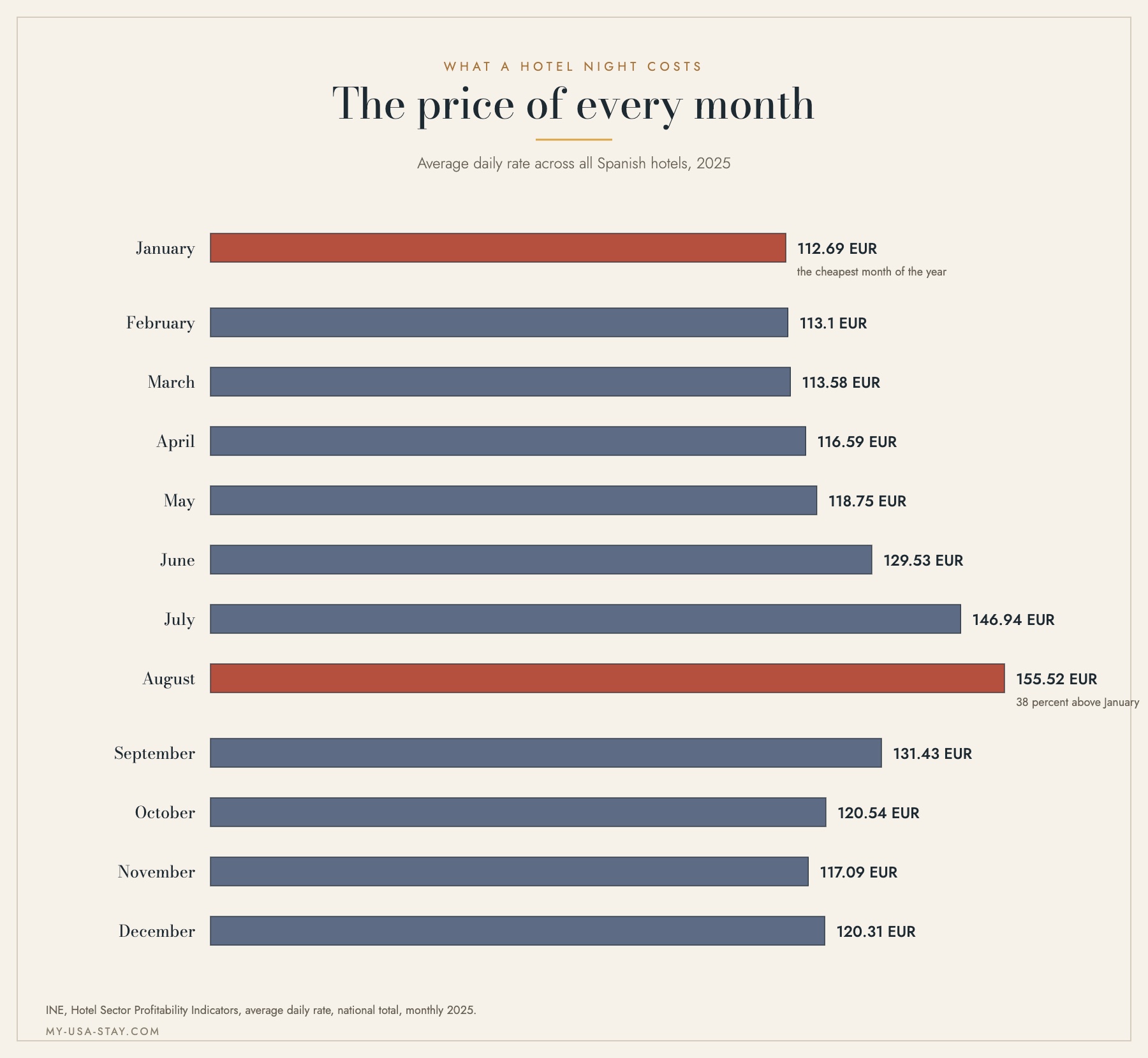
The average daily rate across all Spanish hotels in 2025, month by month, published by INE.
One number is worth more than any general advice about shoulder seasons. Spain's statistics institute publishes the average daily hotel rate by month and by region, and the two do not move together. In August 2026 the Balearic Islands averaged 231 EUR a night and Andalusia 178 EUR, while Madrid averaged 117 EUR, its cheapest month of the entire year. In October 2025 the arrangement reversed: Madrid rose to 173 EUR, its annual peak, and the Balearics fell to 118 EUR. Spain has two hotel markets running on opposite calendars, and knowing which one you are buying into is worth more than a week of searching.
Events that shape the year
Spanish festivals do two things to a trip: they are the reason to go, and they are the reason a hotel costs triple. The distinction that matters is between dates that move and dates that do not.
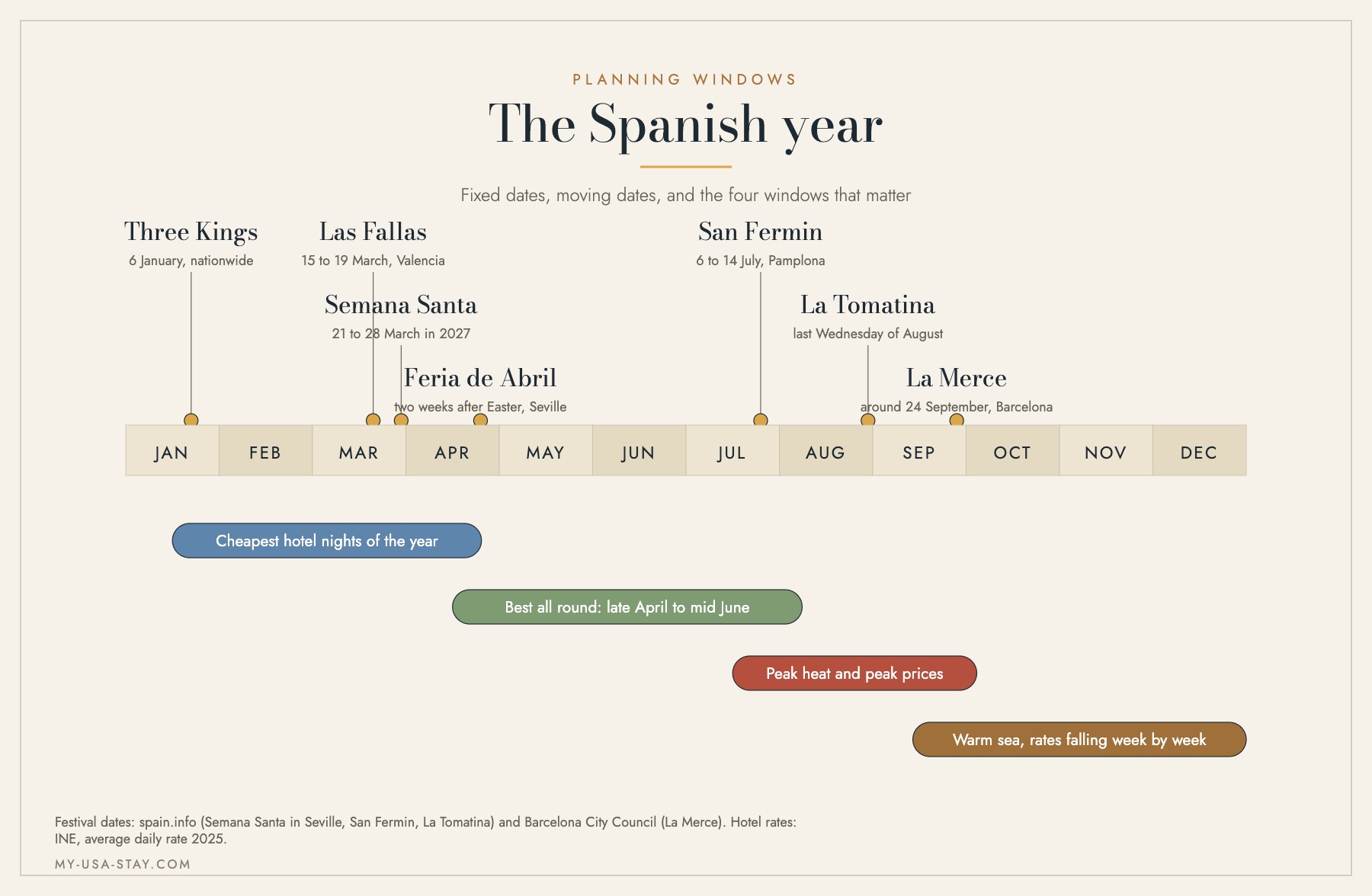
The fixed dates, the moving dates and the four windows that decide a Spanish trip.
The moving dates all hang off Easter. Semana Santa is the largest religious event in Europe and reshapes a dozen Spanish cities for a week. In 2027 it runs 21 to 28 March. Seville's processions occupy the old city from Palm Sunday, with the Madruga, the night of Holy Thursday into Good Friday, drawing the largest crowds of the year. Book eight to ten months ahead or plan to be somewhere else.
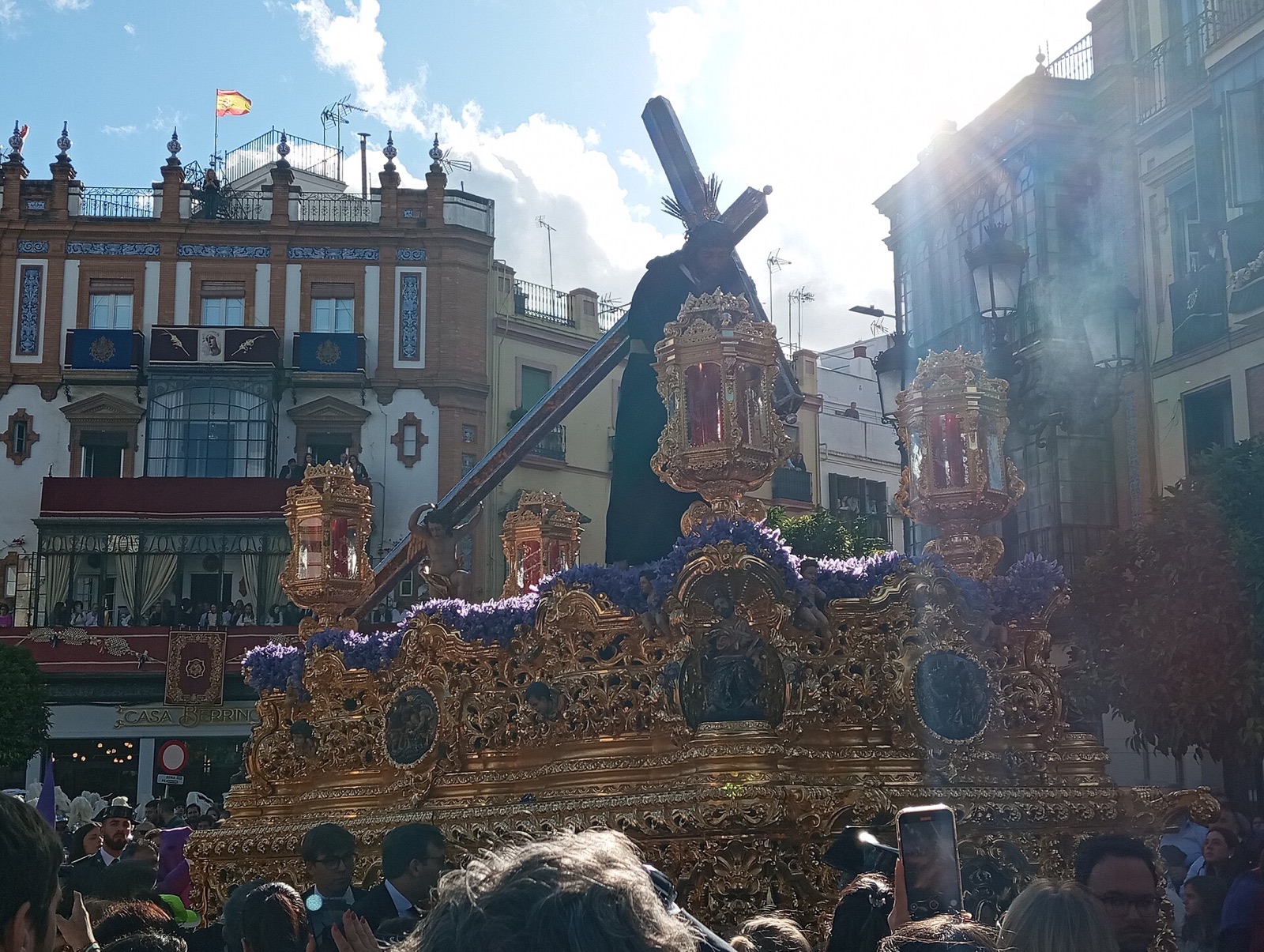
A Holy Week paso in Seville, where Semana Santa runs 21 to 28 March in 2027. Photo: Cofrades 2020 sevilla, Wikimedia Commons, CC BY-SA 4.0.

The fixed dates are easier to plan. Las Fallas runs 15 to 19 March in Valencia. San Fermin in Pamplona runs 6 to 14 July, opening with the chupinazo rocket on 6 July and an encierro at 8:00 am every morning over a 848 metre course through the old town. La Tomatina takes place on the last Wednesday of August in Bunol, starts at 11:00, and now requires a ticket, priced at 10 EUR for general admission. La Merce, Barcelona's own festival, filled five days around 24 September in 2026.
Two that reward timing rather than surviving it: the Sagrada Familia placed the upper arm of the cross on its Tower of Jesus Christ on 20 February 2026, completing the exterior of a tower that stands 172.5 metres with the cross topping out at 176 metres, and 2026 marks the centenary of Antoni Gaudi's death. And the Alhambra opens every day of the year except 25 December and 1 January, 8:30 to 20:00 in summer and 8:30 to 18:00 in winter.
Where to go, region by region
The right region for your month is a more useful question than the right month for Spain. Our regional collections split the country the way the climate does.
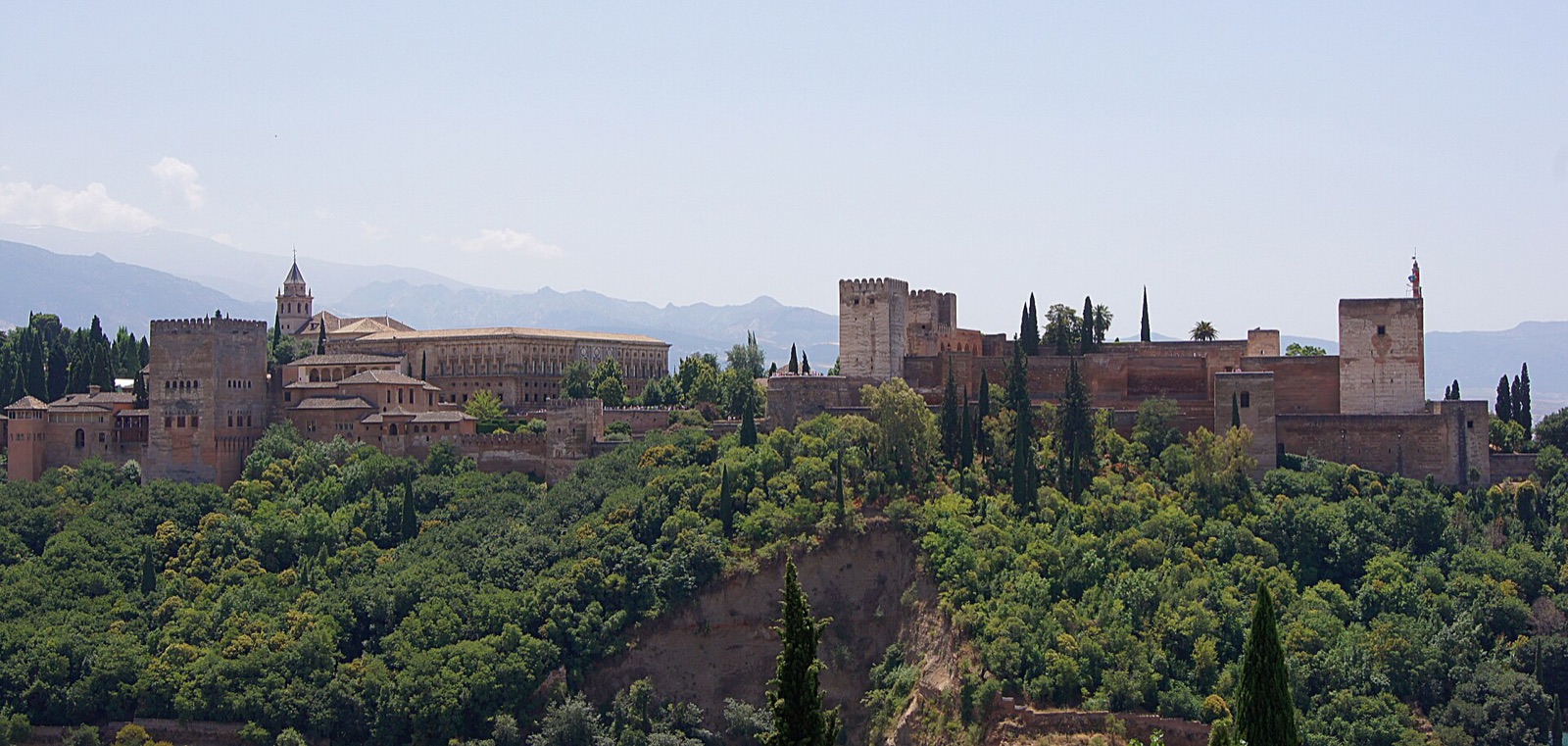
The Alhambra seen from the Mirador de San Nicolas in Granada, open every day except 25 December and 1 January. Photo: Jebulon, Wikimedia Commons, Public domain.

- March to May, and October: Granada province and the Washington Irving route, the road between Seville and Granada named for the American writer who lodged in the Alhambra in 1829 and wrote Tales of the Alhambra out of it. Andalusia in spring is the case the whole page is built on.
- May to September: the Valencia coast and Valencia province, where the sea warms earlier than in Catalonia and the March Fallas give the city a second season.
- Year round, with a summer peak: Barcelona province and our wider Barcelona selection. Barcelona is the one Spanish city that works in every month of the calendar.
- June to September: our European beach destinations, which is where the Balearic and Costa options sit.
- April to June, and September: the Lagunas de Ruidera in Castilla La Mancha, an inland lake chain that is best before the meseta heat arrives and again once it breaks.
Getting there from the United States
This is the part most Spanish weather guides leave out, and it is the part that changes an American itinerary. Four things to settle before you book.
Entry rules changed in 2026. The European Union's Entry/Exit System became fully operational on 10 April 2026. At your first Schengen border your passport details, facial image and fingerprints are recorded and your entry and exit dates logged; passport stamping is gone. The European Commission offers optional pre-registration through the Travel to Europe app within 72 hours of arrival, which shortens the queue. ETIAS, the separate travel authorisation Americans will need to obtain before boarding, is scheduled to start in the last quarter of 2026 and will be valid for three years or until the passport expires.
Your passport has two conditions, not one. The EU requires it to be valid for at least three months after your intended departure from the Schengen area and to have been issued within the previous ten years. A passport renewed as an adult with a long extension can satisfy the first and fail the second. US citizens need no visa for tourism and may stay 90 days in any 180 day period across the whole Schengen area, not per country.
The time difference has two exceptions a year. Mainland Spain runs on Central European Time, six hours ahead of New York and nine ahead of Los Angeles. But the clocks do not change together: the European Union switches on the last Sunday of March and the last Sunday of October, the United States on the second Sunday of March and the first Sunday of November. For about two weeks in March, and again for a week from late October, Madrid is only five hours ahead of New York. If you are booking a connection or a call home in those windows, check the gap rather than assuming it.
Americans already avoid August, and they are right. Spain's own arrivals data shows US residents peaking in June, at 546,830 in 2025 and 613,824 in 2026, and bottoming out in August at 365,357, a third below June. More Americans visit Spain in October than in August. In total 4.46 million US residents came in 2025. The pattern is not an accident: August is when Spanish and French holidays collide, when the interior is at its worst and when rates are at their highest. If your schedule allows June or late September, take it. Our guide to timing a trip inside the United States applies the same method in reverse.
FAQ
What is the best month to visit Spain?
May is the strongest single month. Seville averages 81°F (27°C), Madrid 72°F (22°C) and Barcelona 70°F (21°C), which makes every part of the country walkable at the same time. The national average hotel rate was 118.75 EUR in May 2025, well below the 155.52 EUR of August. September is the close runner up.
What month is the cheapest to go to Spain?
January. Spain's statistics institute puts the average hotel rate at 112.69 EUR a night nationwide in January 2025, the lowest of the year and 28 percent below August. February follows at 113.10 EUR and March at 113.58 EUR. Arrivals are also at their annual low, with 5.1 million international visitors in January against 11.2 million in August.
What is the rainy season in Spain?
Autumn, and it varies enormously by region. Barcelona's wettest month is October, with 91 millimetres over 6.3 rain days. Seville's is December, with 99 millimetres. The Atlantic north has no dry season at all: Bilbao records 1,134 millimetres a year across 124 rain days, more than double Seville's 539 millimetres over 50 days.
Which is the hottest month in Spain?
July inland, August on the coast. Seville airport averages a daily high of 97°F (36°C) in July and 96°F (35.5°C) in August, the highest station normals of any major Spanish city. Madrid peaks at 90°F (32°C) in July. Barcelona's hottest month is August, at 83°F (28.5°C), thirteen degrees cooler than Seville in the same month.
Which part of Spain is best to visit in August?
The Atlantic north or the islands, never the interior. Bilbao averages 79°F (26°C) in August, roughly 17°F below Seville, and July is its driest month. The Balearics are hot too, at 88°F (31°C) in Palma, but the sea is never far. Madrid, Seville and Cordoba in August are for early mornings and late evenings only.
What is considered off season in Spain?
November to February, plus the first half of March. International arrivals fall from 9.3 million in October 2025 to 5.8 million in November, a drop of 38 percent in four weeks, and stay near five million until March. Hotel rates track the same curve. Andalusia and the Canaries are the exceptions, working through winter on their mild temperatures.
Do US citizens need a visa to visit Spain?
No visa is required for tourism. Americans may stay up to 90 days in any 180 day period across the Schengen area as a whole. The passport must be valid for at least three months beyond the intended departure date and must have been issued within the previous ten years. ETIAS authorisation, applied for online in advance, is scheduled to begin in the last quarter of 2026.
Should I avoid Seville during Holy Week?
Only if crowds and closed streets would ruin the trip. Semana Santa runs 21 to 28 March in 2027 and is the reason many travellers come, with processions occupying the old city from Palm Sunday onward. Rooms need booking eight to ten months ahead and cost several times the normal rate. For a quiet Seville, arrive in May or October instead.
Read next
- Where to stay in Spain, our full collection of hotels by region.
- Best time to visit the USA, the same month by month method applied at home.
- France and Italy, the two neighbours most often paired with a Spanish itinerary.
- Granada province, for the Alhambra and the Sierra Nevada ski season in the same week.
- All our destination guides, if Spain is one option among several.