The best time to visit France is May to mid-June, then September. Paris averages a high of 68 °F (20 °C) in May and 71 °F (21 °C) in September, against 78 °F (26 °C) in July, when the country is at its fullest. The sea off Nice is warmer in September, at 74 °F (23 °C), than in June, at 72 °F (22 °C). Skip the first three weeks of August, when French families take their own holiday and a share of restaurants and shops close for annual leave. Start from our home page and work down to the region you have in mind.
The short answer
- Best overall: mid-May to mid-June, and the first three weeks of September. Warm, long days, terraces open, schools still in session.
- Worst for crowds and prices: 14 July to 20 August. French summer holidays begin in early July and the whole country moves at once.
- Warmest water: the Mediterranean off Nice peaks at 79 °F (25.9 °C) in August and holds 74 °F (23.6 °C) through September.
- Driest big city: Nice, with 62 rain days a year against 109 in Paris and 123 in Bordeaux, according to Meteo-France.
- Sunniest: Nice again, 2,761 hours of sunshine a year, compared with 1,717 in Paris.
- Ski: the Alps run from mid-December to mid-April. Chamonix planned its first lifts for 28 November 2026 and the full area for 19 December 2026.
- Lavender: flowering opens around Valensole in mid-June and the harvest starts in mid-July.
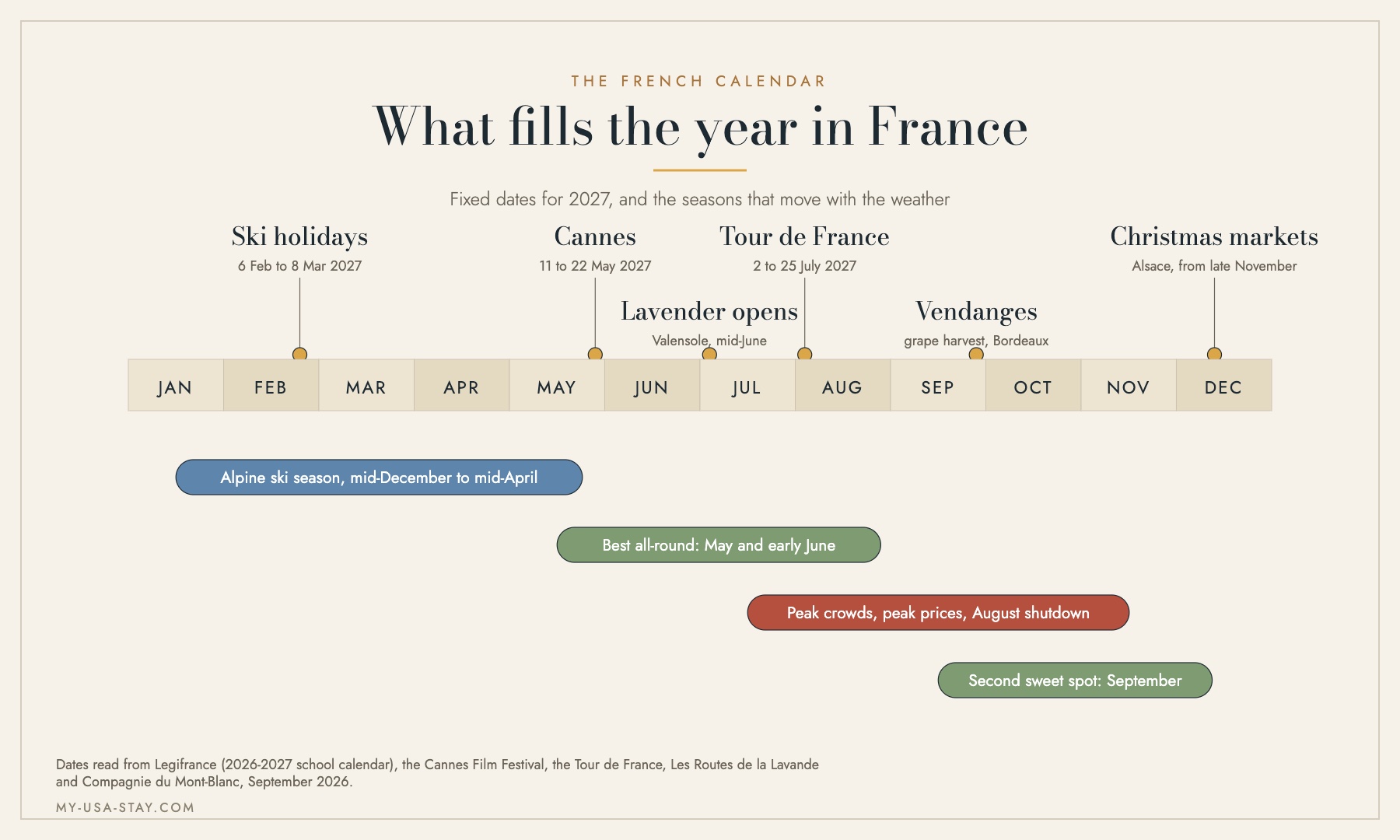
The French year at a glance: fixed 2027 dates, the ski season, the two shoulder sweet spots and the August peak.
Understanding the climate in France
France holds four different climates inside a country smaller than Texas, and the gap between them is wider than most first-time visitors expect. The figures below come from Meteo-France station records, the 1991 to 2020 normals, rather than from a model.
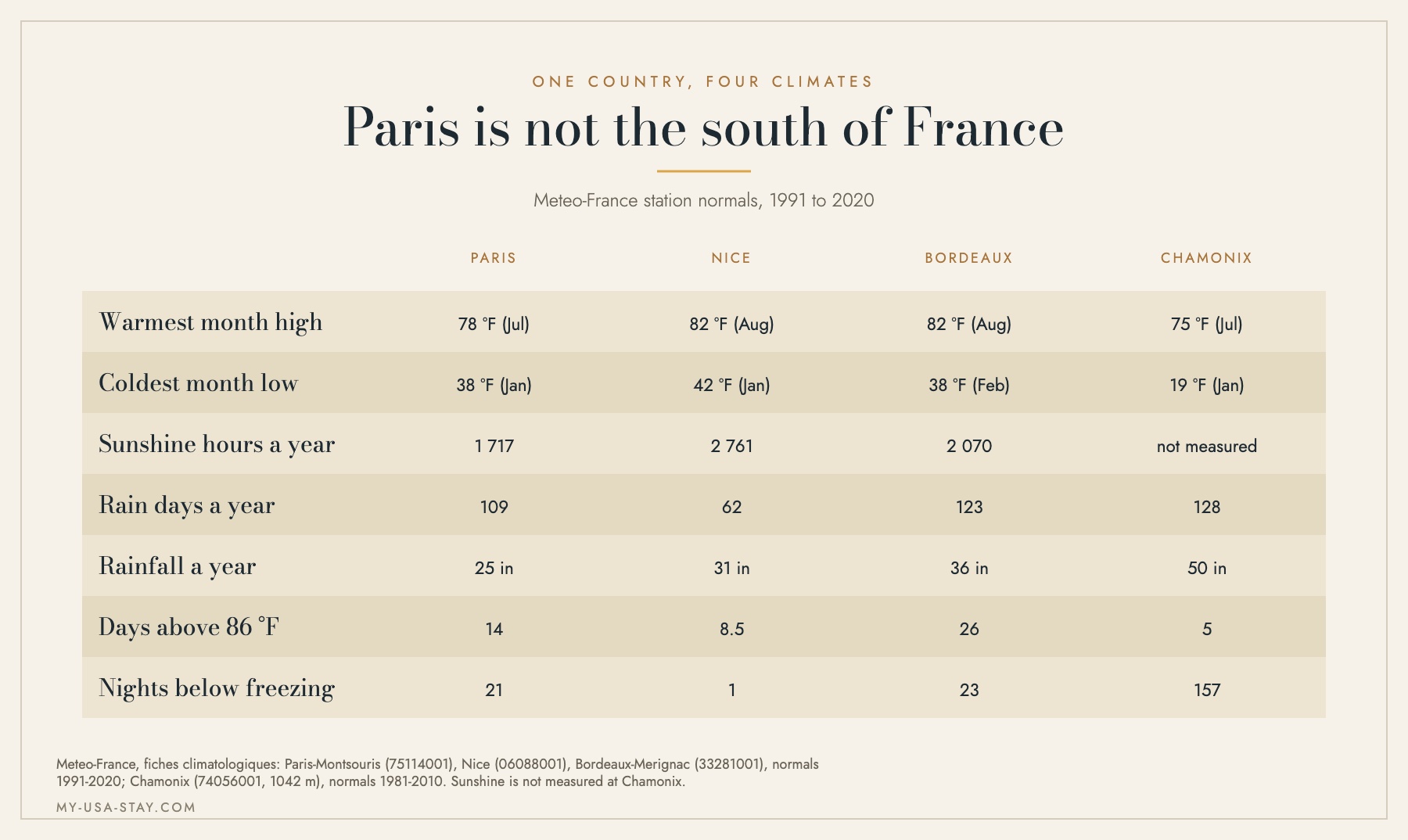
Four French climates compared, from Meteo-France station normals. Nice gets 2,761 hours of sun a year, Paris 1,717.
Paris sits in the oceanic north. Its warmest month, July, averages a high of 78 °F (25.7 °C), and the city records only 14 days a year above 86 °F (30 °C). Rain is spread evenly instead of falling in a season: 25 inches (634 mm) over 109 days. A Paris umbrella is for drizzle, not for downpours.
Nice and the Mediterranean coast behave differently. July there brings 0.5 inches (13.6 mm) of rain across 1.8 rain days, the driest month of any French city in this comparison. The catch comes later: November is the wettest month on the Riviera, with 5.4 inches (138.4 mm). On the coast the rain is concentrated in autumn, and it arrives in storms rather than in showers.
Bordeaux and the southwest are the warm and wet combination. August peaks at 82 °F (27.6 °C), the city counts 26 days a year above 86 °F (30 °C), more than Nice, and still takes 36 inches (925 mm) of rain. That is the climate the vineyards of the Gironde are built on.
Chamonix, at 3,420 feet (1,042 m), is another country. Its normals record 157 nights a year below freezing and 50 inches (1,281 mm) of precipitation, much of it snow above the village. In January the average high is 37 °F (2.7 °C) and the average low 19 °F (minus 7.1 °C). Altitude, not latitude, is what decides the French mountains.
The practical rule: a week that splits Paris and Provence in April can mean packing for two seasons. Check the France destination page for where each region sits before you book.
Spring in France, March to May
Spring is the season that rewards patience, because it arrives from the south and works north over about six weeks. In March, Nice already averages 60 °F (15.4 °C) while Paris is at 55 °F (12.8 °C) and Chamonix is still deep in ski season.
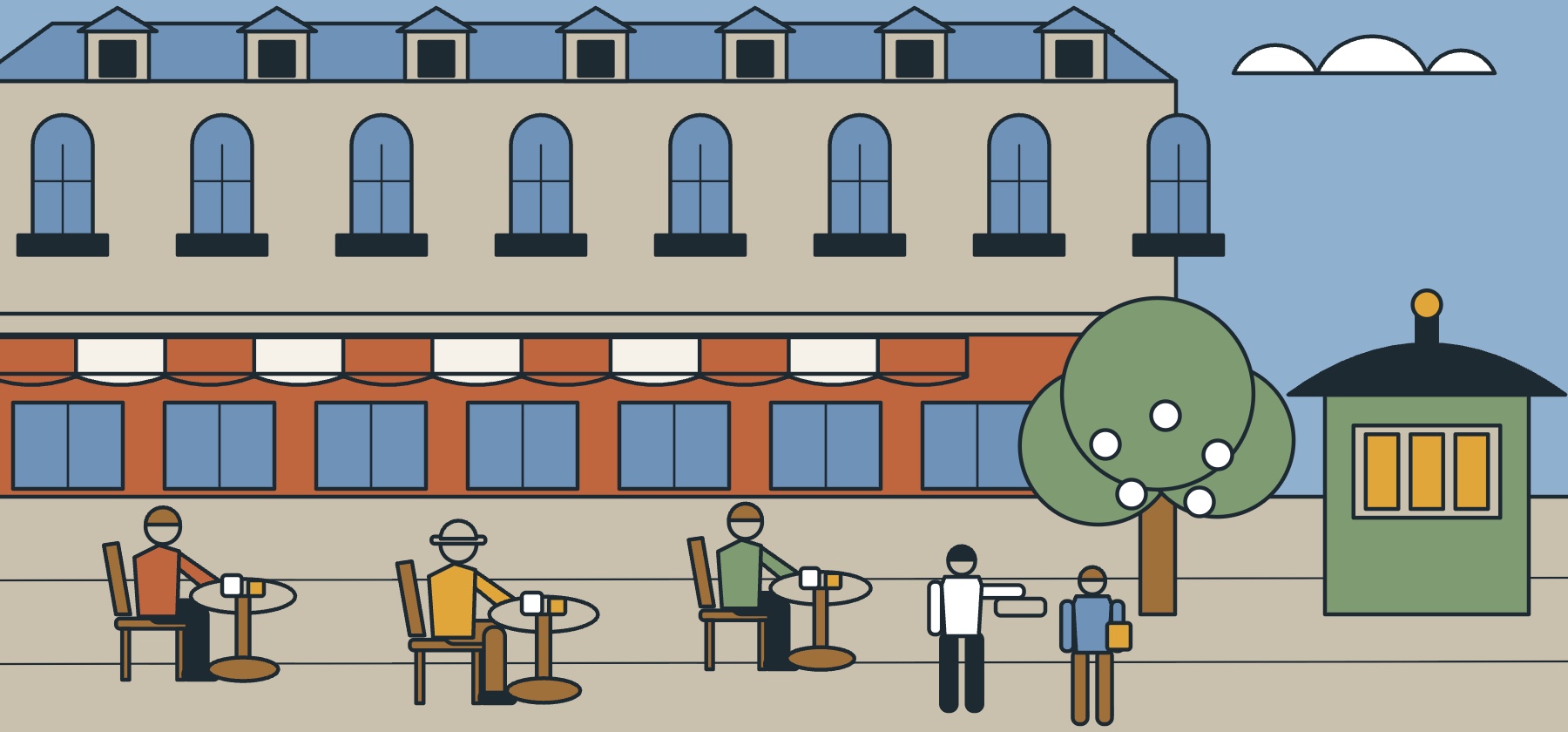
Paris in spring: terraces come out in April and stay out until October. Illustration: my-usa-stay.com.
April is the gamble. Paris gets its driest stretch of the first half of the year, 8.6 rain days, but the highs sit around 62 °F (16.6 °C) and the mornings can start near 46 °F (7.9 °C). May is where the country turns: 68 °F (20.2 °C) in Paris, 70 °F (21 °C) in Nice, gardens open, and daylight lasting past 9 p.m.
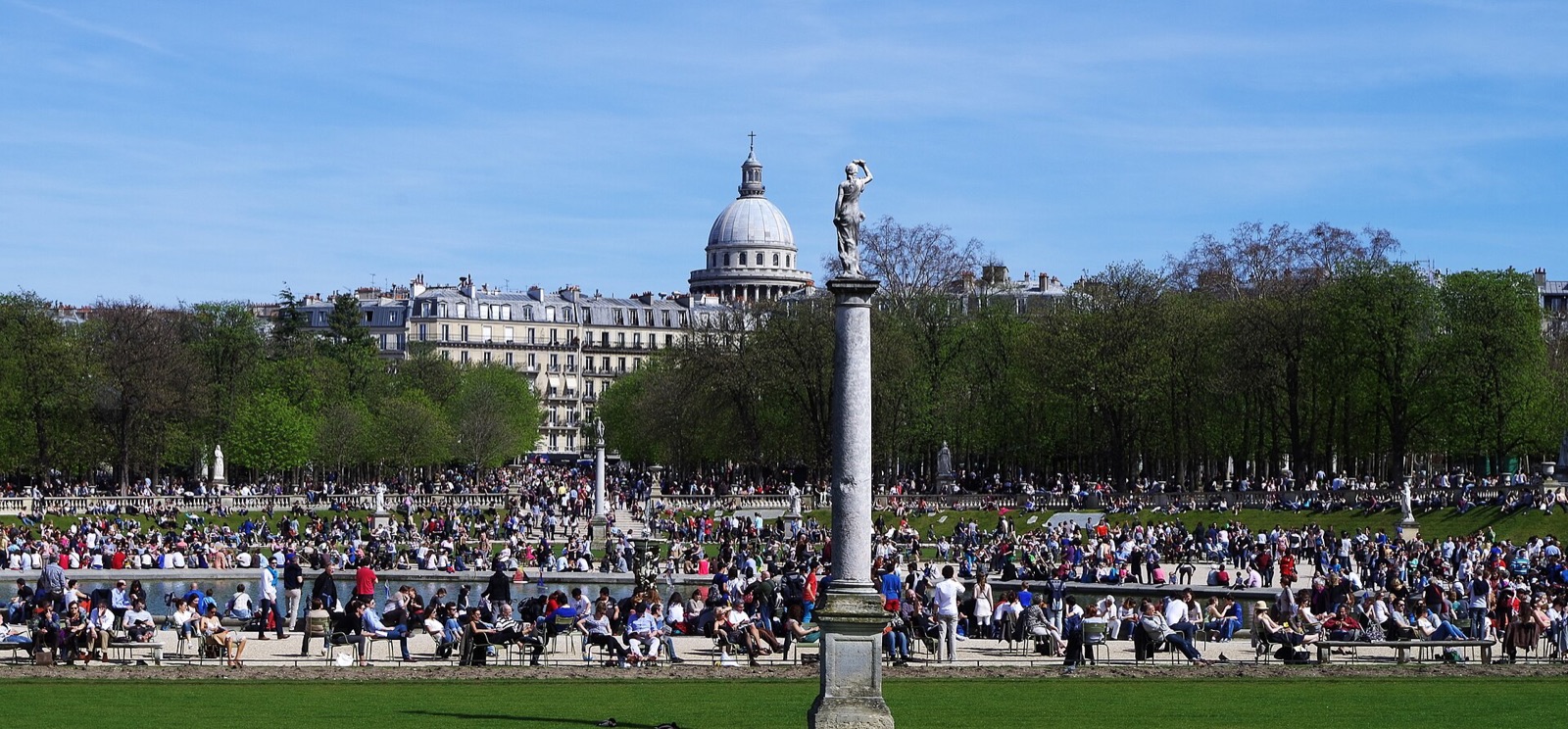
The Jardin du Luxembourg in spring, Paris. Photo: Dinkum, Wikimedia Commons, CC0.

Precautions for a spring trip:
- Pack layers and one waterproof shell. Paris rain in spring is frequent and light, not heavy.
- Watch the French public holidays. In 2027 there are 11, and three fall in May: 1 May and 8 May on Saturdays, Ascension on Thursday 6 May, and Whit Monday on 17 May. The Friday after Ascension is a classic long weekend and roads fill.
- Spring school holidays in 2027 run from 3 April to 3 May across the three French zones, which means four weeks of rolling family travel rather than one peak.
- Mediterranean water is still cold. The sea off Nice averages 64 °F (17.9 °C) in May. This is a terrace season, not a swimming season.
Summer in France, June to August
Summer is the season the French take for themselves, and understanding that is worth more than any packing list. June is the quiet half: Paris at 74 °F (23.4 °C), Nice at 76 °F (24.7 °C), sea at 72 °F (22.2 °C), and French schools still open until the very end of the month. Everything changes in July.
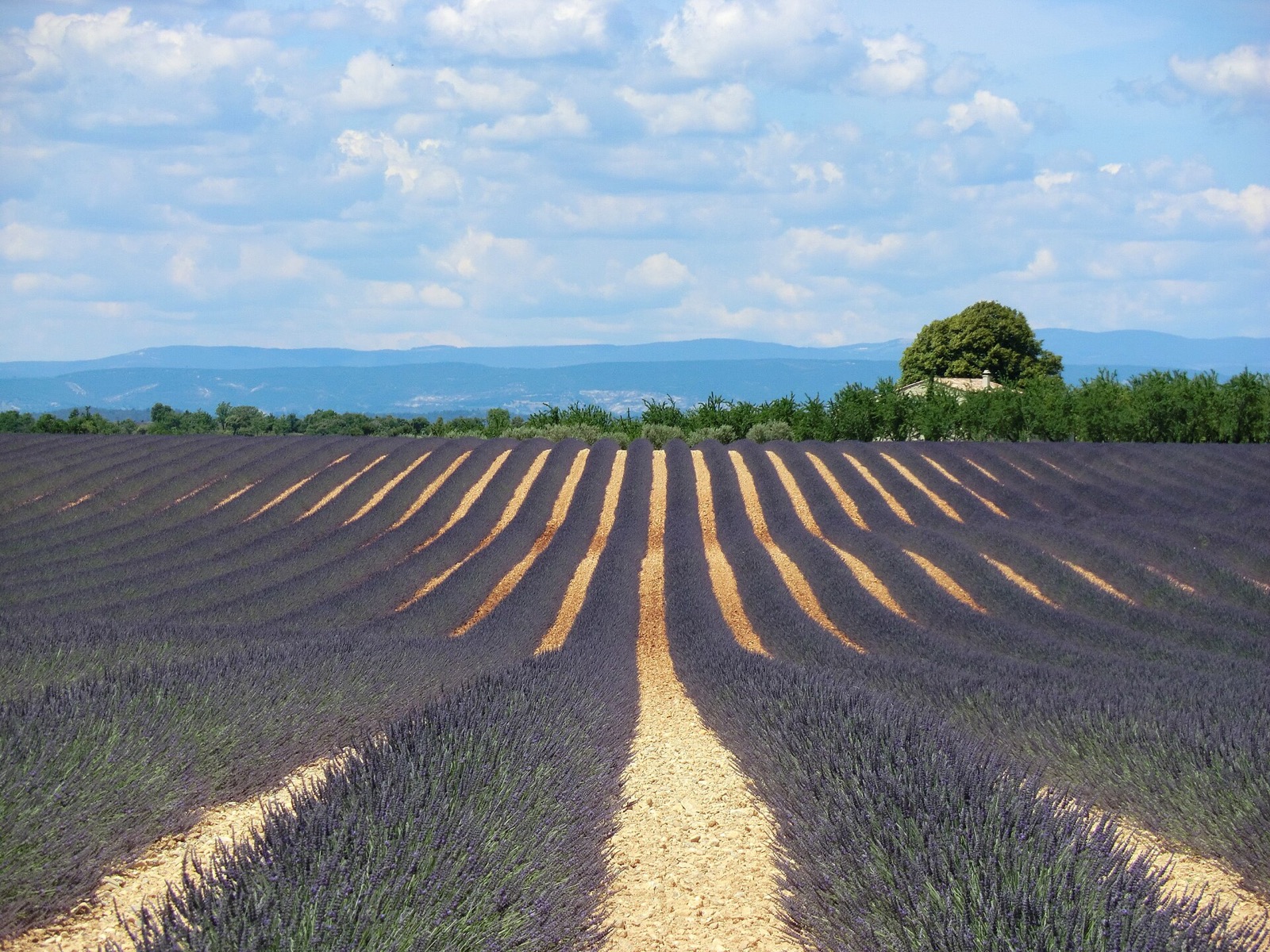
Lavender in flower near Valensole, Provence, where the season opens around mid-June. Photo: Einaz80, Wikimedia Commons, CC BY-SA 4.0.

Lavender is the reason many visitors pick this window. Les Routes de la Lavande, the regional lavender association, places the start of flowering in mid-June in the lowest areas, around Valensole, the Luberon near Apt and the lower Drome valleys. Flowering then climbs: it runs to late July on the plateau d Albion, around Forcalquier and on the montagne de Lure, and into early August in the Haut-Verdon. On the plateau de Sault, full bloom falls in the first half of July, with lavandin following from mid-July to mid-August. Harvest begins in mid-July, and the association is explicit that weather moves the date: a long dry spell brings the cut forward, a storm delays it.
The August shutdown, explained
France does not close in August, but a real share of it does, and the mechanism is written into labour law. Under the rules published by the French administration, an employer may close the business entirely for annual leave, for up to 24 working days, provided staff are told at least one month in advance. Family restaurants, bakeries, neighbourhood shops and small museums use it, most often in the three weeks after 14 July.
What that means in practice:
- In Paris and other big cities, expect a handwritten sign on the door saying fermeture annuelle and a reopening date. The address you researched in March may simply not be open.
- Book restaurants before you fly, and confirm the week you arrive rather than the month.
- Coastal and mountain France does the opposite and runs at full speed. The shutdown empties cities and fills the coast.
- Prices follow the crowd. Paris airports handled 10.1 million passengers in August 2026 alone, against 107 million for the whole of 2025.
Heat is the second August question. Paris averages only 5 days above 86 °F (30 °C) in August, so the city is not reliably hot, but older buildings and the Metro have little air conditioning. Bordeaux, with 8.7 such days in August, is the warmer bet.
Autumn in France, September to November
September is the second best month of the French year and the one most under-used by American visitors. Paris still averages 71 °F (21.5 °C) with only 7.5 rain days, its driest month on the Meteo-France record. Nice sits at 77 °F (24.8 °C), and the sea is at its second warmest, 74 °F (23.6 °C). French schools go back on the first working day of September, so the beaches empty in a single weekend.
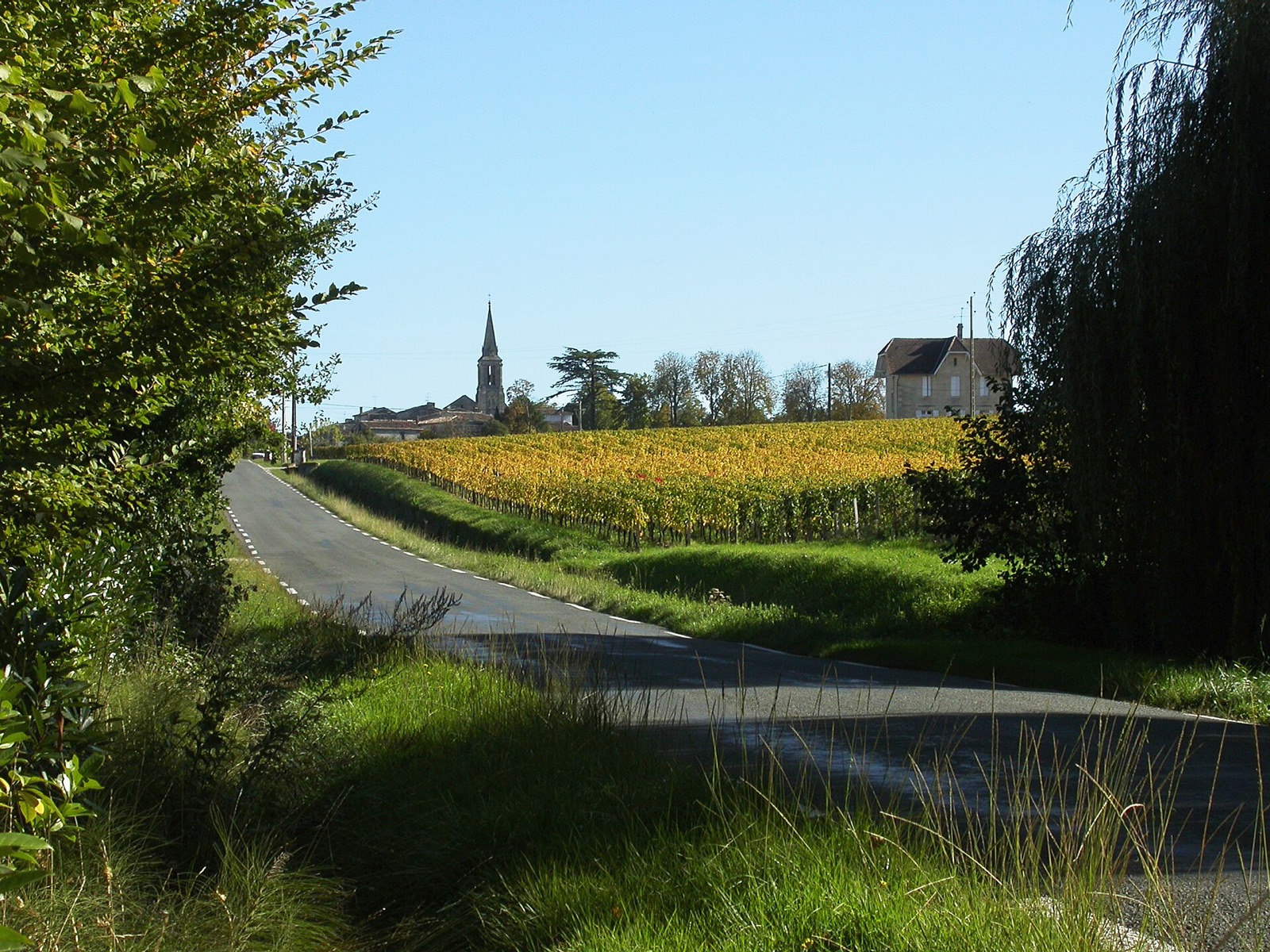
Vineyards near Saint-Emilion, Gironde, at harvest time. Photo: DimiTalen, Wikimedia Commons, CC0.

Autumn is also harvest. The vendanges in the Gironde run through September and into October, depending on the grape and the year, and the vineyards around Saint-Emilion turn colour from late October. If wine is the reason for the trip, see the Gironde and South West France pages for where to base yourself.
October and November are where the country splits again. Paris slides to 62 °F (16.5 °C) then 52 °F (11.1 °C), with rain days climbing back to 10.4 in November. On the Riviera the same two months bring the year's heaviest rain, 4.1 inches (104.4 mm) in October and 5.4 inches (138.4 mm) in November. A wet week on the Mediterranean in November is normal, not bad luck.
- The Toussaint school holiday runs 17 October to 2 November 2026 in every zone at once, the single busiest non-summer week on French roads.
- 1 November and 11 November are public holidays. Many museums outside Paris close on the first.
- November is the cheapest month to be in a French city, and the darkest: Paris records 69.8 hours of sunshine that month against 222.4 in July.
Winter in France, December to February
Winter in France is two holidays wearing the same name. In the lowlands it is a short, grey, inexpensive season. In the Alps it is the peak of the year.
Mont Blanc above Chamonix: the Alpine season runs from mid-December to mid-April. Illustration: my-usa-stay.com.
Paris in January averages a high of 46 °F (7.6 °C) and a low of 38 °F (3.2 °C), with 21 nights a year below freezing. Snow that settles is rare. Nice barely has a winter at all: 56 °F (13.3 °C) in January and a single freezing night a year on average.
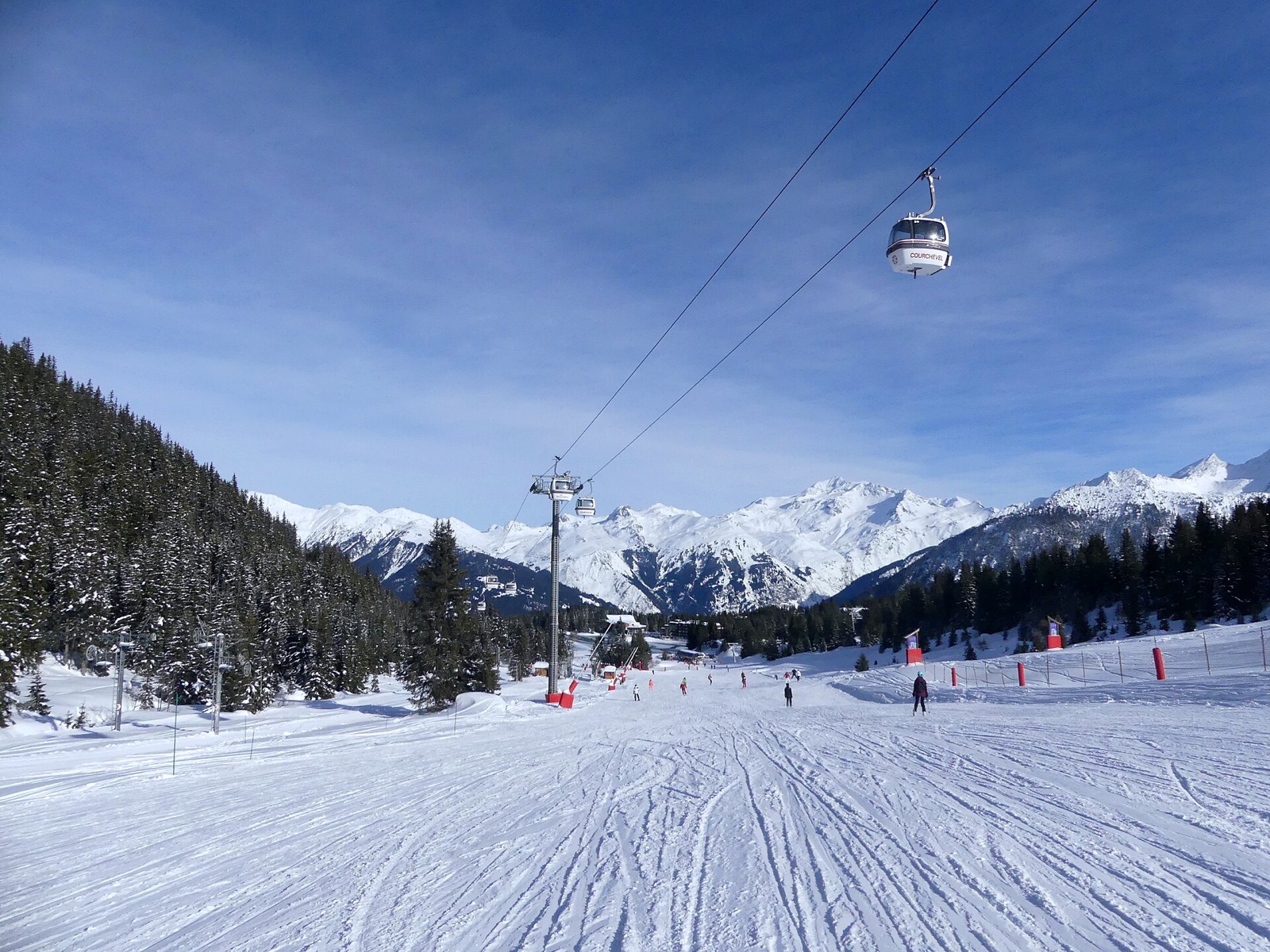
The Verdons piste above Courchevel 1850 in December, French Alps. Photo: Florian Pépellin, Wikimedia Commons, CC BY-SA 4.0.

The Alps run on a different calendar. For winter 2026 and 2027, Compagnie du Mont-Blanc set the Grands Montets and La Flegere to open on 28 November 2026 snow permitting, running continuously from 5 December, with Le Brevent and Balme-Vallorcine from 12 December and the full Chamonix area from 19 December 2026. Those dates were fixed in June, before a single flake fell, so treat them as intentions rather than guarantees.
The crowd calendar matters more than the snow calendar. French winter school holidays in 2027 are staggered across three zones and cover 6 February to 8 March, so the Alps are busy for a solid month, and Christmas week is the most expensive of the year. The cheapest good skiing is mid-January, between the holidays.
France month by month
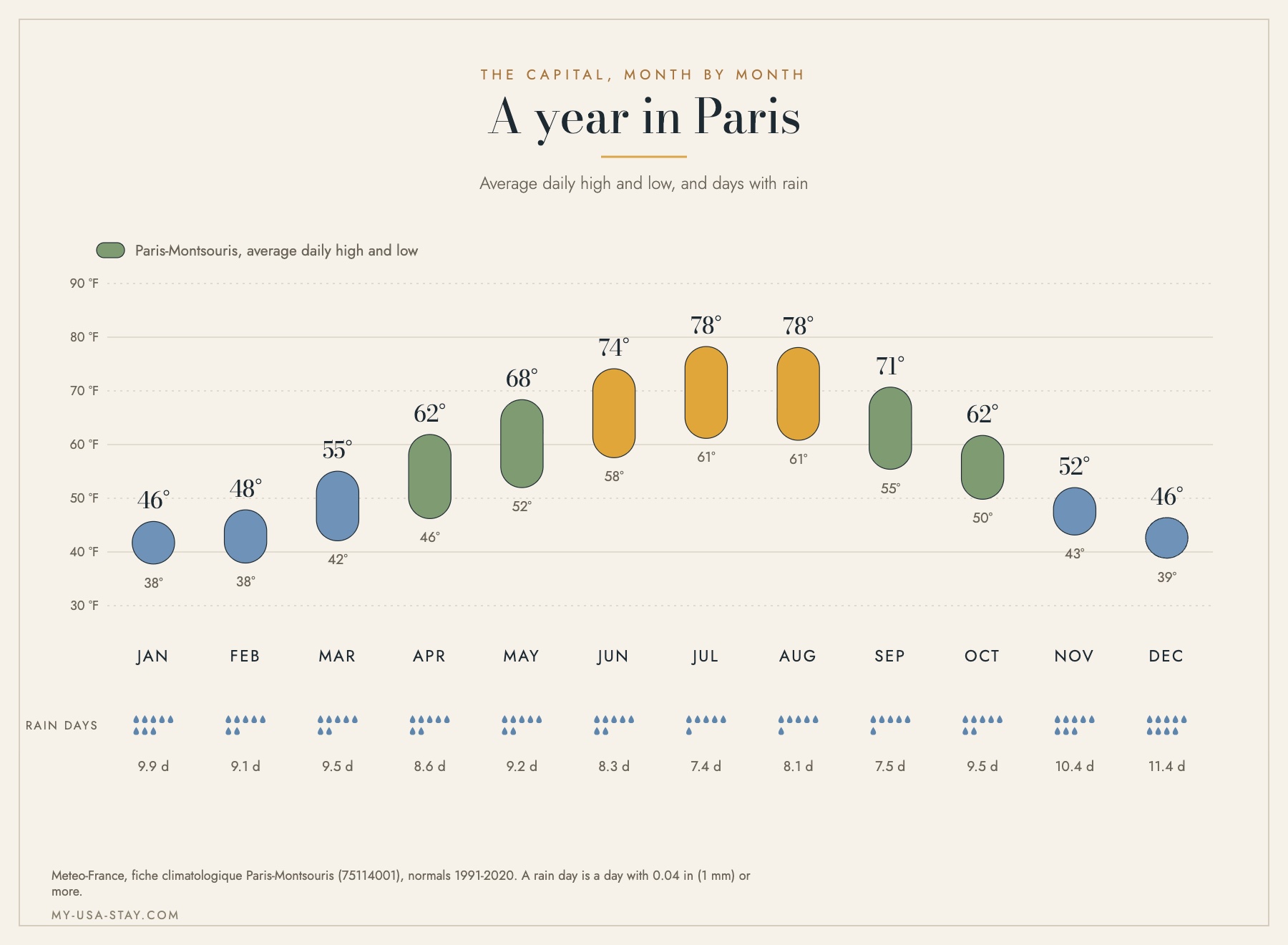
A year in Paris, from the Meteo-France Paris-Montsouris record. July and August peak at 78 F, July is the driest month.
| Month | Paris high / low | Nice high / low | Sea off Nice | Paris rain days | Crowds | Verdict |
|---|---|---|---|---|---|---|
| January | 46 / 38 °F | 56 / 42 °F | 58 °F | 9.9 | Low in cities, high in the Alps | Cold, quiet, cheap |
| February | 48 / 38 °F | 56 / 43 °F | 57 °F | 9.1 | Ski holidays begin | Mountains, not cities |
| March | 55 / 42 °F | 60 / 47 °F | 57 °F | 9.5 | Low | Light returns slowly |
| April | 62 / 46 °F | 63 / 51 °F | 60 °F | 8.6 | Rising, spring holidays | Gardens, variable skies |
| May | 68 / 52 °F | 70 / 58 °F | 64 °F | 9.2 | Moderate | The best month |
| June | 74 / 58 °F | 76 / 65 °F | 72 °F | 8.3 | Building fast | Long days, lavender |
| July | 78 / 61 °F | 82 / 69 °F | 77 °F | 7.4 | Peak from 14 July | Hot, full, festive |
| August | 78 / 61 °F | 82 / 70 °F | 79 °F | 8.1 | Peak on the coast | Crowded and closed |
| September | 71 / 55 °F | 77 / 64 °F | 74 °F | 7.5 | Falls away after the first week | Warm sea, calm |
| October | 62 / 50 °F | 70 / 57 °F | 69 °F | 9.5 | Moderate, Toussaint week | Vineyards, first storms |
| November | 52 / 43 °F | 63 / 49 °F | 64 °F | 10.4 | Low | Grey, cheap, indoor |
| December | 46 / 39 °F | 57 / 44 °F | 60 °F | 11.4 | High in Alsace and the Alps | Markets and snow |
Air temperatures: Meteo-France station normals 1991 to 2020, Paris-Montsouris (75114001) and Nice (06088001). Rain days are days with 0.04 in (1 mm) or more. Sea temperature: NOAA OISST monthly means 2016 to 2025 for the Mediterranean off Nice. Crowd column follows the French school calendar set by decree of 22 October 2025 and the INSEE tourist season figures for 2025.
The best time for what you want to do
The right month depends on the trip, not on the country. Here is how the year splits by purpose.
- Paris and the museums: late September and October. Warm enough for terraces, past the summer queues, before the November rain sets in.
- Swimming on the Mediterranean: July to late September. The sea holds 74 °F (23.6 °C) in September and 69 °F (20.6 °C) in October, so the season runs later than the school calendar suggests.
- Lavender photography: the last week of June and the first two weeks of July, at the altitude that suits your dates. Valensole opens first, Sault peaks in early July.
- Wine and harvest: September into early October in the Gironde, when the vendanges are under way and hotel rates have dropped from August.
- Skiing: mid-January for value, February for reliable cover, mid-March for long days on snow. Avoid Christmas week and the February zone holidays if price matters.
- Walking and cycling: May, June and September. Chamonix averages 13.6 rain days in May, its wettest month for rain days, so early summer in the Alps is less settled than the postcards suggest.
- Christmas markets: the last week of November through Christmas Eve, mostly in Alsace.
- Lowest prices: mid-January, and November outside the Toussaint week.
Events that shape the year
A handful of fixed dates move hotel prices across whole regions, and they are worth checking before you lock in flights.
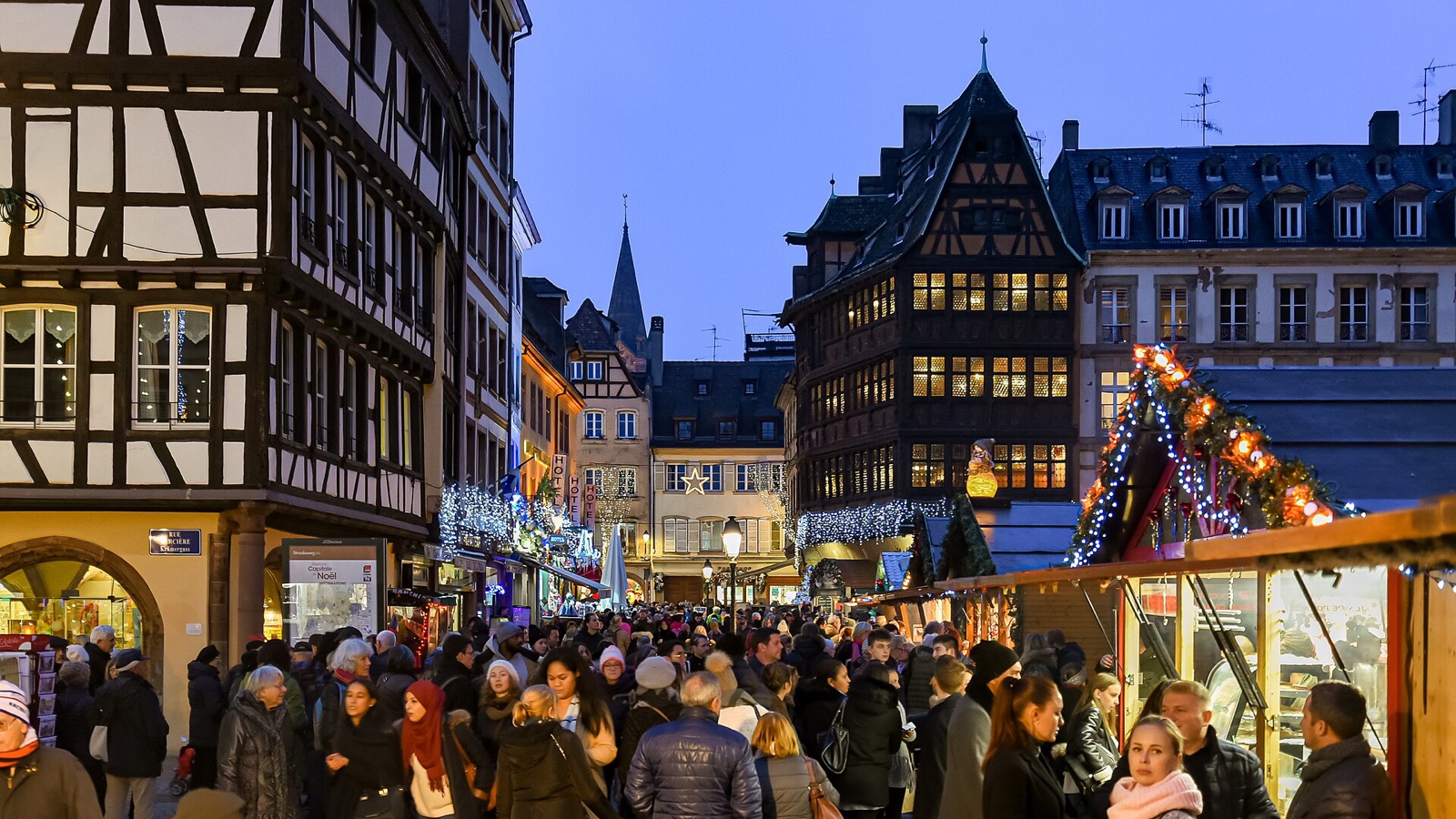
The Christmas market in Strasbourg, Alsace, which opens in late November. Photo: Jorge Franganillo, Wikimedia Commons, CC BY 2.0.

- Cannes Film Festival, 80th edition, 11 to 22 May 2027. The whole Riviera prices up, not just Cannes. Plan the French Riviera around it rather than through it.
- Roland-Garros, qualifying from 17 May and the main draw 23 May to 6 June 2027, fills western Paris for three weeks.
- Bastille Day, 14 July, is the national holiday and the practical start of the French summer exodus.
- The Tour de France is announced for 2 to 25 July 2027, with a start in Britain and the race reaching France on 5 July. Towns on the route sell out months ahead and roads close on the day.
- Christmas markets open in Alsace from late November. Strasbourg had not published its 2027 dates when this page was written, so check the city site before booking.
- Public holidays 2027: 1 January, 29 March, 1 May, 6 May, 8 May, 17 May, 14 July, 15 August, 1 November, 11 November, 25 December. Alsace-Moselle adds Good Friday, 26 March, and 26 December.
Where to go, region by region
Season and region are the same question in France, because the same week is a different trip depending on where you spend it.
The Promenade des Anglais in Nice: the sea holds 69 F into October. Illustration: my-usa-stay.com.
Paris and the Ile-de-France work in every month except August, when part of the city closes, and they are at their best in May, June, September and October. Start with Paris, Greater Paris and Ile-de-France.
The Riviera and Provence have the longest usable season in the country, from April to late October, with the sea still at 69 °F (20.6 °C) in October. See Alpes-Maritimes, Provence and Bouches-du-Rhone. For the wider coast, the South of France and Gulf of Lion pages cover the stretch west of Marseille.
The southwest peaks in September, when Bordeaux is still at 76 °F (24.2 °C) and the harvest is on. See Gironde, South West France and, for the pilgrim routes that cross it, Santiago's route.
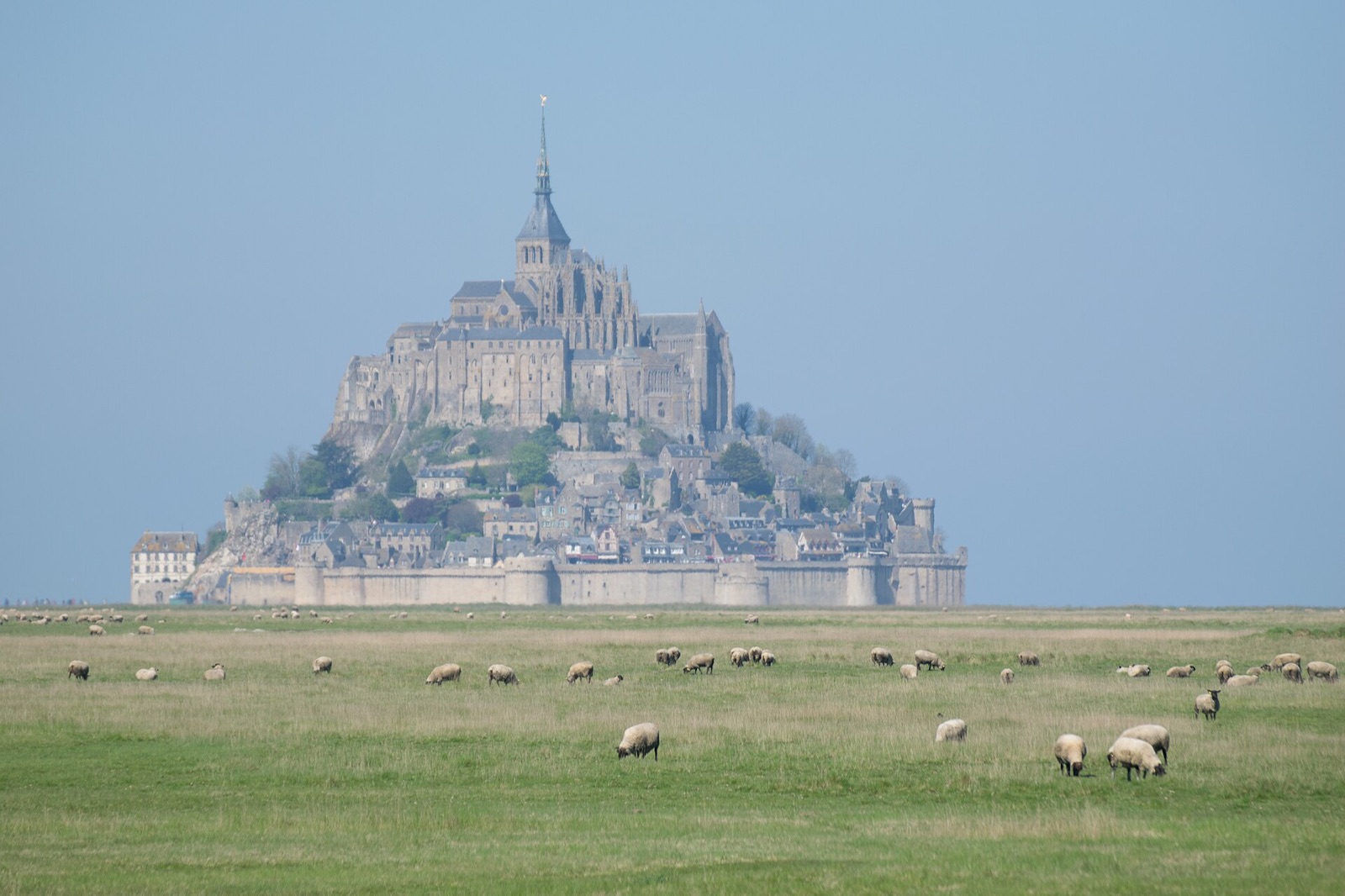
Mont Saint-Michel and its salt meadows in April, Normandy. Photo: Antoine Lamielle, Wikimedia Commons, CC BY-SA 4.0.

The east and the mountains reverse the calendar: December to April for snow, July and August for high trails. See South East France and the Saint-Etienne area. Our France guide, with 102 addresses, 26 maps and three itineraries, sets out the routes in detail.
Getting there from the United States
The border itself changed recently, and it is the part of a France trip most American guides have not updated. Since 10 April 2026, the European Entry/Exit System, known as EES, is fully operational. It began a gradual rollout on 12 October 2025 and now applies at every external Schengen border.
What EES means for you, according to the French Ministry for Europe and Foreign Affairs:
- There is nothing to do before you travel. Registration happens at the border.
- Your facial image and, for anyone aged 12 or over, your fingerprints are recorded on first entry.
- EES replaces the passport stamp. Entries and exits are now recorded electronically across the 29 participating countries.
- The short-stay limit is unchanged: 90 days in any 180, counted across all of those countries together, not per country.
- Expect slower lines at first entry, especially at a hub like Paris-Charles de Gaulle in July and August.
ETIAS, the separate travel authorisation for visa-exempt travellers, is not in force yet. The European Union has pointed to a launch at the end of 2026 at the earliest, which in practice means 2027. It is not required for a France trip booked today, and no site can sell you one.
On time zones, Paris is normally 6 hours ahead of New York and 9 hours ahead of Los Angeles. Twice a year that gap shrinks by an hour, because the two continents change clocks on different dates. Europe moves on the last Sunday of March and the last Sunday of October, the United States on the second Sunday of March and the first Sunday of November. In 2027 the United States springs forward on 14 March and Europe waits until 28 March, so for those two weeks Paris is only 5 hours ahead of New York. The same happens between 31 October and 7 November 2027. If you are booking a connection or a call home in those windows, check the arrival time twice.
Paris is the main gateway, with 107 million passengers through its two airports in 2025, but Nice, Lyon, Marseille and Bordeaux all take long-haul or one-stop traffic and can save you a domestic leg. If you are comparing a French trip with a home one, our guide to the best time to visit the USA uses the same method.
FAQ
What is the best month to visit France?
May is the single best month. Paris averages a high of 68 °F (20 °C), daylight runs past 9 p.m., gardens and terraces are open, and French schools are still in session, so crowds and prices sit well below July. September is a close second, with warmer sea and a calmer coast.
What is the cheapest time of year to visit France?
Mid-January and November, outside the Toussaint school break, are the cheapest weeks. Cities are quiet, hotel rates fall, and flights from the United States are at their lowest demand. The trade is daylight: Paris records 59 hours of sunshine in January against 222 in July.
What is the rainy season in France?
France has no monsoon. In Paris rain is spread across the year, 25 inches (634 mm) over 109 days, slightly heavier from October to December. The Mediterranean coast is different: Nice takes most of its rain in October and November, and almost none in July, with 1.8 rain days that month.
Why does France take August off?
French labour rules let an employer close the whole business for annual leave, for up to 24 working days, with one month's notice to staff. Combined with school holidays that start in early July, this concentrates the national break into the three weeks after 14 July. Cities empty, the coast fills.
Is August a bad time to visit France?
August is poor for cities and good for coast and mountains. Paris keeps its major museums open but loses many independent restaurants and shops to annual closure. The Mediterranean is at its warmest, 79 °F (25.9 °C), and the Alps are at peak hiking season, so it depends entirely on where you go.
When is the lavender in bloom in Provence?
Flowering opens in mid-June in the lowest areas, around Valensole and the Luberon, and runs to late July at altitude, on the plateau d Albion and the montagne de Lure. The plateau de Sault peaks in the first half of July. Harvest starts in mid-July, so late July fields may already be cut.
When is ski season in the French Alps?
Mid-December to mid-April, with the best combination of snow and daylight in February and March. Chamonix planned its first lifts for 28 November 2026 and the full area for 19 December 2026. February is crowded because French school holidays run across three zones from 6 February to 8 March 2027.
How many days in France do I need?
Ten to fourteen days lets you pair one city with one region without spending the trip on trains. A common split is four nights in Paris and six on the Riviera or in the southwest. France is compact, but Paris to Nice is still about 430 miles (690 km), so plan one long transfer rather than three short ones.
Read next
- Where to stay in France, region by region.
- Our France guide: 102 addresses, 26 maps, three itineraries.
- The French Riviera, for the longest season in the country.
- Provence, for lavender, hill villages and the summer light.
- The best time to visit the USA, and where to stay in Italy if you are pairing two countries.