The best time to visit Japan is late March to mid April for cherry blossom and late October to early December for autumn colour and the clearest skies of the year. Skip the rainy season, which the Japan Meteorological Agency dates on average from June 7 to July 19 around Tokyo, and think twice about August, when Tokyo averages a high of 88°F (31.3°C) and typhoons approach three times a month. Three weeks fill every train and hotel in the country: Golden Week, Obon and the New Year. Japan received 42,683,301 foreign visitors in 2025. Start planning from our home page.
The short answer
- Best overall: late October to early December. Dry, clear, maple colour moving south, and no national holiday week in the way.
- Best for cherry blossom: the last week of March in Tokyo and Kyoto, mid April in Sendai, late April in Sapporo. The blossom front covers 40 days between Kyushu and Hokkaido.
- Worst for weather: mid June to mid July in the rain, then August for heat and humidity. Kyoto averages 93°F (33.7°C) in August.
- Worst for crowds: April 29 to May 5 (Golden Week), August 13 to 16 (Obon) and December 29 to January 3. Those are domestic weeks, not foreign ones.
- Typhoon season: July to October, peaking in August and September with 3.3 typhoon approaches a month on JMA normals.
- Cheapest for Americans: late January and February, the two months when US arrivals fall to about 185,000 a month against 345,000 in June.
- Warmest sea: Okinawa, 85°F (29.4°C) in August and still 82°F (27.6°C) in October.
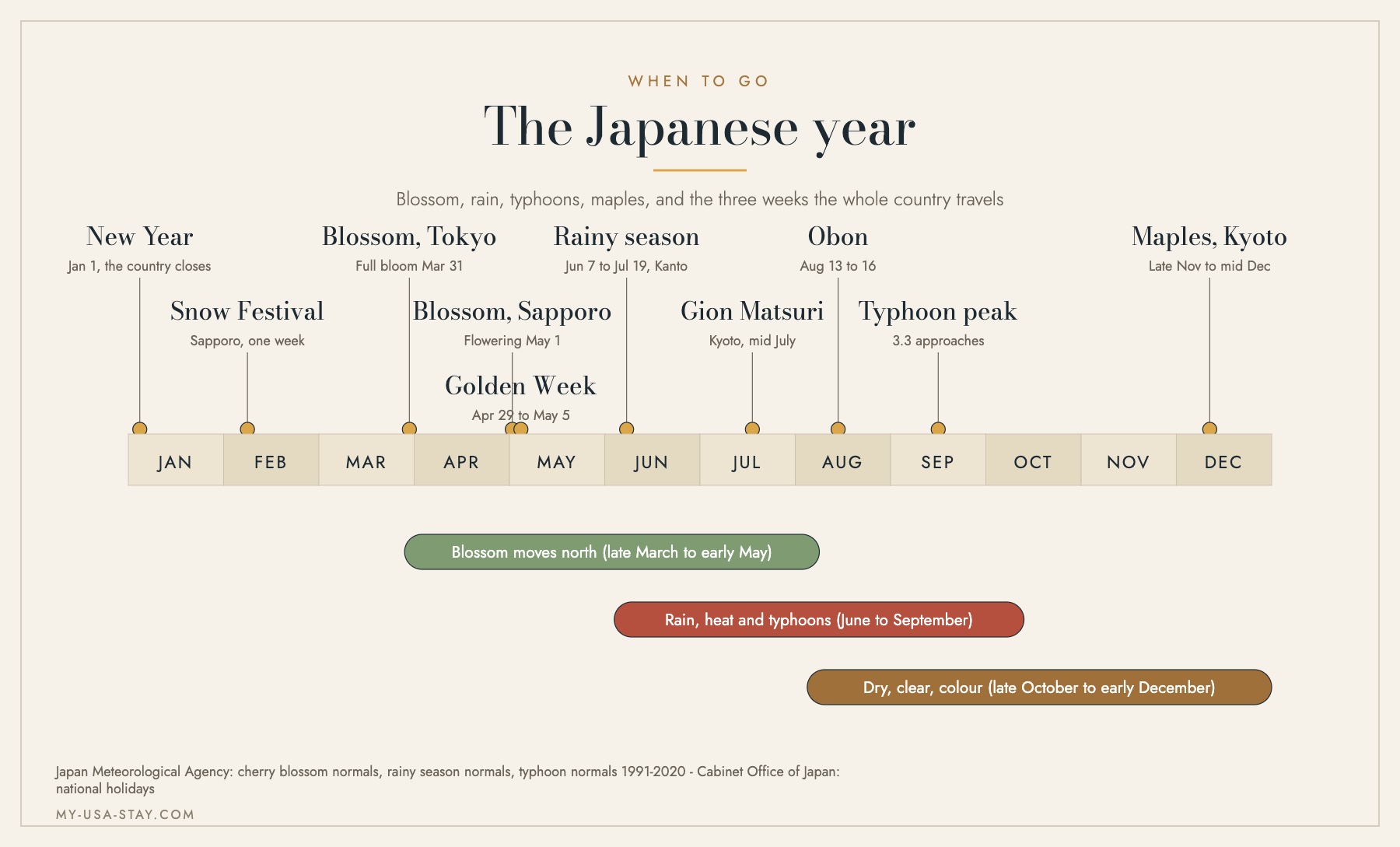
The Japanese year at a glance, from the New Year closure to the maples of Kyoto.
Understanding the climate in Japan
Japan is not one climate, it is a 1,900 mile arc that runs from the latitude of Montreal to the latitude of Miami. The four cities below are all measured by the Japan Meteorological Agency at its own stations, on the 1991 to 2020 normals. We use JMA rather than a global reanalysis grid because a model cell placed over Okinawa or the Ishikari plain is half ocean, and it flattens both the highs and the lows by several degrees.
- Sapporo, Hokkaido, 43°N. January high 31°F (-0.4°C), low 20°F (-6.4°C), and 54 inches of snow in January alone. August high 80°F (26.4°C). This is the only part of Japan the JMA does not give a rainy season, and the only part with a real ski economy.
- Tokyo, 35°N, on the Pacific. January high 50°F (9.8°C), August high 88°F (31.3°C). Winter is dry and bright: 2.4 inches of rain in January against 9.2 inches in October.
- Kyoto, 35°N but inland in a basin ringed by hills. Hotter than Tokyo in summer by 5°F and colder in winter, with 93°F (33.7°C) as the August average high. The basin traps heat, which is why Kyoto in August is harder work than its latitude suggests.
- Naha, Okinawa, 26°N, subtropical. January high 68°F (19.8°C), August high 89°F (31.8°C), and 11.2 inches of rain in June. The sea off Okinawa runs from 71°F (21.8°C) in February to 85°F (29.4°C) in August, on NOAA satellite measurements.
The gap that matters for planning: in January, Sapporo and Naha are 37°F apart in daytime high. In August they are 9°F apart. Summer flattens Japan, winter splits it in two.
Spring, March to May: the blossom front
Spring is the reason most Americans book Japan, and it is the one season where a week either side changes the trip completely. The Japan Meteorological Agency observes the flowering and full bloom of the somei yoshino cherry at stations across the country, and those observations give a normal date for each city.
- Fukuoka: flowering March 22, full bloom March 31
- Tokyo: flowering March 24, full bloom March 31
- Nagoya: flowering March 24, full bloom April 2
- Hiroshima: flowering March 25, full bloom April 3
- Kyoto: flowering March 26, full bloom April 4
- Osaka: flowering March 27, full bloom April 4
- Sendai: flowering April 8, full bloom April 13
- Sapporo: flowering May 1, on a different cherry species
Forty days separate Fukuoka from Sapporo. That is the single most useful fact about a Japanese spring: if you miss the blossom in Kyoto you can drive or ride north and catch it again.
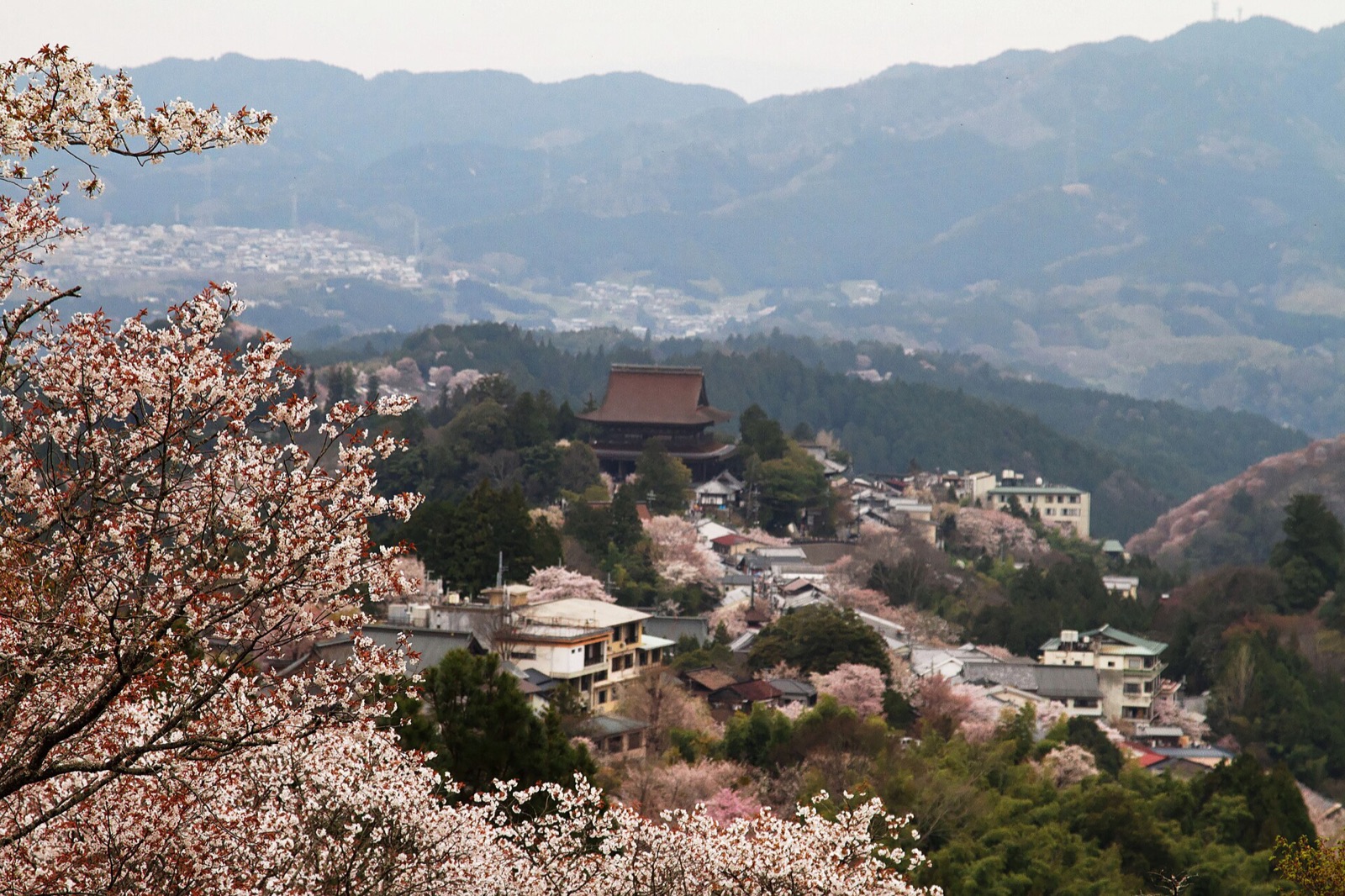
Mount Yoshino, Nara prefecture, where the blossom climbs the hill in waves over two weeks. Photo: KimonBerlin, Wikimedia Commons, CC BY-SA 2.0.

The forecast is a real published product, not a guess. The Japan Meteorological Corporation, a private forecaster, issues a national bloom forecast through the winter and spring and updates it repeatedly. In 2026 it published fourteen successive forecasts, the last on April 23, working from autumn and winter low temperatures, the state of the trees and accumulated warmth since the start of the year. The 2026 season ran early almost everywhere: Tokyo flowered on March 19 and reached full bloom on March 28, three days ahead of normal, while Kyoto flowered March 23 and peaked March 30. Sapporo flowered on April 18, thirteen days early.
Practical consequences for a spring trip:
- Book hotels for late March in Tokyo and Kyoto before the first forecast comes out in January. Prices move the day it is published.
- Full bloom lasts roughly a week, and rain or wind shortens it. Plan the blossom as a bonus on a fixed itinerary, not as the itinerary.
- Head north if you are late. Sendai in mid April and Hirosaki or Sapporo at the end of April are the second and third acts.
- April 29 to May 5 is Golden Week. In 2027 Showa Day falls on April 29, then Constitution Day on May 3, Greenery Day on May 4 and Children's Day on May 5. Shinkansen reservations sell out, hotel rates double, and every famous site is at capacity.
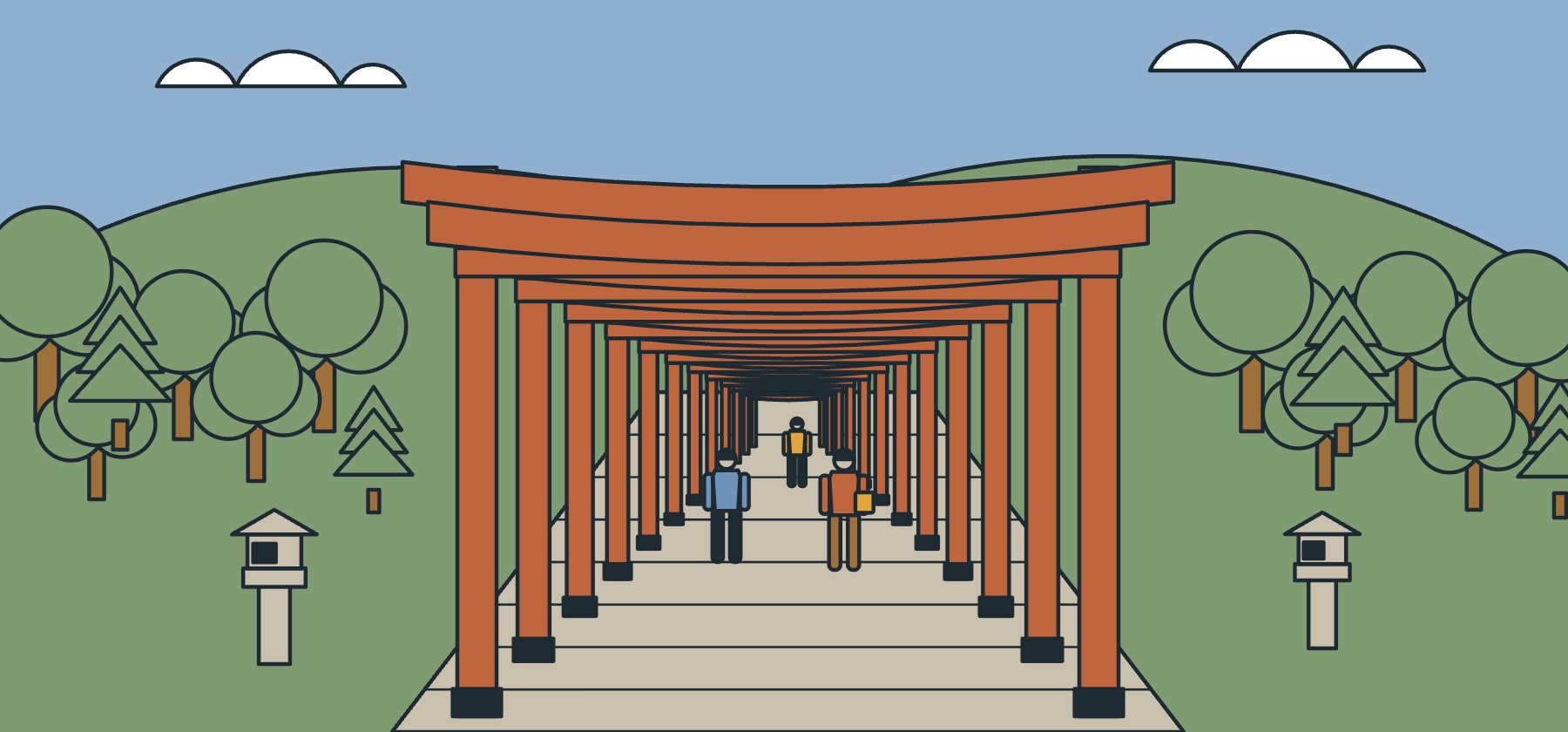
The torii path of Fushimi Inari in Kyoto, walkable in any season and emptiest before eight in the morning. Illustration: my-usa-stay.com.
Late May is quietly one of the best windows in the calendar and almost nobody talks about it. Golden Week is over, the rains have not started on Honshu, Kyoto averages 77°F (25.1°C) and the temples are empty by comparison. Our Kinki region guide covers Kyoto, Osaka and Nara, which is where most first trips spend their second week.
Summer, June to August: tsuyu, heat and typhoons
Japan has a named rainy season, the tsuyu, and the JMA publishes its average start and end date for every region. These are the 1991 to 2020 normals:
- Okinawa: May 10 to June 21
- Southern Kyushu: May 30 to July 15
- Northern Kyushu: June 4 to July 19
- Shikoku: June 5 to July 17
- Chugoku, Kinki and Tokai: June 6 to July 19
- Kanto and Koshin, including Tokyo: June 7 to July 19
- Northern Tohoku: June 15 to July 28
- Hokkaido: no rainy season is declared
In 2026 the Kanto rainy season opened on June 2 and closed on July 19, while the Kinki region got out early on July 9. The tsuyu is not a monsoon and it does not rain all day. Tokyo records 14 rain days in June, its wettest month by frequency, but June gets 6.6 inches against October's 9.2. The problem is humidity and grey light, not volume.
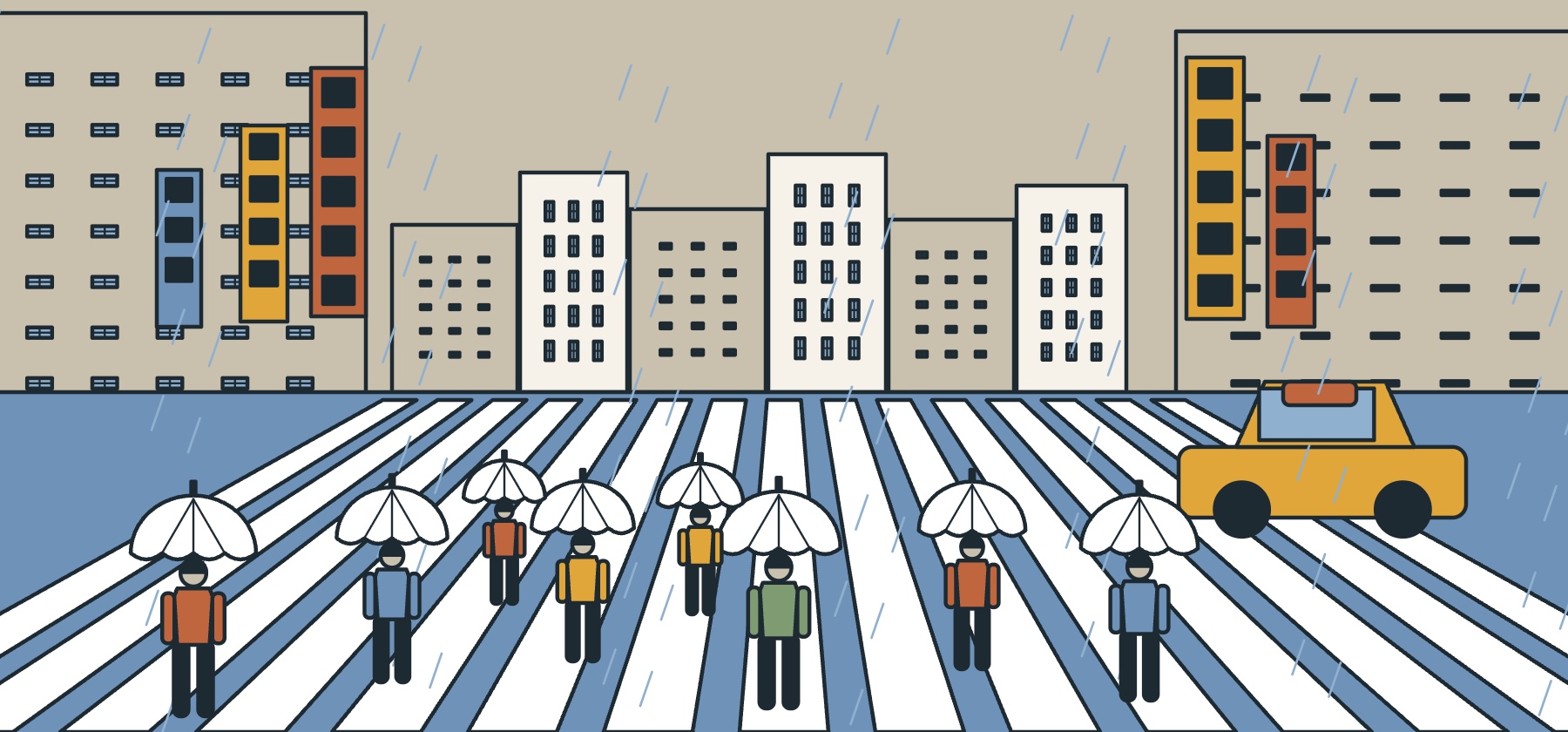
Tokyo during the tsuyu. The clear umbrella is a summer uniform, not a cliche. Illustration: my-usa-stay.com.
Typhoons are the second summer variable, and the JMA normals are precise about the risk. Across the year 25.1 typhoons form in the western Pacific, 11.7 come close enough to Japan to count as an approach, and 3.0 make landfall. By month, approaches run 2.1 in July, 3.3 in August, 3.3 in September and 1.7 in October. Landfalls peak in September at 1.0. A typhoon rarely ruins a two week trip, but it will cancel a day of trains and a flight to Okinawa, which is why travel insurance and a loose itinerary matter more in September than in any other month.
Precautions worth taking for a summer trip:
- Carry the umbrella. Every convenience store sells a clear one for a few hundred yen, and Japanese cities are built around the assumption that you have one.
- Move sightseeing to the morning. Kyoto's afternoon in August is not a walking city.
- Do not book a tight connection in early September. Build a spare day around any domestic flight.
- Avoid August 13 to 16. Obon is not a public holiday but it is the week the whole country goes home, and Mountain Day on August 11 pushes the exodus earlier.
Summer does buy two things nothing else does. Mount Fuji can only be climbed in summer: the official portal run by Yamanashi and Shizuoka prefectures closes the season on September 10, and every climber now pays a 4,000 yen entry fee, with a daily cap of 4,000 climbers on the Yoshida trail. And the festival calendar is at its densest, from Kyoto's Gion Matsuri through July to fireworks nights all over the country in August.
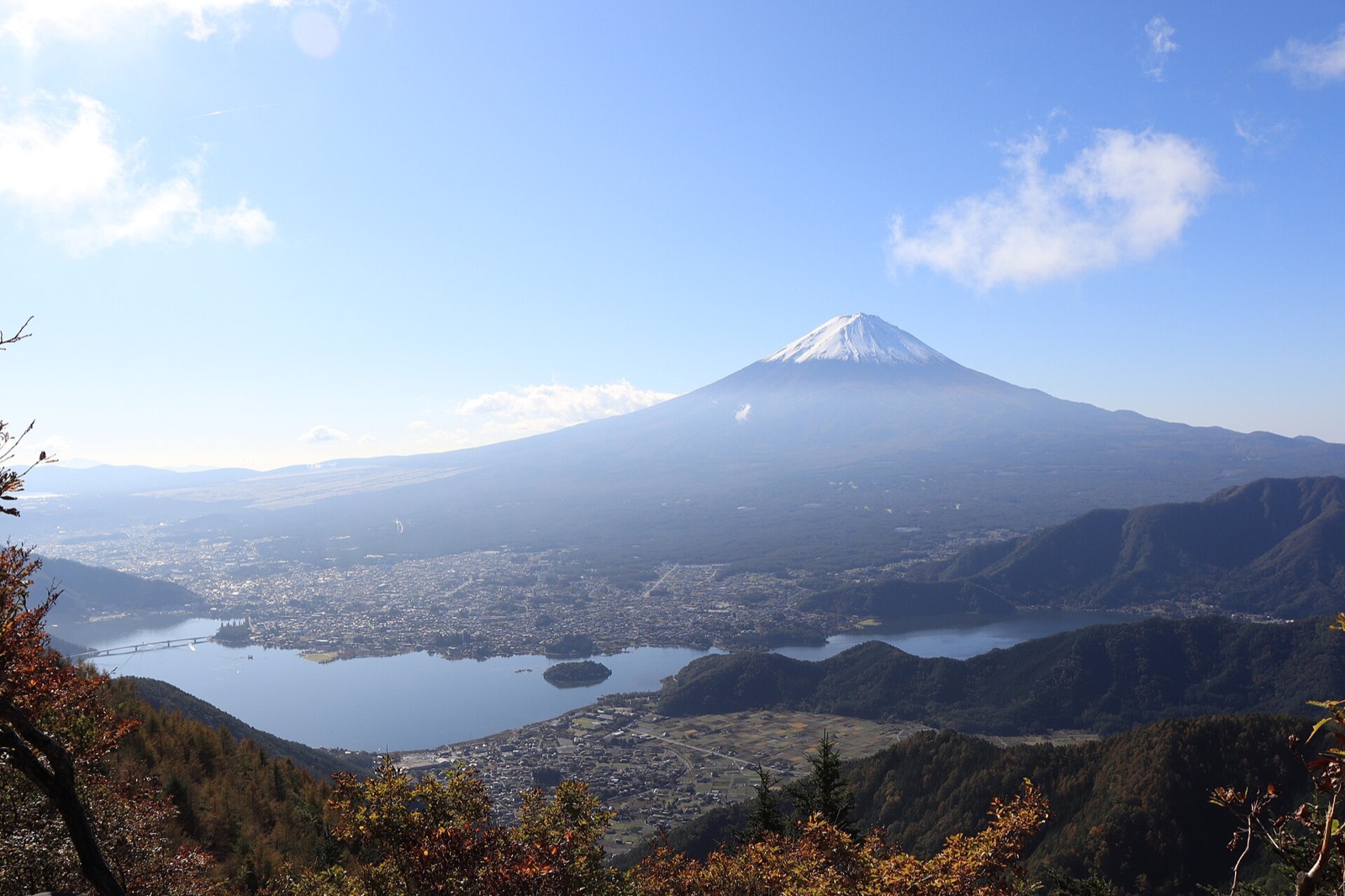
Mount Fuji from Shindo Pass above Lake Kawaguchi. The climbing season closes on September 10. Photo: Alpsdake, Wikimedia Commons, CC BY-SA 4.0.

Autumn, September to November: the best month is not the one you think
September is the most misunderstood month in Japan. It is the year's quietest for visitors, with 3,267,228 foreign arrivals in September 2025, the lowest of the twelve months. It is also the peak of the typhoon season and still hot, with Tokyo averaging 82°F (27.5°C). That trade is the whole decision: empty temples and cheaper rooms, against a real chance of losing a day to weather.
October flips it. Arrivals jumped to 3,896,524 in October 2025, within a few thousand of April, the busiest month of the year. The weather is the reason: Tokyo drops to a 72°F (22.0°C) high, typhoon approaches halve to 1.7, and the light turns. The crowd is real but it is spread across the country rather than concentrated on one flowering week.
Autumn colour runs the opposite way to the blossom. It starts in Hokkaido in early November and finishes in Kyushu in mid December. The Japan Meteorological Corporation, the same forecaster that publishes the bloom dates, issues a koyo forecast each September. For 2026 it put Tokyo's maples around November 29 and Kyoto's around December 11, with the ginkgo yellowing a fortnight earlier in both cities. Nikko and the mountains above Lake Chuzenji peak in the second half of October, six weeks before the cities below them.
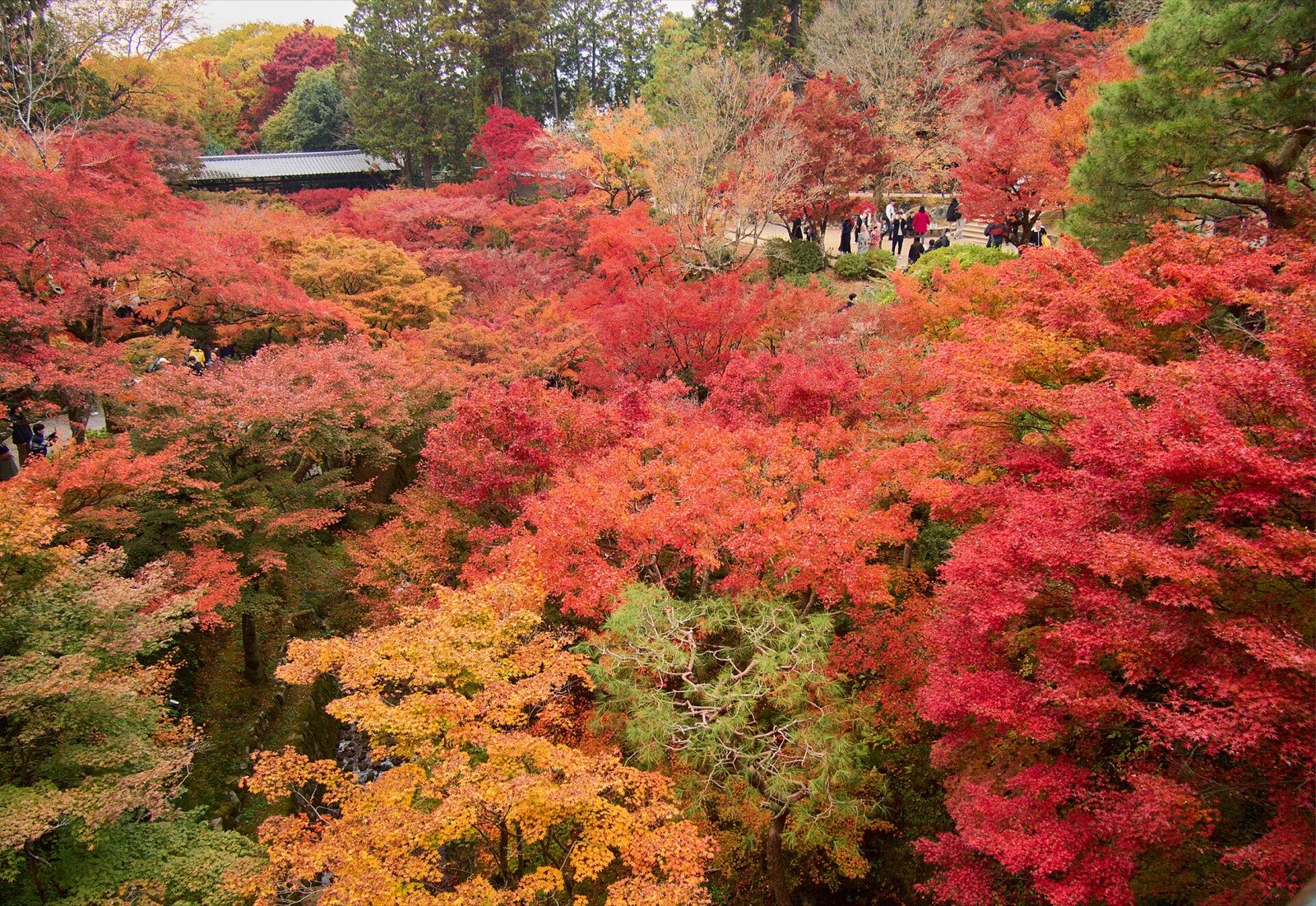
Tofuku-ji in Kyoto, where the maples peak around the second week of December. Photo: lumoplank, Wikimedia Commons, CC0.

If you want one recommendation from this page: the second half of November. The maples are in Kyoto and Tokyo, the air is dry, the typhoon season is over, and the country has no national holiday week between Culture Day on November 3 and the New Year.
Winter, December to February: two countries at once
Winter is when Japan splits hardest. Sapporo takes 54 inches of snow in January and 46 inches in February on JMA normals, which is why Hokkaido has built a ski industry on it. Tokyo in the same weeks is dry and bright, with 2.4 inches of rain in January and only 6 rain days, the fewest of the year. Naha sits at 68°F (19.8°C), warm enough to walk in a shirt and too cool for the sea, which drops to 71°F (21.8°C) in February.
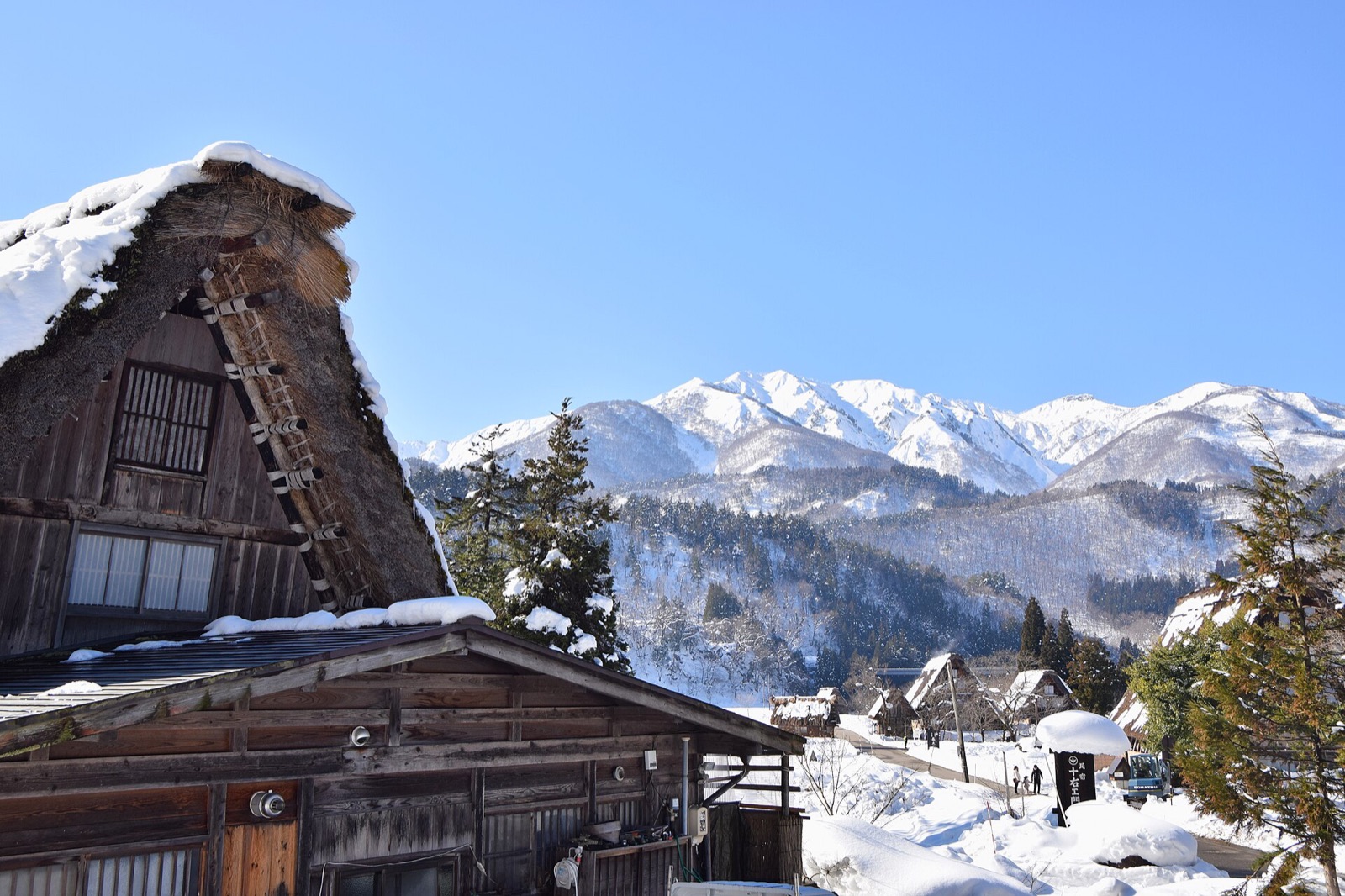
Shirakawa-go in Gifu prefecture, one of the snowiest inhabited places in Japan. Photo: Raita Futo from Tokyo, Japan, Wikimedia Commons, CC BY 2.0.

Two dates decide a winter trip. The first is the New Year. December 29 to January 3 is the one period when Japan genuinely closes: museums, many restaurants, most small shops and a large share of family businesses shut, while trains and domestic flights run full. The second is the Sapporo Snow Festival, which runs about a week in early February across the Odori, Susukino and Tsudome sites. The official festival site gave the 2025 edition as February 4 to 11, and the following year's dates are announced on the same page in autumn. Hokkaido hotel prices for that week are set months ahead.
Otherwise, January and February are the cheapest and emptiest time to see Kyoto and Tokyo. US arrivals fall to 182,556 in January and 191,494 in February, roughly half of June. Snow on the temples of northern Kyoto happens a handful of days a year and is worth the gamble to some people.
Japan month by month
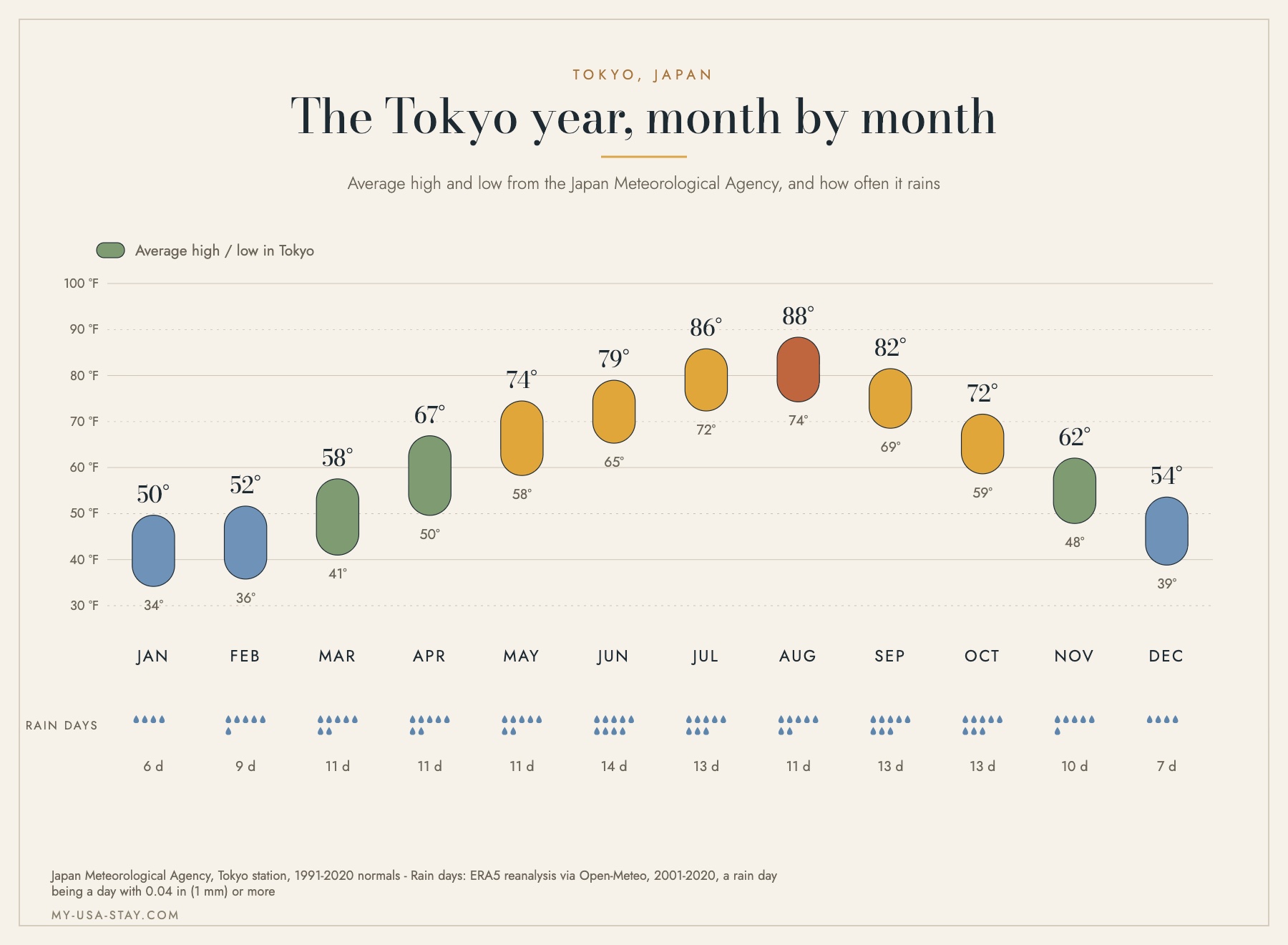
Tokyo month by month, on Japan Meteorological Agency normals.
| Month | Tokyo high / low | Kyoto high | Sapporo high | Naha high | Sea, Okinawa | Tokyo rain | Foreign visitors, 2025 | Verdict |
|---|---|---|---|---|---|---|---|---|
| January | 50 / 34°F | 48°F | 31°F | 68°F | 73°F | 2.4 in, 6 d | 3,781,629 | Dry, cheap, closed |
| February | 52 / 36°F | 50°F | 33°F | 68°F | 71°F | 2.2 in, 9 d | 3,258,491 | Snow country, plum blossom |
| March | 58 / 41°F | 57°F | 40°F | 71°F | 72°F | 4.6 in, 11 d | 3,497,755 | Blossom, book early |
| April | 67 / 50°F | 68°F | 53°F | 76°F | 73°F | 5.3 in, 11 d | 3,909,128 | Peak, and Golden Week |
| May | 74 / 58°F | 77°F | 64°F | 81°F | 77°F | 5.5 in, 11 d | 3,693,587 | Late May is underrated |
| June | 79 / 65°F | 83°F | 71°F | 86°F | 81°F | 6.6 in, 14 d | 3,377,985 | Rainy season, humid |
| July | 86 / 72°F | 90°F | 78°F | 89°F | 84°F | 6.1 in, 13 d | 3,437,118 | Rain lifts, festivals start |
| August | 88 / 74°F | 93°F | 80°F | 89°F | 85°F | 6.1 in, 11 d | 3,428,406 | Hot, Obon, typhoons |
| September | 82 / 69°F | 85°F | 73°F | 87°F | 84°F | 8.9 in, 13 d | 3,267,228 | Quietest, and riskiest |
| October | 72 / 59°F | 74°F | 62°F | 83°F | 82°F | 9.2 in, 13 d | 3,896,524 | Clear, busy, excellent |
| November | 62 / 48°F | 63°F | 48°F | 77°F | 78°F | 3.8 in, 10 d | 3,517,659 | Maples, the best month |
| December | 54 / 39°F | 53°F | 36°F | 71°F | 76°F | 2.3 in, 7 d | 3,617,791 | Bright, then shut |
Air temperatures and rainfall: Japan Meteorological Agency, 1991 to 2020 normals at the Tokyo, Kyoto, Sapporo and Naha stations. Rain days: ERA5 reanalysis via Open-Meteo, 2001 to 2020, counting days with 0.04 in (1 mm) or more. Sea surface: NOAA OISST v2.1, monthly means 2016 to 2025, off Okinawa. Visitor numbers: Japan National Tourism Organization, 2025.
The best time for what you want to do
- Cherry blossom: March 24 to April 4 for the Tokyo to Kyoto axis, mid April for Sendai, late April for Hirosaki and Sapporo.
- Maples and temple gardens: the last ten days of November in Kyoto and Tokyo, late October at altitude around Nikko and the Japanese Alps.
- Skiing: January and February in Hokkaido, where Sapporo alone records 54 and 46 inches of snow in those months.
- Beaches and diving: Okinawa from June to October, with the sea between 81 and 85°F. October is the sweet spot, still 82°F in the water with the typhoon peak passing.
- Climbing Mount Fuji: the summer window only, closing on September 10.
- Cities and food, on a budget: late January and February. Fewest Americans, lowest rates, driest weather in Tokyo.
- Hiking the Nakasendo or Kumano Kodo: late April to early June, and October to mid November. Avoid the tsuyu, when the trails are slick.
- Avoiding everyone: the first three weeks of September, if you accept the typhoon risk, or the second half of January.
Events that shape the year
Japan's calendar is built on sixteen national holidays set by the Cabinet Office, plus two travel weeks that are not holidays at all but move more people than any of them.
- New Year, December 29 to January 3. Shrines are full on the first three days, everything else is shut.
- Sapporo Snow Festival, early February. A week across three sites, with the 2025 edition running February 4 to 11.
- Cherry blossom, late March to early May. The only event whose dates are forecast rather than fixed.
- Golden Week, April 29 to May 5. Four national holidays in seven days. In 2027 that is Showa Day on Thursday April 29, then Constitution Day, Greenery Day and Children's Day on May 3, 4 and 5.
- Gion Matsuri, all July in Kyoto. The float processions in the middle of the month are the peak, and Kyoto hotel rates reflect it.
- Obon, August 13 to 16. Not a public holiday. Still the hardest week of the year to book a Shinkansen seat.
- Autumn colour, November to mid December. Forecast city by city each September.
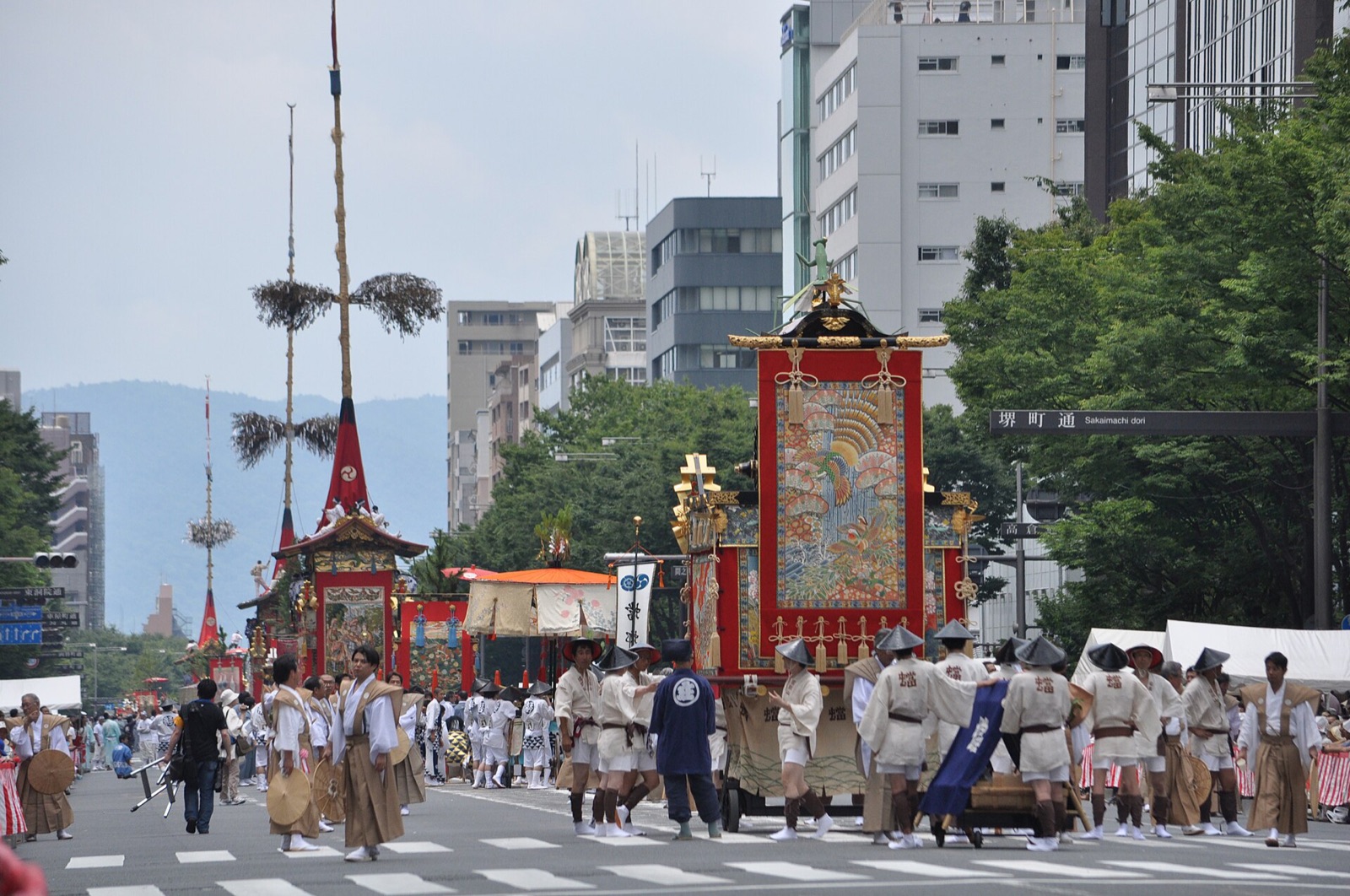
Gion Matsuri in Kyoto, which occupies the whole of July. Photo: 江戸村のとくぞう, Wikimedia Commons, CC BY-SA 4.0.

Where to go, region by region
The season should decide the region, not the other way round. Japan is long enough that there is a good answer in every month.
Kinki, the Kansai heartland, holds Kyoto, Osaka and Nara. It is the best-served region for a first trip and the worst for August heat, with Kyoto's 93°F average high. Come in late March, late May or the second half of November. Its rainy season runs June 6 to July 19 on average, a fortnight that closed early in 2026, on July 9.
Chugoku, the western end of Honshu, covers Hiroshima, Miyajima and the Seto Inland Sea. Its climate tracks Kinki within a degree or two and its blossom arrives a day earlier, Hiroshima flowering on March 25 against Kyoto's March 26. The inland sea coast is drier than the Sea of Japan side, which makes it a reasonable winter alternative when the north is under snow.
Kyushu, the southern island, is where the Japanese year begins and ends. Fukuoka flowers on March 22, the earliest mainland date, and Kyushu's maples hold on into mid December. It pays for that with the longest rainy season on Honshu's doorstep, from May 30 in the south, and the first typhoons. Its hot spring towns, Beppu and Kurokawa, are at their best from November to March.
Okinawa runs on a different calendar again. Its rainy season is over by June 21 on average, its sea is swimmable from May to November, and its winter is mild rather than cold. September and early October carry the typhoon risk, but late October is close to ideal, with the water at 82°F and the crowds gone.
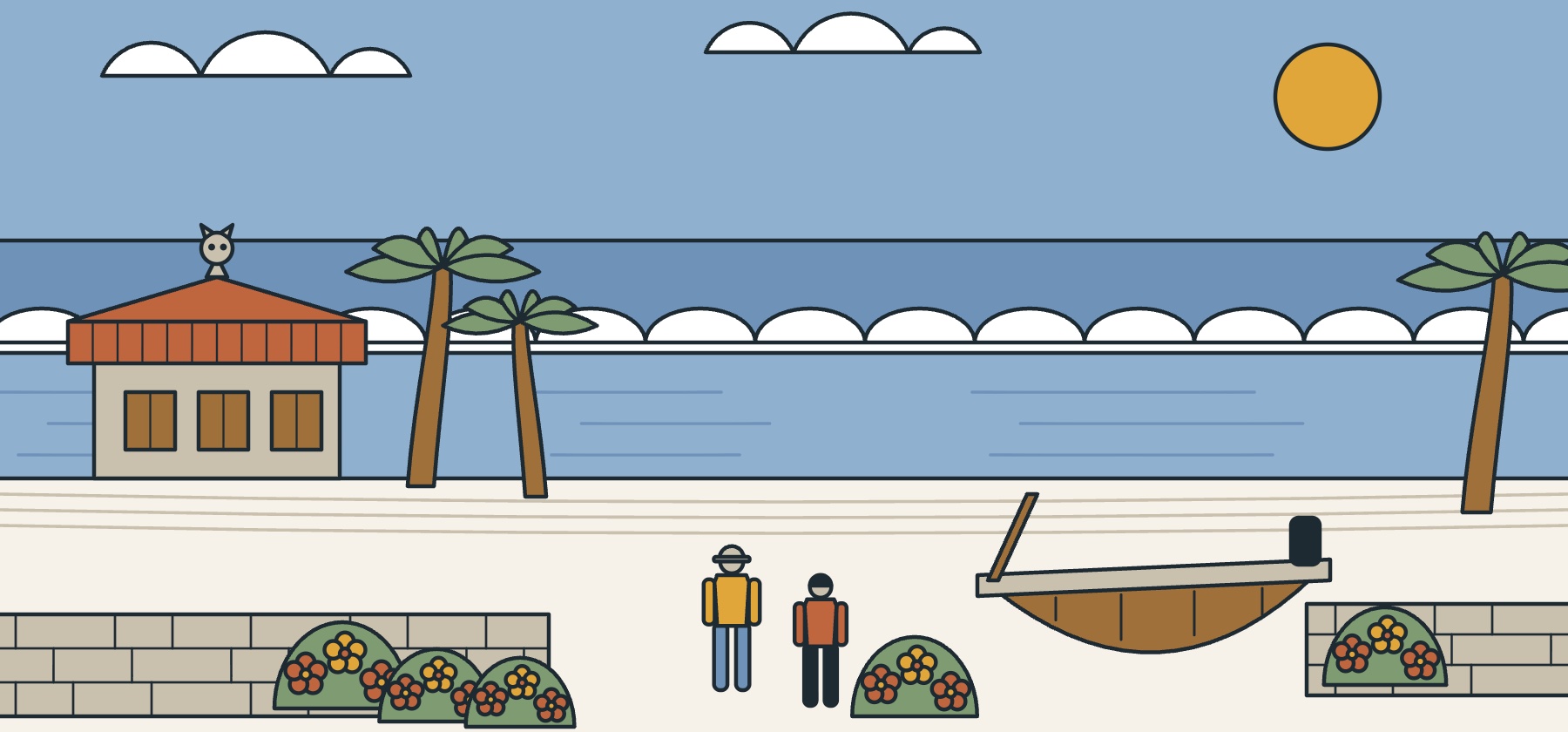
Okinawa in October, when the sea is still 82 degrees Fahrenheit and the typhoon peak has passed. Illustration: my-usa-stay.com.
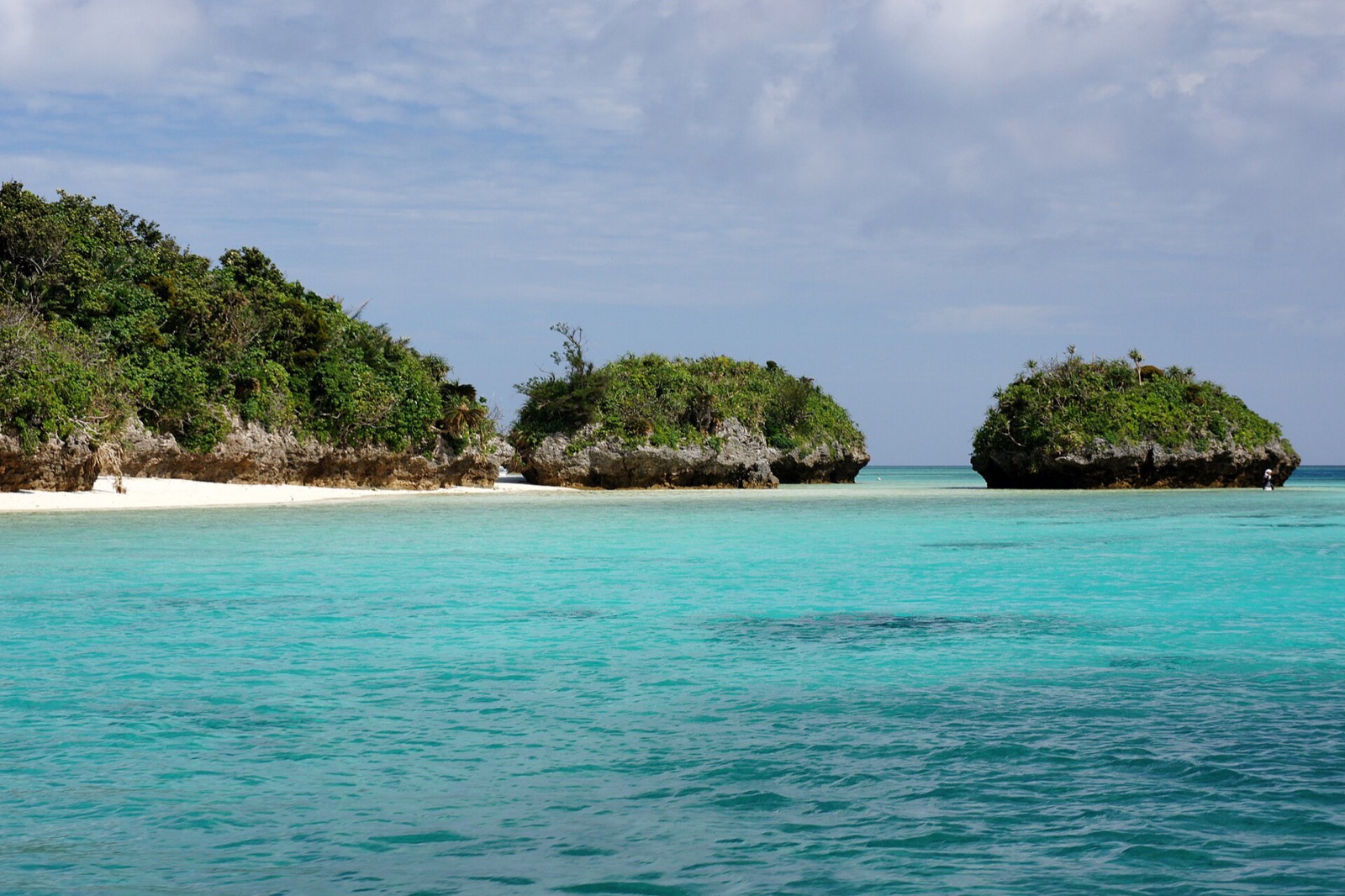
Kabira Bay on Ishigaki, Okinawa, where the sea holds above 80 degrees Fahrenheit from June to October. Photo: 663highland, Wikimedia Commons, CC BY 2.5.

Tokyo itself deserves a note on timing rather than a season. Its driest, brightest weeks are December and January, its wettest are September and October, and its neighbourhoods east of the Sumida, including Koto and Edogawa, are where the summer fireworks nights happen.
Getting there from the United States
Japan is a long flight and a full calendar day from the East Coast, and the dates you pick have as much to do with the American calendar as the Japanese one.
Distance. Tokyo Haneda is 6,758 miles from New York JFK, 6,291 from Chicago, 5,476 from Los Angeles, 5,149 from San Francisco and 4,792 from Seattle, on great circle distances. Osaka Kansai adds roughly 200 miles to each. The westbound leg is the long one because it flies into the jet stream, and the eastbound return is shorter.
Time difference. Japan runs on Japan Standard Time, UTC+9, and does not observe daylight saving. Because the United States does, the gap moves twice a year: Tokyo is 13 hours ahead of New York in American summer and 14 hours ahead in winter, and 16 then 17 hours ahead of Los Angeles. You lose a calendar day flying out and get it back coming home.
Entry. The Japan National Tourism Organization states that passport holders of some countries do not need a visa for a stay of 90 days or less, and that all foreign visitors must hold a valid passport. The full list of exempt nationalities is kept by Japan's Ministry of Foreign Affairs, whose own guidance gives 90 days as the period of stay granted on landing for those countries. Visit Japan Web, the government's online immigration and customs pre-registration, is optional: registration is not required, but doing it in advance speeds up arrival and tax-free shopping.
Shopping, from November 2026. Japan has changed how tax-free shopping works. From November 1, 2026, you pay the full price in the shop and claim the consumption tax back at customs before checking in for your flight home. The window for taking the goods out of the country was extended from 30 to 90 days at the same time. Budget for the tax up front and the refund later.
When Americans actually go. This is the part no other guide will tell you. In 2025, 3,306,820 Americans visited Japan, and their monthly pattern is nothing like the overall one.
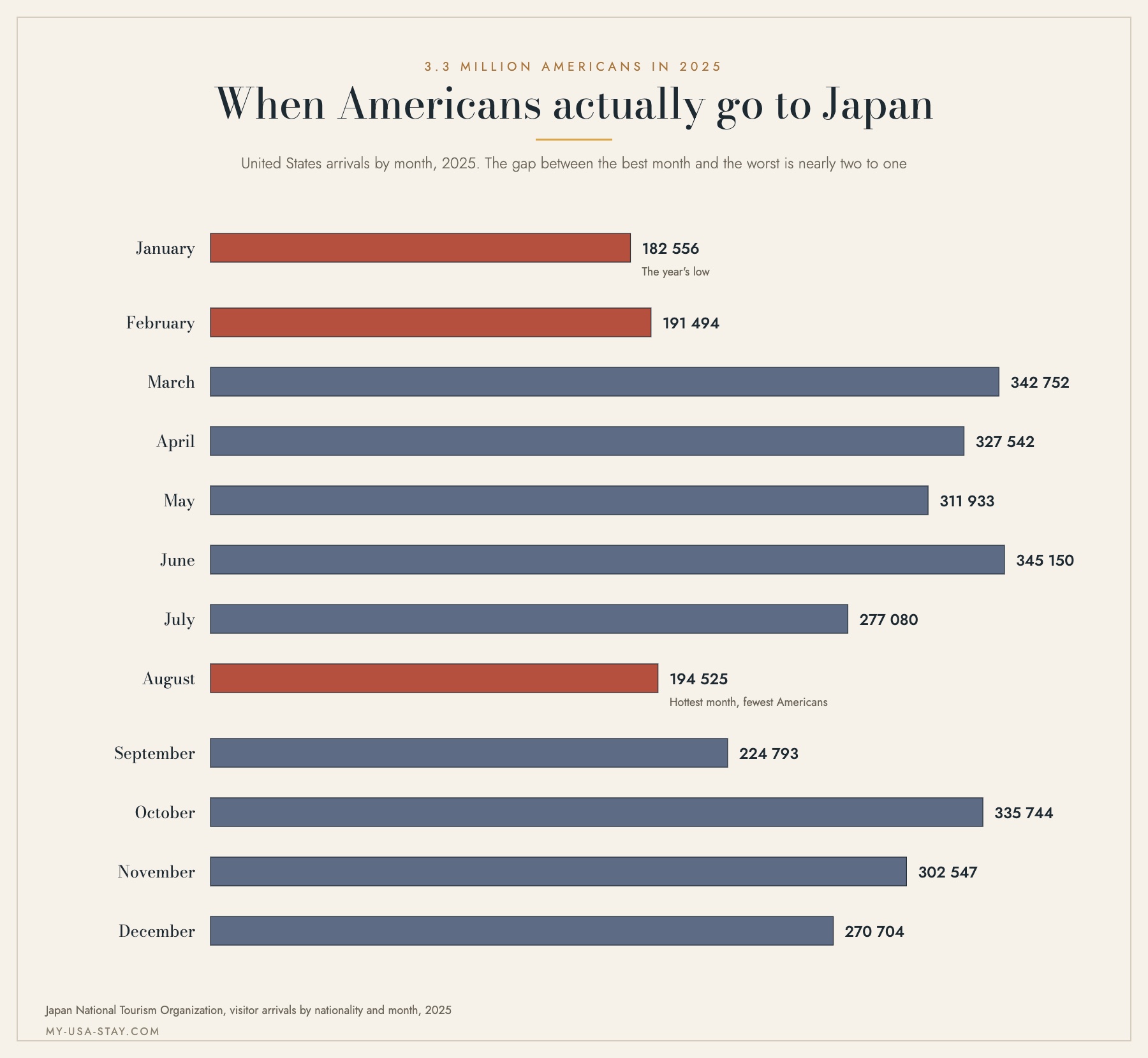
When Americans actually go to Japan, on Japan National Tourism Organization arrivals.
American arrivals peak in June (345,150), March (342,752) and October (335,744), and collapse in January (182,556), February (191,494) and August (194,525). June is the surprise: it is the single biggest US month and it falls in the middle of the rainy season, because it fits the school calendar. August is the other surprise, and it runs the other way. Japan's own August crowd is domestic and Asian, so an American who shifts a summer trip from August to late June or early July trades heat and Obon for rain and a lighter crowd, while an American who moves it to late September gets the emptiest month of the Japanese year.
Transpacific fares follow the American calendar, so Thanksgiving week, the days around Christmas and spring break in March carry a premium that has nothing to do with conditions in Japan. The cheapest departures sit in the second half of January, early February and the first half of December.
FAQ
What are the best and worst months to visit Japan?
The best months are late October and November for dry, clear weather and autumn colour, and late March to early April for cherry blossom. The worst are June and July for the rainy season, which the JMA dates from June 7 to July 19 around Tokyo, and August, when Tokyo averages 88°F and typhoons approach 3.3 times a month.
What month should I not visit Tokyo?
Avoid August if heat is a problem for you. Tokyo averages a high of 88°F with a low of 74°F, humidity is heavy, and the Obon travel week from August 13 to 16 fills trains and hotels. September is cooler but is the peak of the typhoon season, with one landfall a month on JMA normals and 8.9 inches of rain.
When do the cherry blossoms bloom in Japan?
Cherry blossoms flower around March 22 in Fukuoka, March 24 in Tokyo, March 26 in Kyoto, April 8 in Sendai and May 1 in Sapporo, on Japan Meteorological Agency normals. Full bloom follows about a week later and lasts roughly a week. The Japan Meteorological Corporation publishes and updates a national forecast from January onwards.
When is the rainy season in Japan?
The rainy season, tsuyu, starts on May 10 in Okinawa, May 30 in southern Kyushu, June 6 in the Kinki region and June 7 around Tokyo, ending between mid and late July. Those are JMA 1991 to 2020 normals. Hokkaido has no declared rainy season, which makes it the obvious June destination inside Japan.
Is Japan worth visiting in August?
Yes, with adjustments. August brings the year's best festivals and fireworks, warm seas off Okinawa at 85°F, and the only window to climb Mount Fuji. It also brings Kyoto at 93°F, 3.3 typhoon approaches and the Obon travel week. Book Obon accommodation months ahead and sightsee in the morning.
What is the cheapest time to visit Japan?
Late January and February are cheapest. American arrivals fall to 182,556 in January and 191,494 in February against 345,150 in June, transpacific fares drop after the holidays, and hotel rates outside Hokkaido follow. Tokyo is also at its driest then, with 2.4 inches of rain and six rain days in January.
Is September a good time to visit Japan?
September is the quietest month of the Japanese year, with 3,267,228 foreign arrivals in September 2025, the lowest of the twelve. It is also the peak of the typhoon season, with 3.3 approaches and one landfall on average, and Tokyo still averages 82°F. Take it if you want space and can absorb a lost day.
Do Americans need a visa to visit Japan?
No visa is needed for a tourist stay of 90 days or less under Japan's visa exemption arrangements, which the Japan National Tourism Organization and the Ministry of Foreign Affairs both set out. You need a valid passport. Visit Japan Web pre-registration for immigration and customs is optional but speeds up arrival and tax-free shopping.
Read next
- Where to stay in Japan, our hotel guide for American travelers
- Kinki and Kansai, for Kyoto, Osaka and Nara
- Chugoku, for Hiroshima and the Seto Inland Sea
- Kyushu, where the blossom starts and the maples finish
- The best time to visit the USA, the same method applied at home