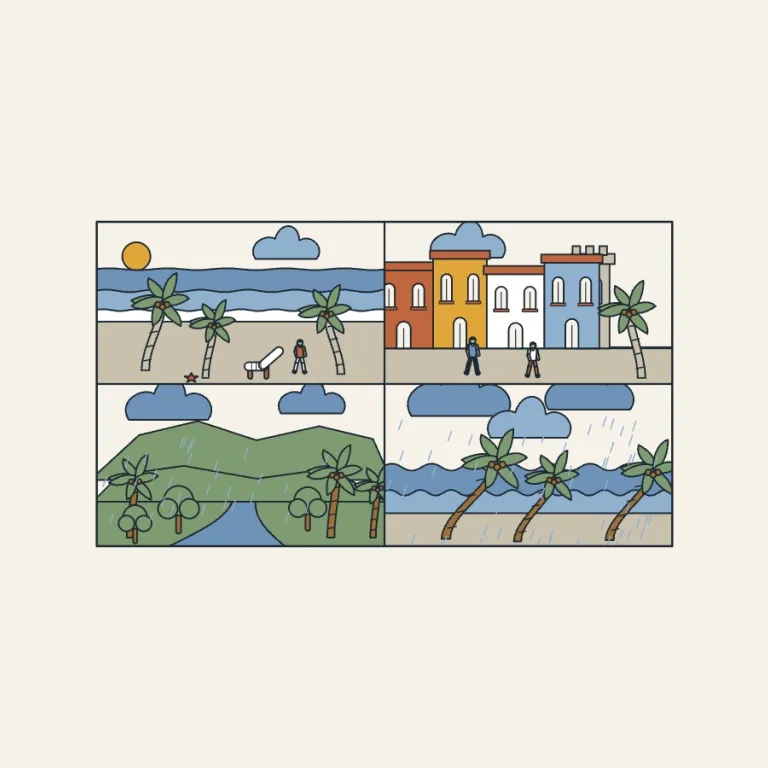
The best time to visit the Dominican Republic is January to April, when the trade winds keep Punta Cana near 84 °F (29 °C), rain falls on 9 to 12 days a month instead of 20, and the humpback whales are in Samana Bay. The month to avoid is September: it holds the statistical peak of the Atlantic hurricane season on September 10, and it is also the emptiest month of the Dominican year, with 490,273 non-resident arrivals against 976,734 in December. Everything below is built on station normals and official arrivals data. More on where to sleep across the island on my-usa-stay.com.
The short answer
- Best overall: mid-January to mid-April. Driest air, calmest sea, whale season, no storm risk.
- Best value with good weather: late April to early June, before the heat and after the spring break wave.
- Avoid: September and the first half of October. Peak storm climatology, the wettest month in Punta Cana (20 rain days), and many small hotels closed.
- Hurricane season: June 1 to November 30, with most activity between mid-August and mid-October, per the NOAA National Hurricane Center.
- Whales in Samana: January 15 to the end of March. The Ministry of Environment sets the dates and licenses the boats.
- Sargassum: a summer problem on the east and south coasts. The University of South Florida satellite record puts the Atlantic peak in June or July and the minimum in winter.
- Busiest months: December, then July. July is not a dead month here, whatever the northern hemisphere reflex says.
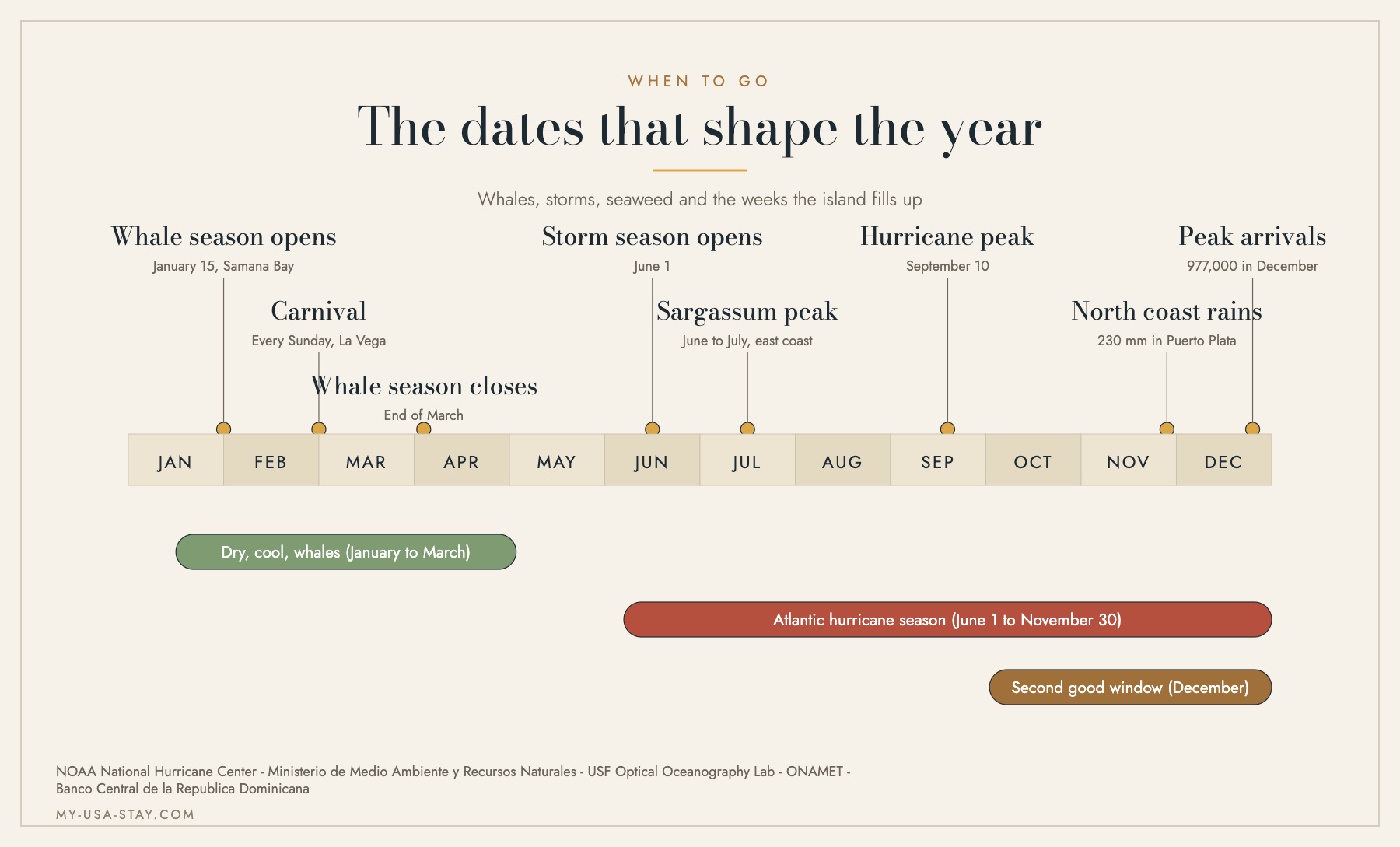
The dates that decide a Dominican trip, from the January whale season to the September 10 hurricane peak.
Understanding the climate in the Dominican Republic
The Dominican Republic has four climates on one island, and the gap between them is larger than the gap between its months. The country shares Hispaniola with Haiti and runs a mountain spine, the Cordillera Central, straight through the middle, so the coasts, the capital and the highlands do not keep the same calendar at all.
Punta Cana and the east coast are the mildest and the least seasonal. NOAA climate normals for the 1991 to 2020 period at Punta Cana International Airport give an average high of 83 °F (28.5 °C) in January and 90 °F (32.0 °C) in August. That is a 7 °F annual swing, less than the difference between two consecutive days in New York. Nights sit between 70 and 76 °F (21 to 24 °C) all year.
Puerto Plata and the north coast run their rain on a different schedule, and this is the single most useful thing an American traveler can know about Dominican weather. ONAMET, the national weather office, publishes normals for Gregorio Luperon International Airport that put the wettest months in November and December, at 230 mm each, and the driest in June and July, at 50 to 70 mm. The south coast does the opposite. A December week that is perfect in Punta Cana can be grey and streaming in Cabarete.
Santo Domingo, on the south coast, is hotter by day and cooler at night than the beaches, because the city sits on a broader shelf of land. Highs run from 30 °C in January to 32 °C in August, and nights drop to around 20 °C in winter, which the beach resorts never do.
The highlands change the rules entirely. Jarabacoa sits at 529 m (1,735 ft) and runs nights near 63 °F (17 °C) in January. Constanza sits at 1,164 m (3,819 ft), grows strawberries and lettuces, and holds the Dominican cold record: ONAMET logged minus 1 °C (30 °F) at its station on February 6, 1958. Frost is a real event in Constanza in January and February. Pack a fleece if you are going up, and do not assume a Caribbean island means a Caribbean night.
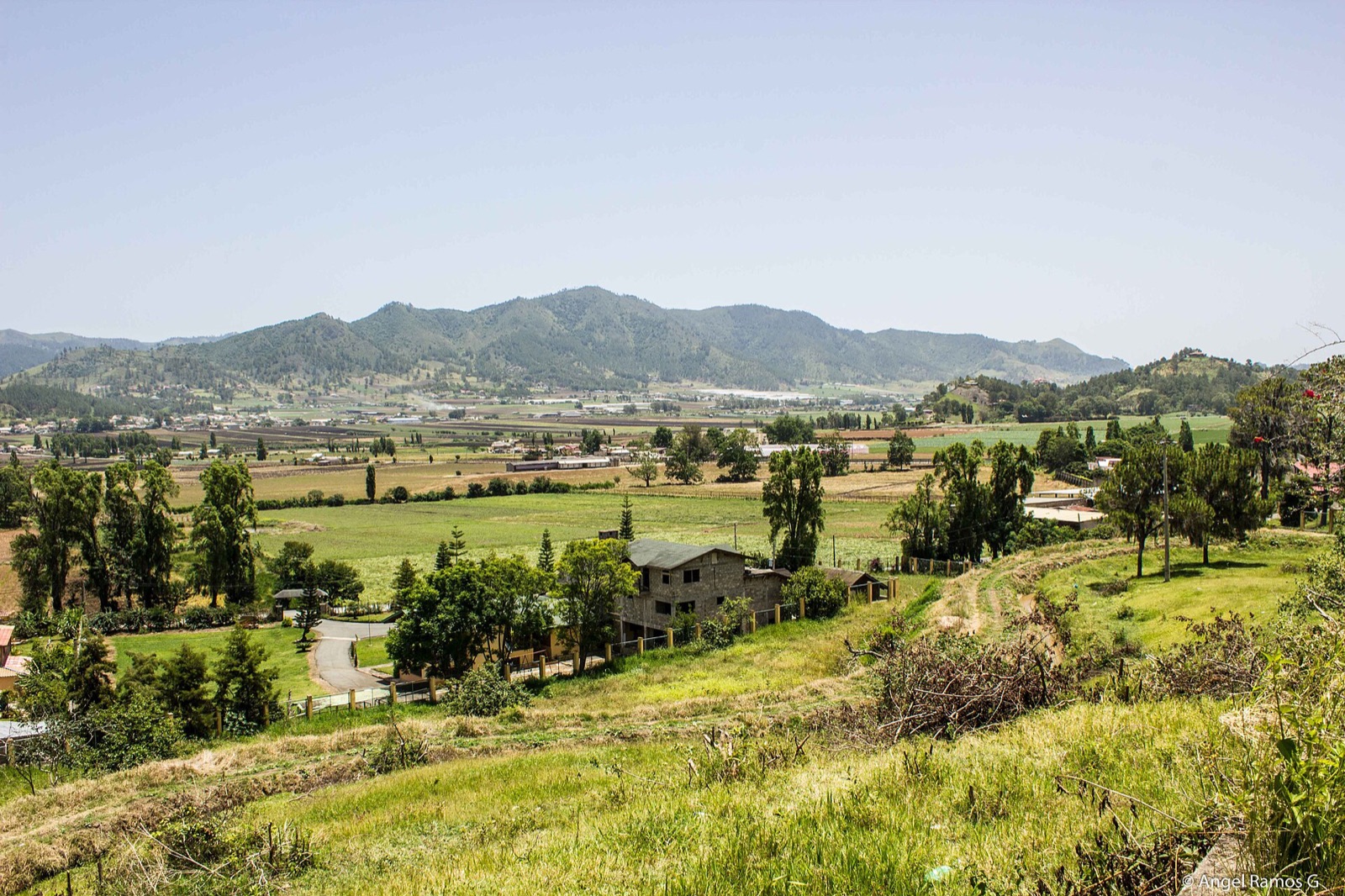
Constanza, at 1,164 m (3,819 ft) in the Cordillera Central, where ONAMET once recorded minus 1 °C. Photo: Angel Ramos G, Wikimedia Commons, CC BY 2.0.

One technical note, because it changes the numbers you will see elsewhere. Global reanalysis grids, the kind most weather sites resell, average land and sea inside each cell. On a narrow shore like Punta Cana the cell is mostly water, so the highs come out flat: the ERA5-Land grid gives an August high of 28.9 °C where the airport station measures 32.0 °C, a gap of 5.6 °F. This page uses station normals for the coasts and names the source under the table.
The dry season, December to April
The Dominican dry season runs from December to April and is the reason the island fills up. Rain in Punta Cana falls on 9 to 12 days a month between January and April, against 18 to 20 days in late summer, and those days are usually short afternoon showers rather than lost days. The trade winds blow steadily from the northeast, which is what keeps 84 °F feeling like 84 and not like a sauna.
What this season gives you:
- The humpback whales in Samana Bay, from January 15 to the end of March.
- Walkable heat in the Zona Colonial of Santo Domingo, which is punishing in August.
- The clearest water for diving and snorkeling, before the summer algae and the runoff.
- Carnival, every Sunday in February in La Vega, plus February 27, Independence Day.
- Zero hurricane risk. The Atlantic season does not open until June 1.
What to plan around:
- Christmas and New Year are the single busiest window of the year. December 2025 brought 976,734 non-resident arrivals, the heaviest month in the Banco Central series.
- Spring break and Holy Week stack up in March. March 2025 brought 819,976 arrivals, the busiest month of the first half. In 2027, Easter falls on March 28, so Holy Week and the American spring break land on top of each other.
- The sea is at its coolest, which here means 80 to 81 °F (26 to 27 °C). That is still warmer than Miami in July.
- The north coast is the exception: November and December are its wet months, so a Puerto Plata trip is better in February and March than in December.
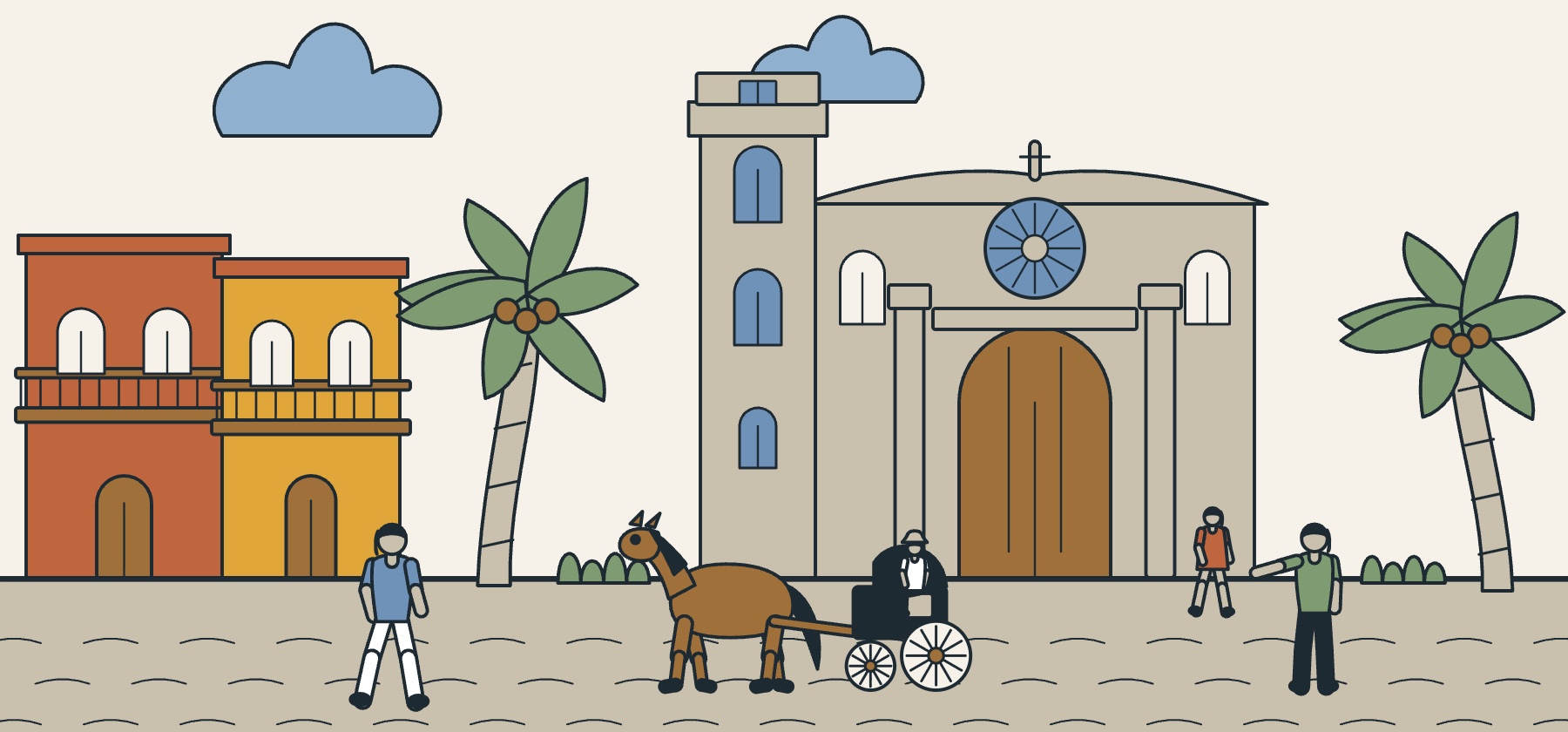
The Zona Colonial of Santo Domingo, a walking city best visited between December and April. Illustration: my-usa-stay.com.
The rainy months and the storm season, May to November
From May to November the island is hotter, wetter and cheaper, and it carries a real, manageable risk. The Atlantic hurricane season runs June 1 to November 30, the National Hurricane Center places the statistical peak on September 10, and most activity falls between mid-August and mid-October. That is a climatology, not a forecast: most weeks inside the season pass with nothing but heat and showers.
The precautions that actually matter:
- Buy travel insurance that names named storms, and book a hotel with a written storm policy. Check the wording before you pay, not after.
- Watch the National Hurricane Center directly in the five days before departure. Systems are usually visible three to five days out.
- Do not put a wedding, a cruise connection or a single-day excursion in the first two weeks of September. If the week fails, it fails completely.
- Prefer the south and east if you travel in November: Puerto Plata is then in its rainiest stretch.
- Expect afternoon rain, not all-day rain. Punta Cana takes 18 to 20 rain days in August, September and October, but mornings are usually clear.
Then there is sargassum, the brown seaweed that has changed Caribbean summers since 2011. The University of South Florida Optical Oceanography Lab tracks it by satellite and states the pattern plainly: within the Great Atlantic Sargassum Belt the seaweed peaks in June or July and reaches its minimum in the winter months. The lab measured 9 million metric tons in the eastern Caribbean in June 2026, a record level for that month. It lands on windward shores, which in the Dominican Republic means the east and southeast: Bavaro, Punta Cana, Bayahibe and La Romana take it, while the north coast and the sheltered bays take much less. Big resorts rake their beach at dawn. Small hotels often cannot.
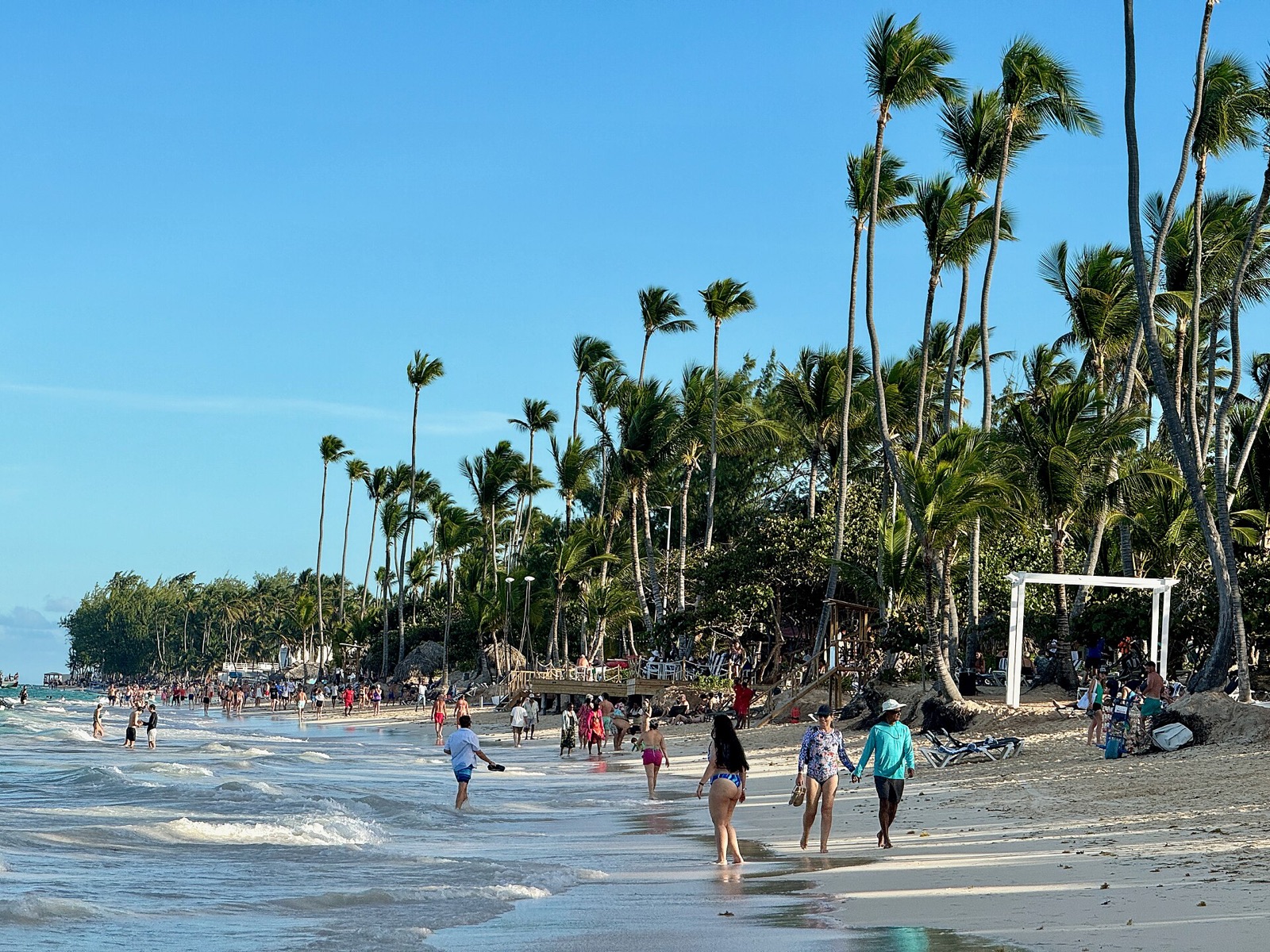
Playa Bavaro, Punta Cana: the east coast takes the sargassum that arrives with the summer. Photo: Oleg Yunakov, Wikimedia Commons, CC BY-SA 4.0.

The wet months are not a write-off. They are the months the island looks alive. The rivers of the Cordillera Central run full, the waterfalls at Damajagua near Puerto Plata carry enough water to be worth the drive, and the hills behind Jarabacoa are green rather than straw-colored.
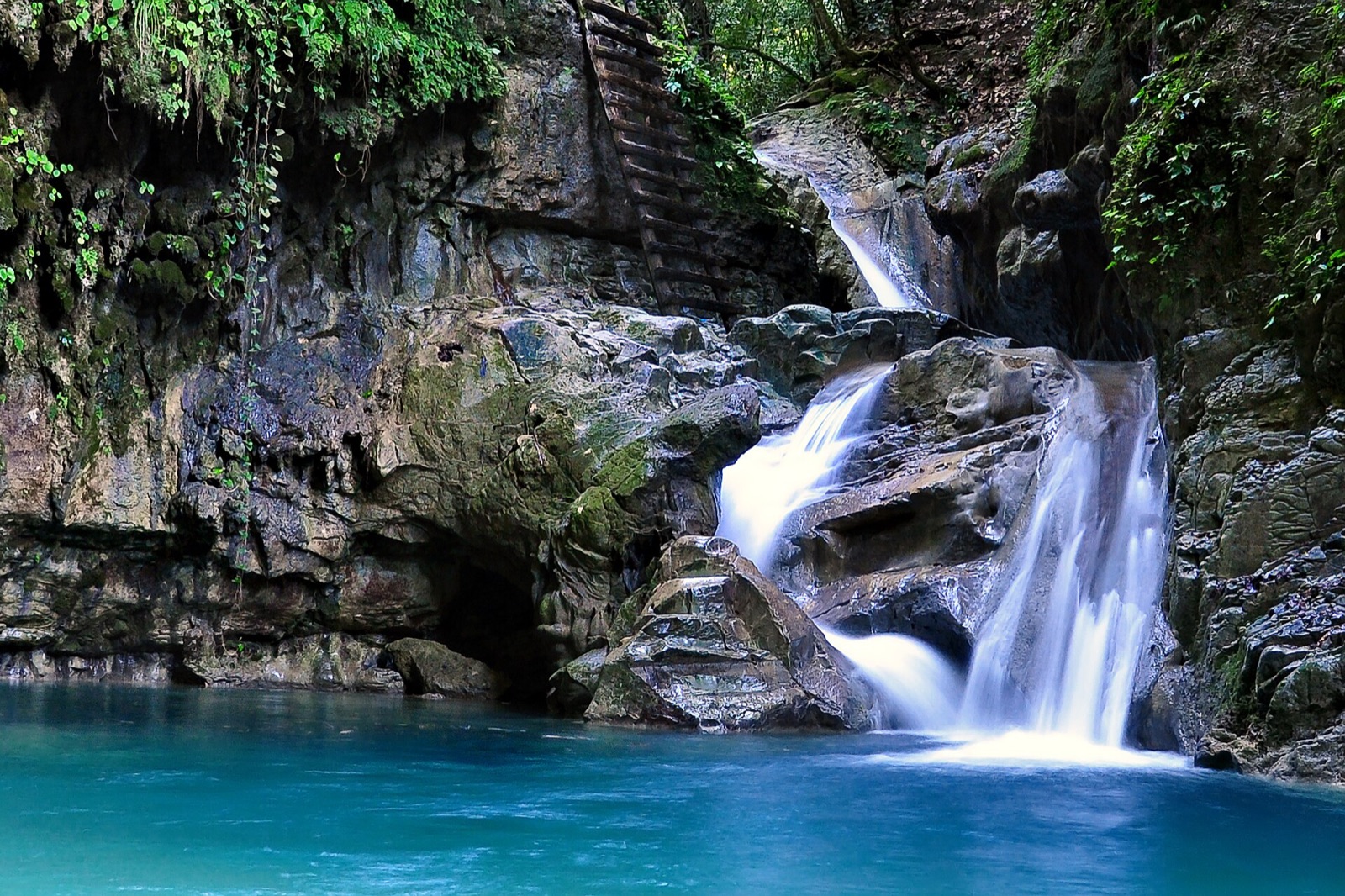
The waterfalls of Damajagua, inland from Puerto Plata, run strongest in the wet months. Photo: Funcheta, Wikimedia Commons, CC BY-SA 4.0.

When the island fills up, and when it empties
The Dominican Republic publishes something most Caribbean destinations do not: monthly arrival counts, by the Banco Central, from Ministry of Tourism and immigration records. They break the usual assumption about Caribbean seasons.
In 2025 the country received 8,860,709 non-resident arrivals by air, up 3.8 percent on 2024. The busiest month was December at 976,734. The second busiest was not March and not February: it was July, at 863,780, ahead of March at 819,976. The emptiest month by a wide margin was September, at 490,273, which is 43 percent below July.
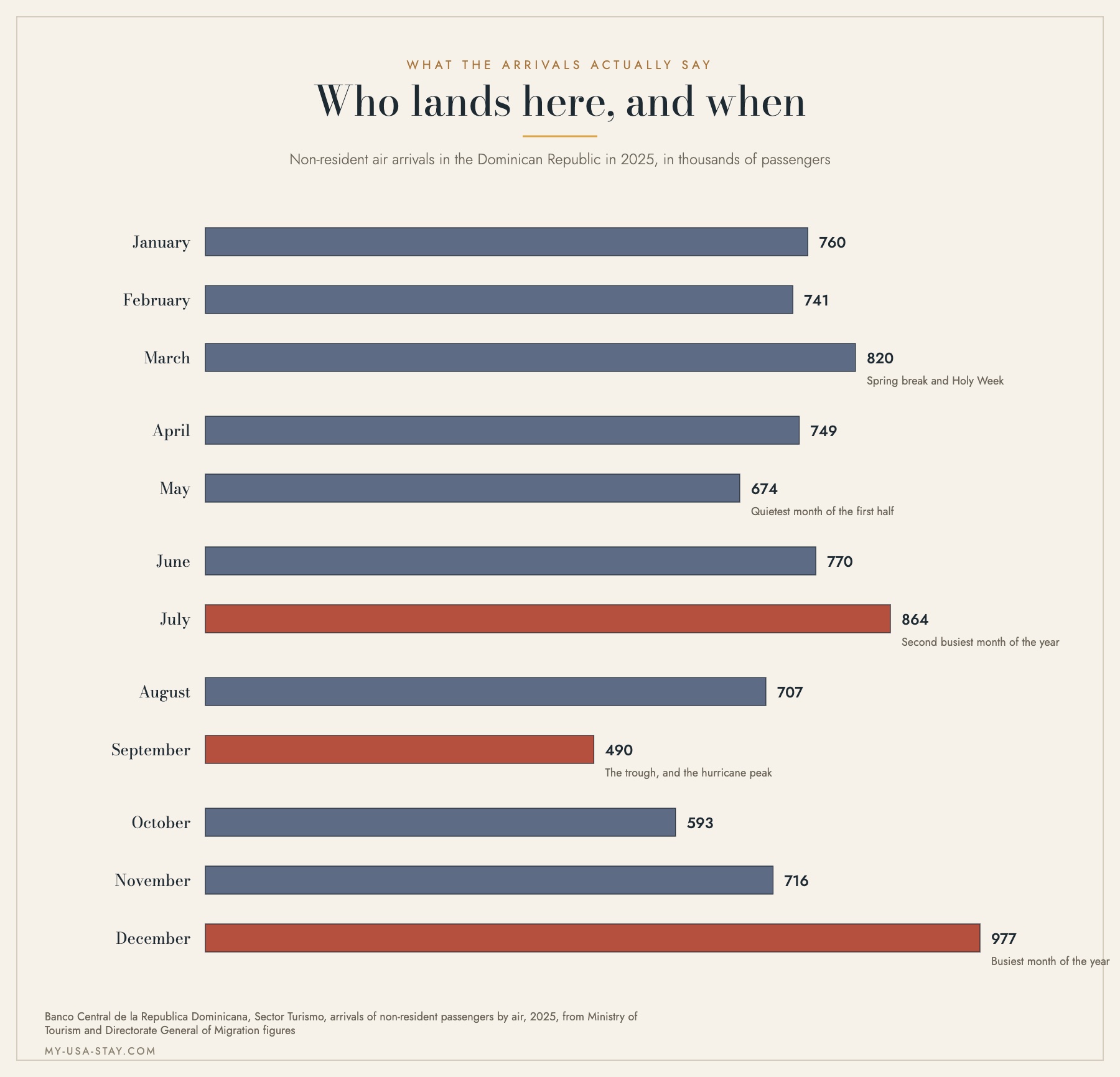
Monthly non-resident arrivals in 2025: July outranks March, and September collapses.
Two readings matter here. First, if you want an empty island you want September and October, and you accept the storm climatology that comes with them. Second, July is busy for a reason that the weather does not explain: the Dominican diaspora comes home. Of July 2025 arrivals, 164,372 were non-resident Dominicans, against 104,188 in March. Strip the diaspora out and the foreign peak moves back to March, at 715,788 foreign arrivals against 699,408 in July. A July trip means full flights from New York and Miami, family reunions in the campo, and beaches that feel local rather than touristy.
The Dominican Republic month by month
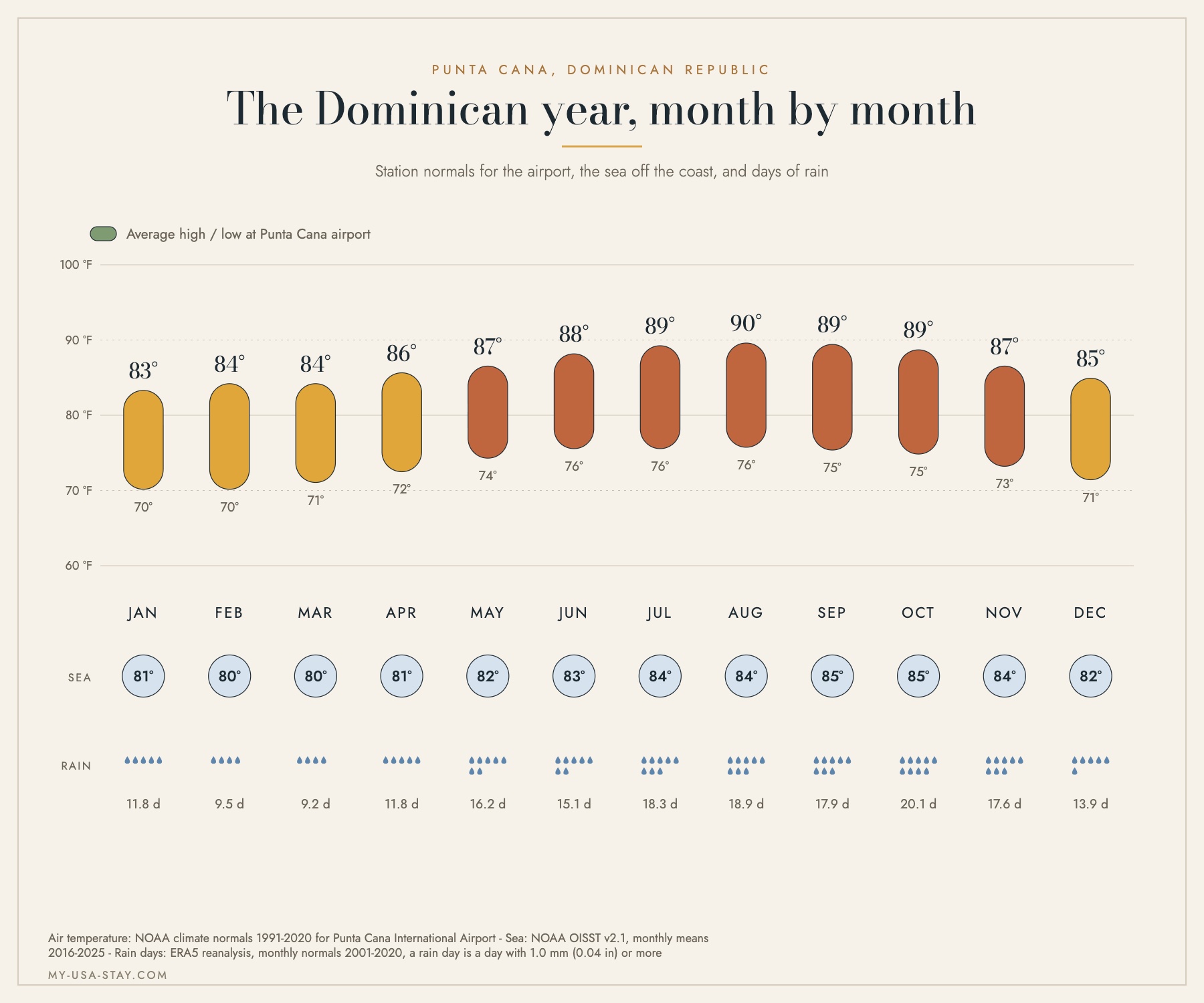
Punta Cana month by month, on station normals rather than a reanalysis grid.
| Month | High / low | Sea | Rain days | Arrivals 2025 | Verdict |
|---|---|---|---|---|---|
| January | 83 / 70 °F | 81 °F | 12 | 759,929 | Dry, busy, whales |
| February | 84 / 70 °F | 80 °F | 10 | 740,650 | Best all round |
| March | 84 / 71 °F | 80 °F | 9 | 819,976 | Driest, very full |
| April | 86 / 72 °F | 81 °F | 12 | 749,211 | Last dry weeks |
| May | 87 / 74 °F | 82 °F | 16 | 673,705 | Showers, fewer people |
| June | 88 / 76 °F | 83 °F | 15 | 770,403 | Hot, season opens |
| July | 89 / 76 °F | 84 °F | 18 | 863,780 | Hot and crowded |
| August | 90 / 76 °F | 84 °F | 19 | 707,146 | Hottest, watch storms |
| September | 89 / 75 °F | 85 °F | 18 | 490,273 | Riskiest, emptiest month |
| October | 89 / 75 °F | 85 °F | 20 | 592,997 | Wettest, still risky |
| November | 87 / 73 °F | 84 °F | 18 | 715,905 | Improves after mid-month |
| December | 85 / 71 °F | 82 °F | 14 | 976,734 | Fine, and full |
Air temperature: NOAA climate normals 1991 to 2020 for Punta Cana International Airport. Sea surface temperature: NOAA OISST v2.1, monthly means 2016 to 2025, for the Atlantic off Punta Cana. Rain days: ERA5 reanalysis, monthly normals 2001 to 2020, a rain day being a day with 1.0 mm (0.04 in) or more. Arrivals: Banco Central de la Republica Dominicana, non-resident passengers arriving by air in 2025. Figures for Puerto Plata and Constanza cited elsewhere on this page come from ONAMET, the Dominican national weather office.
The best time for what you want to do
The right month depends far more on the activity than on the destination. Here is how the year divides.
Humpback whales in Samana, January 15 to the end of March
This is the one Dominican season fixed by government decree rather than by habit. The Ministry of Environment opened the 2026 season on January 16 and issued 46 environmental authorizations to whale-watching operators, 43 of them for Samana Bay and three departing from Puerto Plata. The waters are part of the Marine Mammal Sanctuary of Bancos de La Plata y La Navidad, which covers 64,578 km² after the 2024 expansion and is the largest protected area in the country. Researchers have photo-identified 252 individual whales in Samana Bay by their tail flukes. February is the peak. Outside the official dates no licensed boat will take you out, so a trip planned for April is a trip planned for nothing.
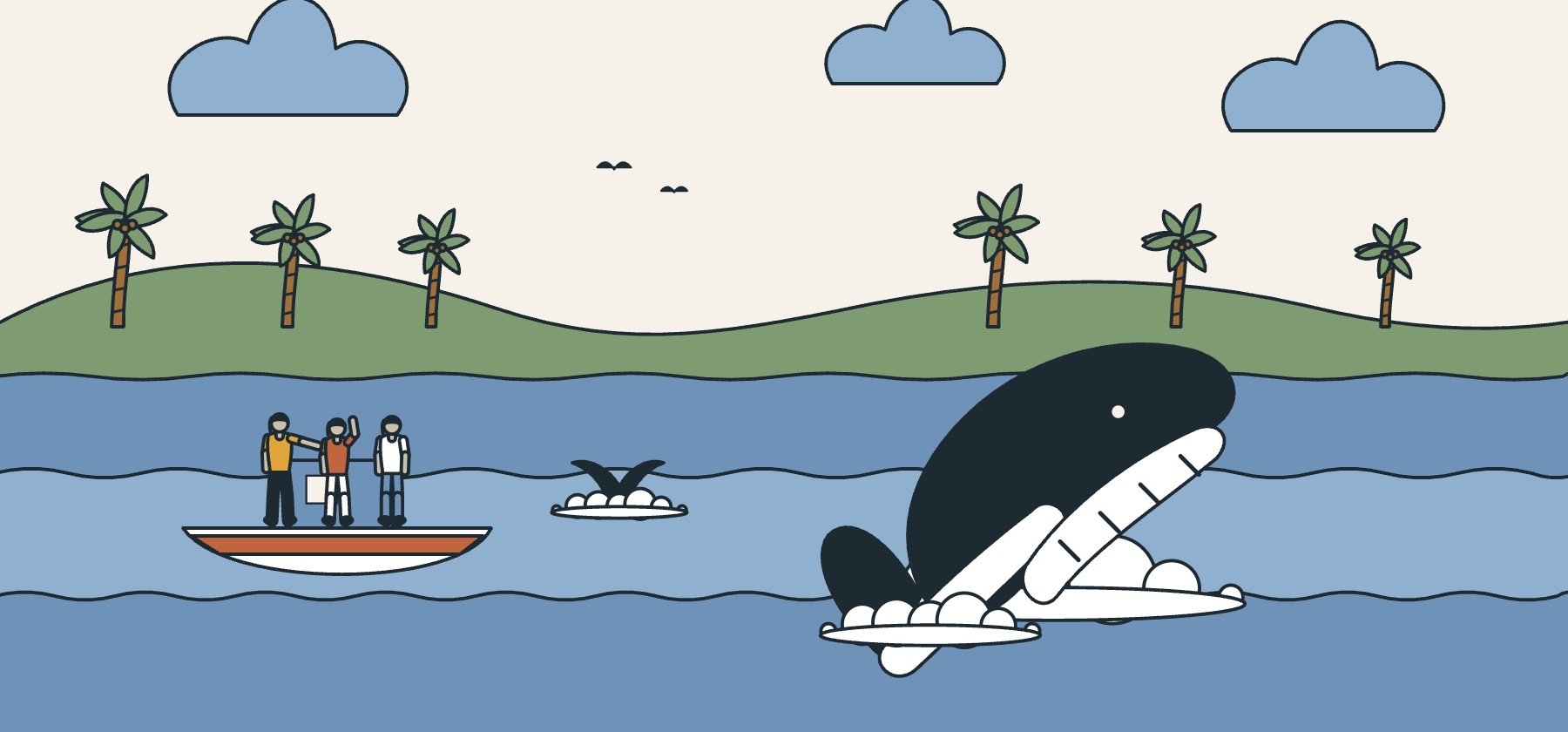
Humpback whales in Samana Bay, a season fixed by decree from January 15 to the end of March. Illustration: my-usa-stay.com.
Diving and snorkeling: February to June
Visibility is best in the dry months, before summer runoff and before the sargassum drift. Bayahibe and the Parque Nacional del Este work year round; the north coast around Sosua is calmer in summer, when the trade swell drops. The sea never falls below 80 °F (26 °C), so a shorty suit is enough in any month.
Kitesurfing and windsurfing in Cabarete: June to August
The north coast runs against the national calendar again. Cabarete's thermal wind is strongest in the summer months, which are also its driest: ONAMET records only 50 to 70 mm of rain in June and July at Puerto Plata, against 230 mm in November. If wind is the point of your trip, come in the months everybody else avoids.
Hiking, rafting and the mountains: November to March
Pico Duarte, at 3,098 m (10,164 ft) the highest summit in the Caribbean, is climbed from Jarabacoa and Constanza over two to three days. The dry, cool months are the season for it, and nights on the mountain drop close to freezing. Whitewater rafting on the Rio Yaque del Norte at Jarabacoa is the reverse: it wants water, so it is better after the rains.
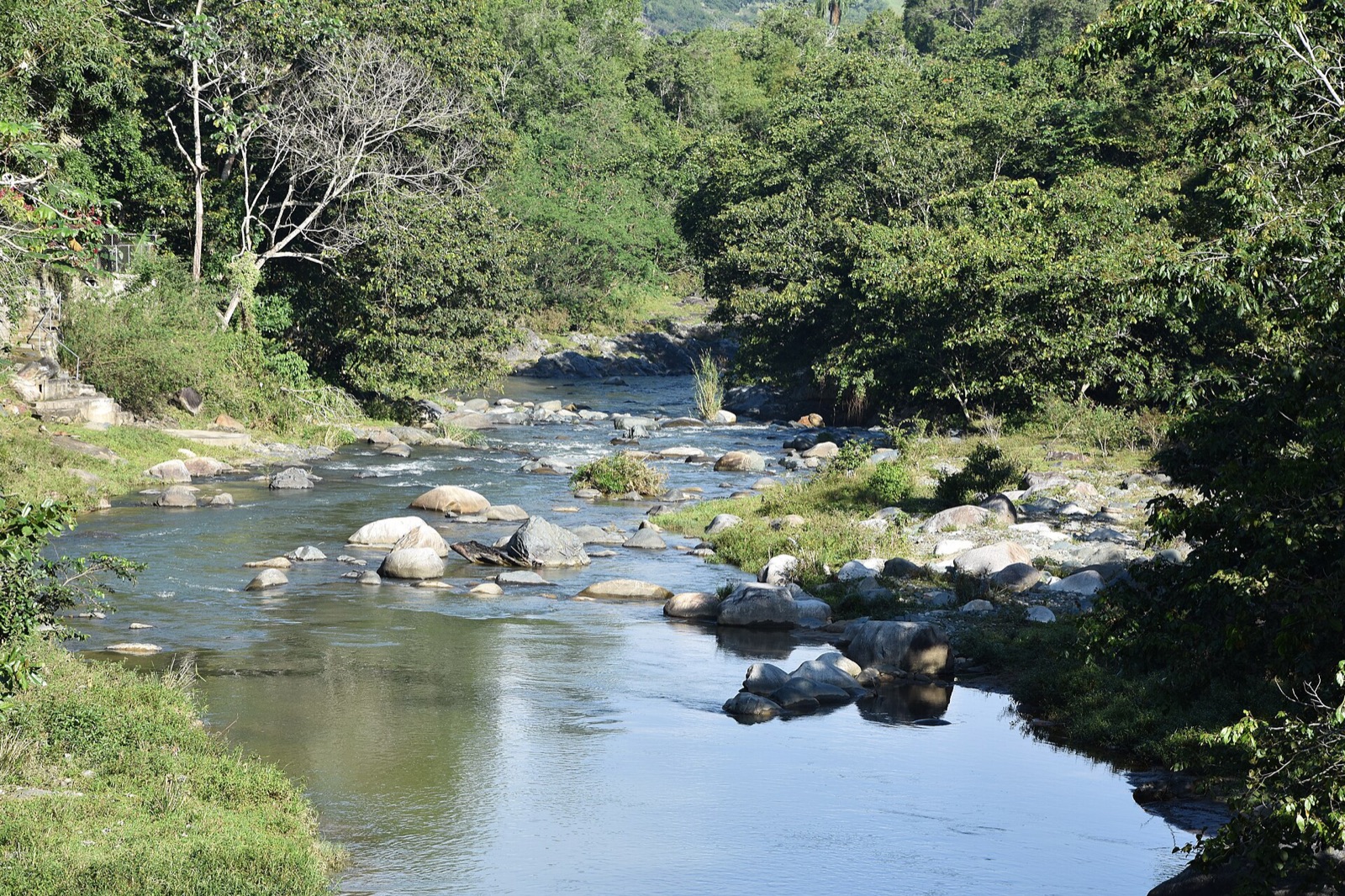
The Rio Jimenoa at Jarabacoa, the base for Pico Duarte and for whitewater rafting. Photo: Phyrexian, Wikimedia Commons, CC BY-SA 4.0.

Waterfalls at Damajagua: May to November
The 27 waterfalls of Damajagua, inland from Puerto Plata, are jumped and slid rather than admired. They run strongest in the wet months, and guides limit how far up you can climb when the flow is low. This is a genuine argument for a summer trip to the north coast.

The 27 waterfalls of Damajagua are jumped and slid, not admired from a viewpoint. Illustration: my-usa-stay.com.
Baseball: October to January
The Dominican winter league, LIDOM, runs from mid-October into January, with the final series feeding the Caribbean Series in February. The stadiums in Santo Domingo, Santiago and La Romana are the cheapest great night out in the country, and the season deliberately fills the months the beaches empty.
Families and school holidays
Spring break in March and the Christmas window are the two most expensive and most crowded stretches. If your dates are not fixed by a school calendar, the last week of April and the first two weeks of May give you the same sea, the same sun, roughly 150,000 fewer arrivals a month, and no storm risk.
Where to go, month by month
The Dominican Republic is not one destination with one season, and the regional pages on this site follow the same split.
Punta Cana and the east are the safest bet from December to April: the driest months, the calmest water and the shortest transfer from the airport that takes about three quarters of all foreign arrivals. In summer it is the coast most exposed to sargassum. Start with our Punta Cana beaches pages.
La Romana and Bayahibe, further west on the south coast, sit slightly in the lee of the easternmost point and are the base for Saona island and for diving in the Parque Nacional del Este. Same dry season, marginally less seaweed. See La Romana beaches.
Santo Domingo and the Greater Antilles coast reward the cool months. The Zona Colonial, founded in 1498 and the oldest European-built quarter in the Americas, is a walking city, and walking it at 90 °F in August is a different experience from walking it at 83 °F in January. Rooms across the region are on our Greater Antilles pages.
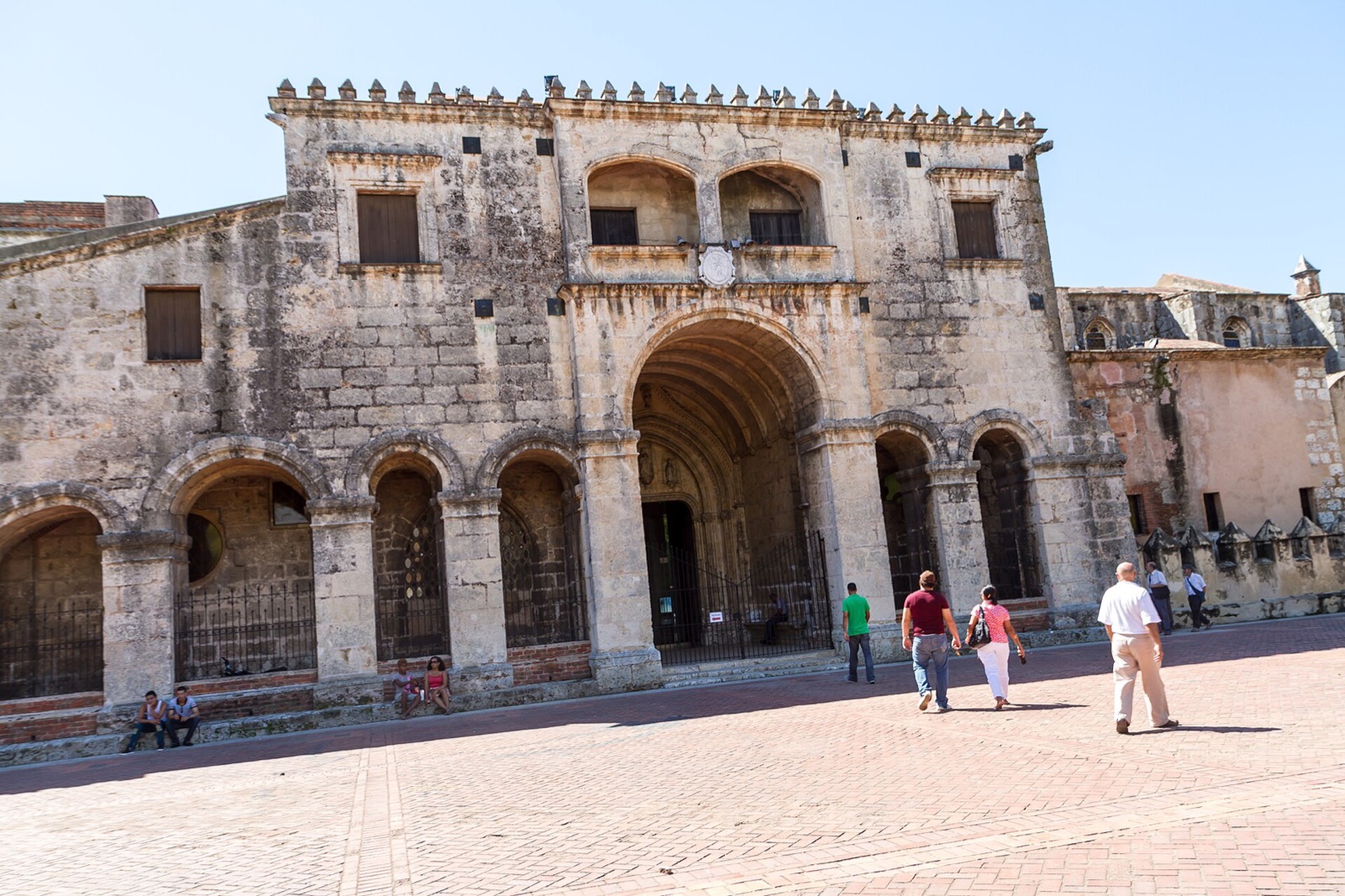
The Zona Colonial of Santo Domingo, founded in 1498 and the oldest European-built quarter in the Americas. Photo: Максим Улитин, Wikimedia Commons, CC BY 3.0.

Samana is a winter destination for the whales and a summer destination for green hills and near-empty beaches at Las Galeras and Playa Rincon. It rains more than the east all year, which is exactly why it looks the way it does.
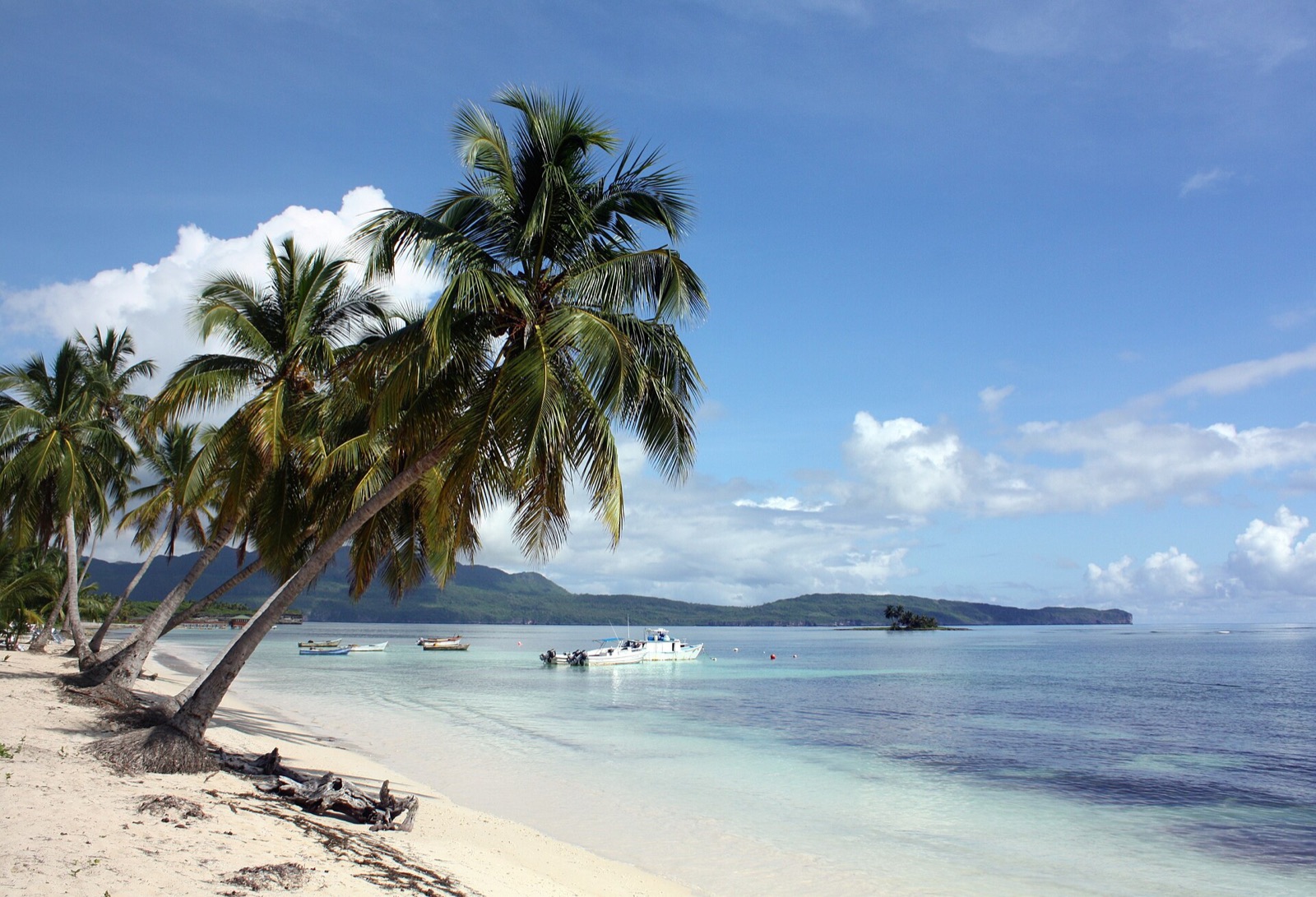
Las Galeras, on the Samana peninsula: whales in winter, green hills and empty sand in summer. Photo: Einfach-Eve, Wikimedia Commons, CC0.

Puerto Plata and the north invert everything: driest in June and July, wettest in November and December, windiest in summer. For a full list of bases across the country, see our Dominican Republic hotel guide.
Events that shape the year
Four dates move prices and fill rooms, and they are worth knowing before you book.
Carnival, every Sunday in February. La Vega runs the biggest one in the country. In 2026 the parades fell on February 1, 8, 15 and 22, plus Friday February 27, with more than 230 costumed groups registered. The pattern repeats every year: Sundays in February, then Independence Day on February 27, when the national parade takes the Malecon in Santo Domingo.
Holy Week (Semana Santa). The whole country moves to the coast and the rivers for four days. In 2027 Easter Sunday falls on March 28, so expect the week of March 22 to be the hardest of the spring to book.
Restoration Day, August 16. A national holiday in the middle of the hot season, with a long weekend of domestic travel behind it.
Christmas and New Year. The December arrivals figure, 976,734 in 2025, is the diaspora and the winter escape arriving in the same three weeks. Book flights by September for a Christmas trip.
American holidays matter too, because they load the flights: Presidents' Day week in February, spring break through March, Thanksgiving, and the last two weeks of December.
Getting there from the United States
This is the part most weather pages leave out, and it is the part that decides whether a trip works.
Flights. Punta Cana International (PUJ) handles the great majority of foreign arrivals and is nonstop from more than a dozen American cities. Published schedules put New York JFK to Punta Cana at just under 4 hours, Miami at about 2 hours 30, and Atlanta at about 3 hours 30. Santo Domingo (SDQ), Santiago (STI), Puerto Plata (POP) and La Romana (LRM) all take American nonstops as well, and choosing the right one can save a three-hour transfer at the end of a long day.
Time difference. The Dominican Republic keeps Atlantic Standard Time, UTC minus 4, all year, and does not use daylight saving. From November to March it is 1 hour ahead of New York and 4 hours ahead of Los Angeles. From March to November it is the same time as New York and 3 hours ahead of Los Angeles. A winter trip loses an hour on arrival that a summer trip does not.
Entry. The Dominican tourism board requires a passport valid for at least six months. American, Canadian, British and EU visitors do not need a visa for tourism. Every passenger, arriving and departing, must complete the free E-Ticket electronic form before reaching the airline counter, at eticket.migracion.gob.do; one form for arrival and one for departure, each producing a QR code. It is free, and any site charging for it is not the official one. The US$20 departure tax is already inside your airfare.
Money and season. Prices track the arrivals curve rather than the weather. The two most expensive windows are the second half of December and the March spring break; the cheapest are September and October, for the reasons given above. If you are weighing the Caribbean against a domestic trip, our guide to the best time to visit the USA covers the same ground for all fifty states.
FAQ
What is the best month to visit the Dominican Republic?
February. Punta Cana averages a high of 84 °F with only about 10 rain days, the sea holds 80 °F, the humpback whale season in Samana Bay is at its peak, and the Atlantic hurricane season is four months away. March is drier still, at 9 rain days, but it carries spring break and Holy Week crowds.
What months should you not go to the Dominican Republic?
September and the first half of October. The National Hurricane Center places the statistical peak of the Atlantic season on September 10, Punta Cana records 18 to 20 rain days in both months, and September 2025 saw only 490,273 arrivals, the lowest month of the year. Many small hotels and restaurants close for repairs then.
What is the rainy season in the Dominican Republic?
There are two, depending on the coast. On the south and east, including Punta Cana and Santo Domingo, the wet months run May to November, peaking in August to October. On the north coast, ONAMET normals for Puerto Plata put the wettest months in November and December at 230 mm each, while June and July are the driest.
What is the cheapest month to go to the Dominican Republic?
September, followed by October. The Banco Central publishes arrivals rather than prices, and its 2025 series shows September at 490,273 non-resident arrivals, 43 percent below July and half of December. Demand drives Caribbean pricing, so the emptiest month is reliably the cheapest one. The trade-off is the peak of the storm season.
What is the rainiest month in Punta Cana?
October, with rain falling on about 20 days of the month, followed by August at 19 days and September at 18. The rain is typically a heavy afternoon shower rather than an all-day event, and mornings are often clear. The driest month is March, with rain on about 9 days.
What month is worst for hurricanes?
September. The NOAA National Hurricane Center puts the single statistical peak of the Atlantic season on September 10, with most activity between mid-August and mid-October. The official season runs June 1 to November 30, but June, July and late November carry much lower climatological risk than the September window.
When can you see whales in Samana Bay?
Between January 15 and the end of March, dates set by the Dominican Ministry of Environment, which also licenses the boats. The 2026 season opened on January 16 with 46 authorized operators. February is the busiest month for sightings. No licensed operator runs whale trips outside those dates, so an April visit will not see them.
Is there sargassum in Punta Cana?
Often, in summer. The University of South Florida satellite record shows Atlantic sargassum peaking in June or July and at its minimum in winter, and the windward east coast around Bavaro and Punta Cana takes the worst of it. Large resorts clear their beach daily. The north coast and sheltered bays such as Samana see far less.
Read next
- Where to stay in the Dominican Republic, region by region
- Punta Cana beaches, the driest coast in winter
- Greater Antilles, for Santo Domingo and the colonial city
- Jamaica, the nearest Caribbean alternative with a similar season
- Best time to visit the USA, if you are comparing with a trip at home